
Golf in the North East does not receive the attention given to Scotland's links or the courses of the English south coast. It deserves rather more than it gets.
The region has hosted top-level professional golf, contains one of the oldest links courses in England and offers clifftop holes with views that visiting golfers remember for years afterwards.
Here is a guide to the game across the region.
Northumberland has the scenery.
Bamburgh Castle Golf Club is the course most often mentioned by visitors, and for obvious reasons. It runs along the coast with the castle, the Farne Islands and Holy Island all in view.
It is not a long course by modern standards, and it does not need to be. The wind, the undulating ground and the distraction of the surroundings are challenge enough.
Further along the coast, Goswick offers a more traditional championship links test and has been used for Open Championship qualifying, while Alnmouth and Dunstanburgh add further coastal options.
Close House brought the professional game.
Close House, near Heddon-on-the-Wall in the Tyne Valley, hosted the British Masters on the European Tour in 2017, bringing top-level professional golf to the region.
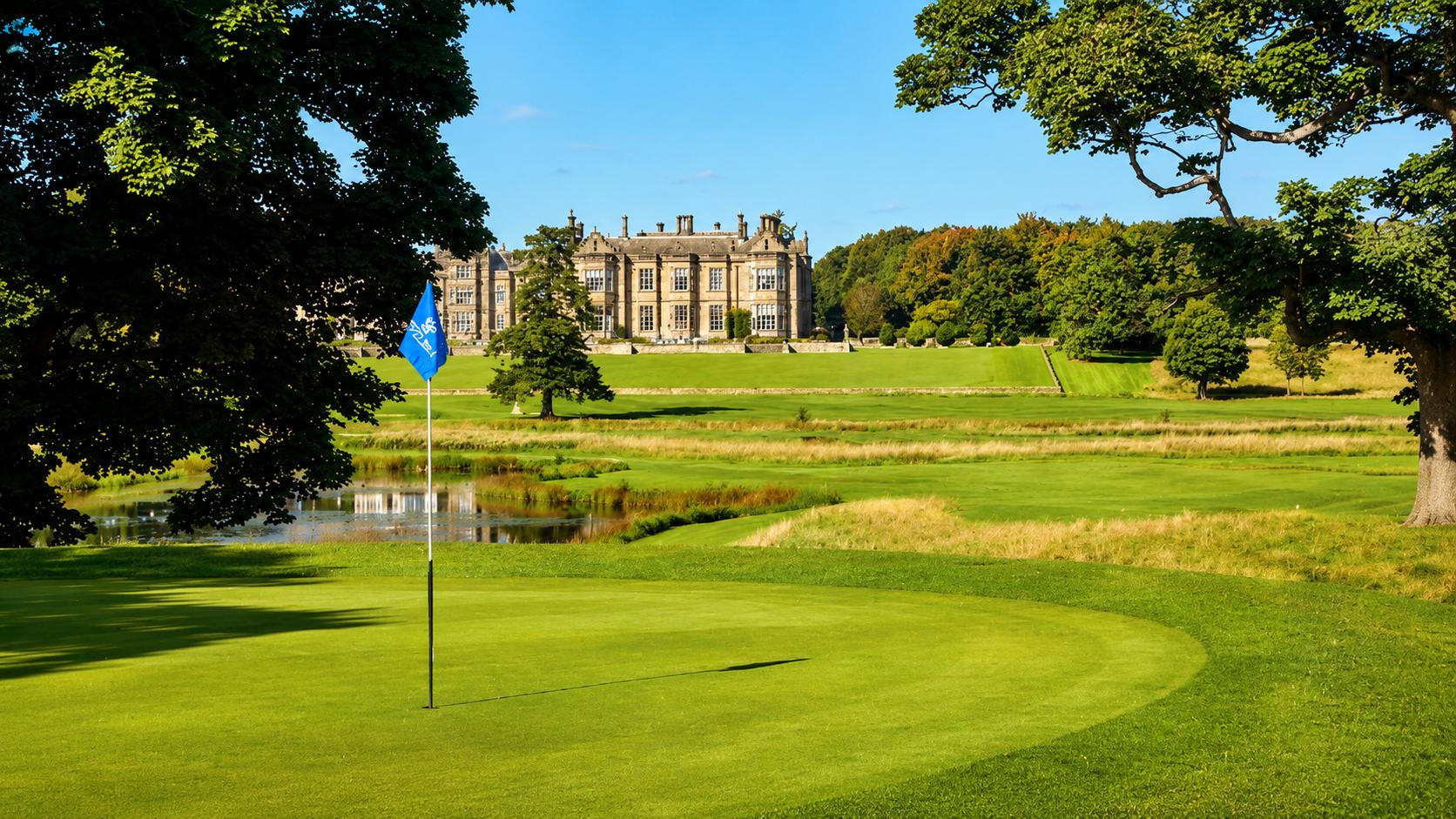
The Colt Course, designed to championship standard, sits in parkland above the Tyne, and the venue has become the region's highest-profile golfing destination.
Its association with Lee Westwood as attached professional raised its national profile considerably during that period.
Parkland and resort golf is well represented.
Slaley Hall in Northumberland offers two courses in woodland and moorland settings and has hosted professional events.
Ramside Hall near Durham, Matfen Hall, Linden Hall and Rockliffe Hall provide resort golf combining courses with hotels and spas, which has become an important part of the region's leisure economy.
These venues have made golf breaks a viable proposition for visitors, and they attract substantial numbers from outside the region.
County Durham and Teesside hold the historic links.
Seaton Carew, near Hartlepool, is among the oldest golf clubs in England, founded in the 1870s, and is a genuine championship links.
It has hosted national amateur championships and Open qualifying, and it is widely regarded as the finest links in the north east of England.
Its setting, between industrial infrastructure and the coast, is unusual and has become part of its character rather than a drawback.
The municipal picture is harder.
Not all the news is positive. Local authority golf courses across the country have closed in significant numbers over the past decade, and the North East has not been exempt.
Municipal courses were historically how people without money or connections got into the game. Their loss narrows access considerably, particularly for young people and those on lower incomes.
Where they survive, they are frequently the busiest courses in an area, which makes the closures a matter of finance rather than demand.
Participation rose sharply and has held.
Golf experienced a substantial surge in participation from 2020 onwards, as an outdoor sport that could continue when others could not.
Much of that interest has been retained, and clubs across the region have reported healthier membership numbers than they saw in the preceding decade.
Driving ranges, adventure golf and simulator venues have also grown, providing entry points that do not require club membership or knowledge of etiquette.
The barriers are being addressed slowly.
Golf's reputation for exclusivity, formality and expense is not entirely undeserved, and it has cost the sport participants for decades.
Many clubs have modernised, relaxing dress codes, removing outdated membership restrictions and offering flexible categories for people who cannot commit to a full membership.
Progress on gender equality in particular has been substantial but uneven, and the pace of change varies considerably between clubs.
Getting started is more straightforward than it looks.
Most clubs offer beginner sessions, and PGA professionals provide lessons that are genuinely worth taking early rather than developing habits that need unpicking later.
Hiring or buying a partial set of second-hand clubs is entirely acceptable and considerably cheaper than a full new set.
Pay-and-play courses, par three courses and driving ranges allow anyone to try the game without joining anything, and the region has a good spread of all three.
The season is longer than people think.
Northern courses were once effectively closed for months, but improved drainage and greenkeeping mean most courses across the region now play year-round.
Winter golf involves temporary greens at some clubs and considerably more layers, but the coastal links courses in particular drain well and are frequently playable when inland parkland is not.
Green fees are also substantially lower outside the summer months, which makes winter a good time for visitors to try courses that would otherwise be expensive.
The region has produced players.
Kenneth Ferrie, from Ashington, competed on the European Tour and contended at a US Open, and the region has produced further tour professionals and strong amateur players.
Junior sections at clubs across the North East continue to develop players, and county golf remains active.
For a sport often assumed to belong elsewhere, the North East has both the courses and the record to justify a stronger reputation.
Share your thoughts.
Which North East course would you play if you only had one round?
Sports News
Golf in the North East: Courses and Character
The region has hosted European Tour golf, holds one of England's oldest links courses and offers clifftop views that visiting golfers talk about for years.
Advertisement




Comments (0)
You must be logged in to post comments.
Don't have an account? Register here
No comments yet. Be the first to share your thoughts!