
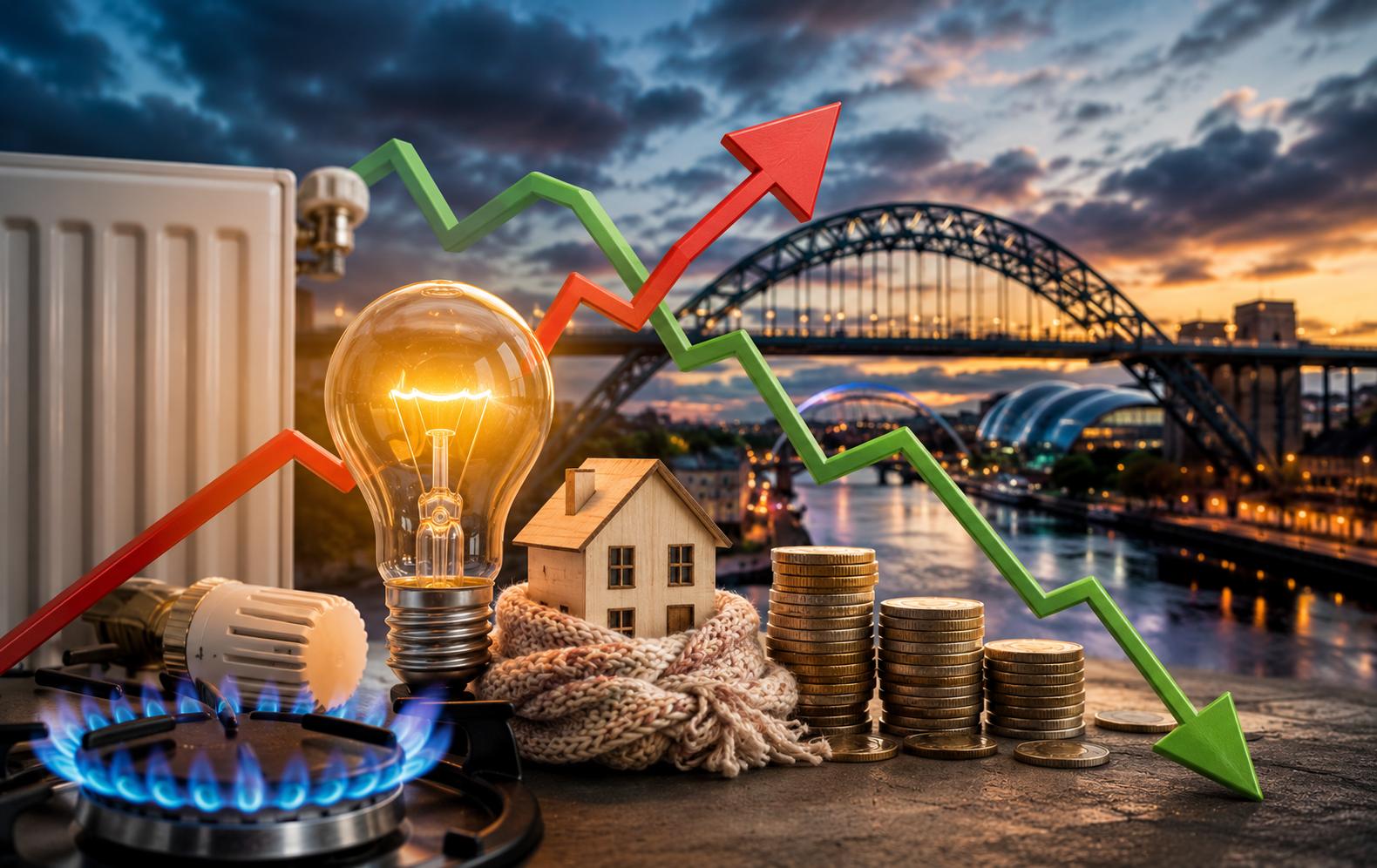
Households across Newcastle and North East England are continuing to feel the pressure of rising energy costs as the UK energy price cap remains one of the biggest talking points for families struggling with monthly bills.
From Newcastle and Sunderland to Durham, Middlesbrough and Gateshead, many residents have seen gas and electricity costs fluctuate dramatically over the past few years, leaving households increasingly concerned about affordability during colder months.
Although the energy price cap is regularly mentioned in national headlines, many people across the region are still unsure how it actually works and why bills continue rising despite protections being in place.
The cap, introduced by energy regulator Ofgem, is designed to limit how much suppliers can charge customers on standard variable tariffs. However, it does not place a fixed limit on total household bills.
That means homes across the North East still face higher costs if they use more energy, particularly during winter when heating demand increases significantly.
With Newcastle and surrounding areas often experiencing colder temperatures than southern parts of England, energy use in the region can be especially high during autumn and winter.
What The Energy Price Cap Actually Means For Newcastle Households.
The UK energy price cap sets a maximum price suppliers can charge per unit of gas and electricity, alongside daily standing charges.
It applies mainly to households on standard variable tariffs rather than fixed-rate energy deals.
For families in Newcastle and North East England, the cap acts as a safeguard against suppliers charging excessive rates, but it does not guarantee low bills.
A household using more gas for heating or more electricity for appliances will still pay more overall, even if the cap falls nationally.
This is particularly important in older North East housing stock, where poor insulation and ageing heating systems can increase energy consumption.
Many terraced homes and older properties across areas such as Byker, Wallsend and parts of County Durham were built decades ago and are often less energy efficient than newer homes.
As a result, residents may find themselves paying significantly higher heating costs during colder periods.
Why Energy Bills Rose Sharply Across The North East.
The energy crisis that followed Russia’s invasion of Ukraine in 2022 had a major impact on households throughout the North East.
Wholesale gas prices surged across Europe, forcing Ofgem to increase the energy price cap repeatedly as suppliers faced soaring costs.
Families across Newcastle, Sunderland and Teesside saw annual bills climb dramatically, with many forced to cut back on heating or reduce spending elsewhere to cope with rising expenses.
Food banks and local charities across the region also reported increased demand during the height of the crisis, as more households struggled with the combined pressure of energy inflation and wider cost-of-living increases.
Although prices have stabilised somewhat in 2026 compared with peak crisis levels, many residents continue paying far more than they did before 2022.
Local consumer groups say energy affordability remains a major concern for vulnerable households, pensioners and low-income families across the North East.
How Ofgem Calculates The Energy Price Cap.
Ofgem reviews the cap every three months based on changes in the wider energy market.
The regulator considers wholesale gas and electricity prices, network infrastructure costs, supplier operating expenses and environmental levies when calculating the new rates.
Standing charges are also included within the cap and remain controversial among many consumers.
In the North East, where lower household incomes remain common in some areas compared with the UK average, critics argue standing charges disproportionately affect low-usage households because the fees apply regardless of energy consumption.
Many campaigners believe the system should be reformed to reduce fixed charges and place more emphasis on actual energy use.
Despite criticism, Ofgem says the cap helps protect millions of households from unfair pricing while allowing suppliers to continue operating sustainably.
Fixed Energy Deals Becoming Popular Again.
As market conditions improve slightly, more suppliers are reintroducing fixed-rate tariffs after years of instability.
Some Newcastle households are now choosing fixed deals to protect themselves from future price rises, while others remain on standard tariffs covered by the cap.
Energy experts say there is no one-size-fits-all solution, as the best option depends on household energy use and financial circumstances.
Residents are being encouraged to compare tariffs carefully before switching and to watch for hidden exit fees or long contract commitments.
Smart meters are also helping more households across the North East track their usage and identify ways to reduce consumption.
Why North East Homes Often Face Higher Heating Costs.
The North East’s colder climate can naturally increase energy usage compared with warmer parts of southern England.
Households in Newcastle and surrounding areas often rely heavily on gas central heating for much of the year, particularly during long winter periods.
Detached homes and older brick properties can also lose heat more quickly if insulation is poor.
Experts recommend improving loft insulation, sealing draughts and servicing boilers regularly to improve energy efficiency and reduce costs.
Simple steps such as lowering thermostat settings slightly, switching off unused appliances and using LED lighting can also help households cut monthly bills.
Local councils across the North East have also promoted grants and support schemes designed to improve insulation and heating efficiency for eligible households.
Why The Energy Price Cap Still Matters In 2026.
Despite criticism, the energy price cap remains one of the most important consumer protections in the UK energy market.
Without it, experts warn suppliers could charge significantly higher rates during periods of global instability and rising wholesale prices.
For families across Newcastle and North East England, the cap offers at least some reassurance during uncertain economic times, even if bills remain higher than many households would like.
With global energy markets still unpredictable, many residents are expected to continue closely watching every Ofgem announcement throughout 2026 and beyond.
Do you think the energy price cap is helping households across Newcastle and the North East? Share your experiences in the comments and tell us how rising energy bills are affecting your family in 2026.
Have you found ways to cut gas and electricity costs in the North East? Join the discussion and share your best energy-saving tips with other local readers.
Local News
Here’s How the UK Energy Price Cap Changes Affect Households Across Newcastle
Advertisement


Comments (0)
You must be logged in to post comments.
Don't have an account? Register here
No comments yet. Be the first to share your thoughts!