
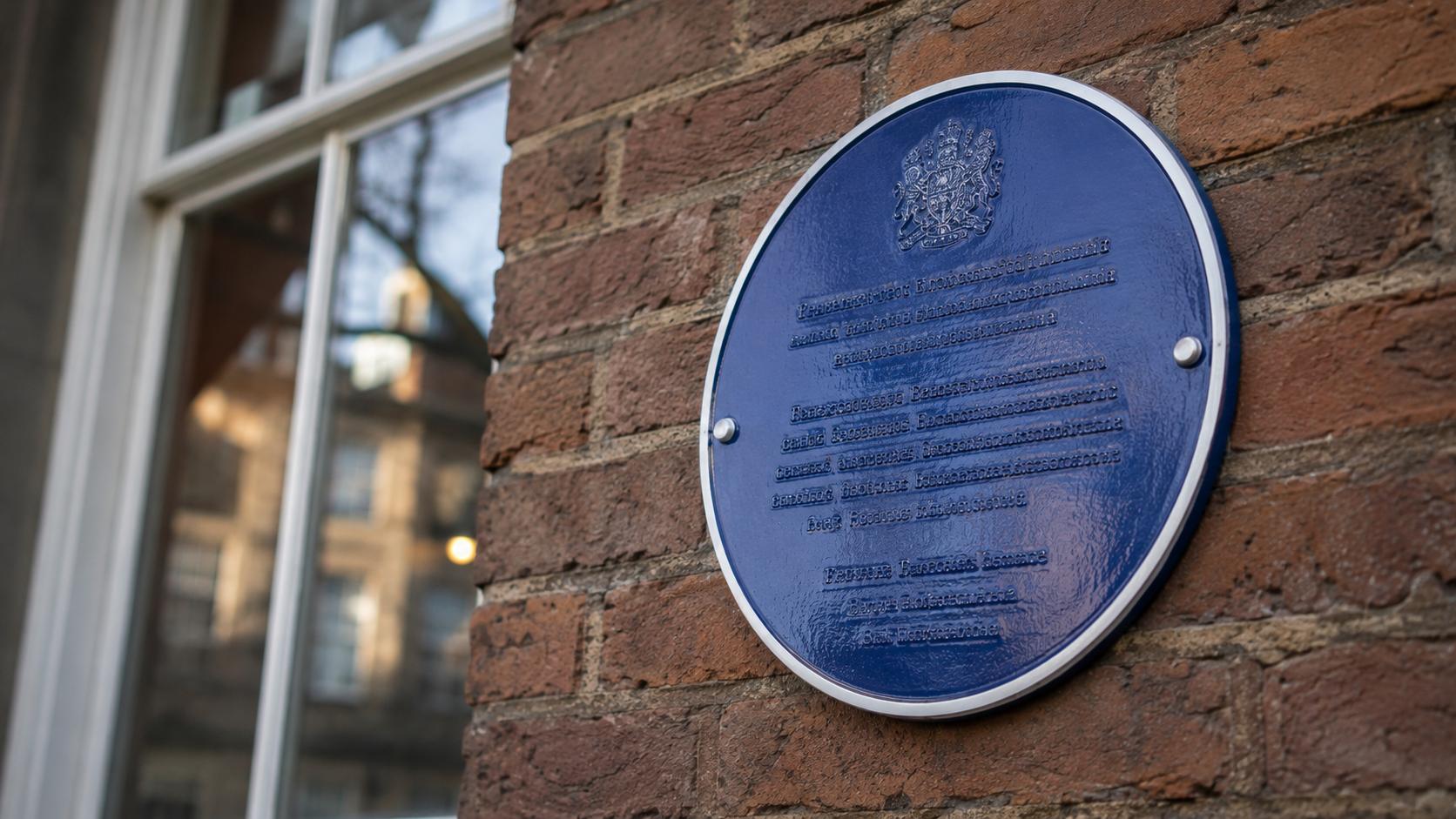
You have walked past dozens of them without stopping. A round plaque, a name, a date, a line about why the person mattered, fixed to a wall on a street you use every week.
Newcastle has a considerable number, marking everyone from engineers and inventors to writers, campaigners and musicians.
They do not appear by accident, and the process of getting one is more demanding than most people assume.
The London scheme is not the only scheme.
A common misconception is that blue plaques are run nationally by a single body. They are not.
The famous English Heritage blue plaque scheme covers London only. Outside the capital, plaques are put up by local authorities, civic societies, universities, trusts and specialist organisations, each with its own criteria.
Newcastle's plaques come from a mixture of sources, including the city council's own scheme and the work of local historical and civic organisations.
That is why you occasionally see plaques in different colours, shapes and materials across the city. They come from different schemes with different rules.
The usual criteria.
Most schemes apply broadly similar tests, and if you are thinking of nominating someone it is worth knowing them before you start.
The subject normally needs to be dead, and many schemes require a set period to have passed, commonly twenty years, so that a reputation has had time to settle.
The achievement should be genuinely significant, recognised beyond a narrow circle, and capable of being explained in a single sentence on a plaque.
The building must still exist. This is the criterion that defeats more nominations than any other. A great many notable Newcastle residents lived in streets that were cleared in the twentieth century, and no surviving building means no plaque.
The connection must be real and documented. A verified address from a census return, a directory or a deed carries weight. A local tradition that somebody once lived somewhere does not.
The owner has to agree.
A plaque is fixed to somebody's property, and no scheme can compel an owner to accept one.
Owner consent is therefore essential, and where the building is listed, listed building consent may also be required before anything is drilled into a historic façade.
Occupiers sometimes decline, usually over concerns about visitors, maintenance or fixing into stonework. It is not obstruction; it is their wall.
Somebody has to pay.
Plaques cost money to make and to install, and schemes are usually funded by a mixture of council budgets, civic society funds, donations and sponsorship.
Costs include the plaque itself, the fixing, scaffolding or access equipment where needed, and the unveiling event. It adds up to a meaningful sum for a small organisation.
That funding reality is the reason most schemes install only a handful of plaques a year, and why proposals with a sponsor attached often move faster.
Making a nomination.
The practical route is to approach the relevant scheme with a written case. Set out who the subject was, why they matter, the precise address, evidence of the connection, and whether the building survives in a suitable form.
Anticipate the obvious objections. Show that the achievement is documented, that the address is verified and that you have thought about who owns the building.
Groups do better than individuals. A nomination backed by a school, a society, a community organisation or a professional body demonstrates that the interest is broader than one enthusiast.
Who is missing.
Any honest look at plaque schemes across the country finds the same imbalance. The overwhelming majority commemorate men, and the great majority commemorate people from a narrow social range.
That is partly a reflection of who got recorded in the past, and partly a reflection of who has historically been doing the nominating.
Schemes across the country have made deliberate efforts to redress this, and Newcastle has a strong field to draw on: women in medicine, education, trade unionism, science and campaigning whose local addresses are documented and whose buildings survive.
The gaps are not evidence that nobody qualifies. They are evidence that nobody has yet put the paperwork in.
Share your thoughts.
Who deserves a blue plaque in Newcastle that does not yet have one?
Local News
How a Building Gets a Blue Plaque in Newcastle
Advertisement



Comments (0)
You must be logged in to post comments.
Don't have an account? Register here
No comments yet. Be the first to share your thoughts!