
Retail theft has become one of the biggest challenges facing supermarkets across the UK, with businesses losing billions of pounds every year through shoplifting, organised crime and stock losses. As the problem grows, many retailers are turning to artificial intelligence to help protect staff, reduce theft and improve customer safety.
While Newcastle and the wider North East have not been immune to rising retail crime, the region could also become one of the biggest beneficiaries of new AI-powered security technology. From intelligent CCTV systems to facial recognition and predictive analytics, supermarkets are investing heavily in technology that can identify suspicious behaviour long before someone reaches the exit.
The aim is not simply to catch thieves. It is to make stores safer for employees and honest customers while reducing the rising costs that eventually affect everyone at the checkout.
Why retail theft has become a major issue.
Shoplifting is no longer viewed by supermarkets as a minor inconvenience. It has become an organised and expensive problem.
According to the British Retail Consortium, UK retailers experienced more than 20 million theft incidents during the latest reporting year, equivalent to around 55,000 incidents every day. Retail crime now costs the industry £4.2 billion annually, including £2.2 billion lost directly through customer theft and £1.8 billion spent on crime prevention measures.
Official figures also show police-recorded shoplifting offences in England and Wales have reached record levels, highlighting how widespread the issue has become.
For supermarkets operating on relatively small profit margins, these losses can quickly add up, particularly when organised gangs repeatedly target multiple stores.
Why the North East faces unique challenges.
The North East has experienced some of the highest reported shoplifting rates in England.
Analysis based on official crime data suggests the region records around 11.5 shoplifting offences per 1,000 people, approximately 35 percent above the national average, with neighbouring Cleveland among the hardest hit areas.
Although Newcastle itself continues investing in city centre policing and retail partnerships, supermarkets across Tyneside face many of the same challenges seen elsewhere, including repeat offenders, organised theft and increasing aggression towards shop workers.
These pressures have accelerated investment in smarter security systems rather than relying solely on additional staff.
How AI is changing supermarket security.
Artificial intelligence has quietly become one of the most powerful tools available to retailers.
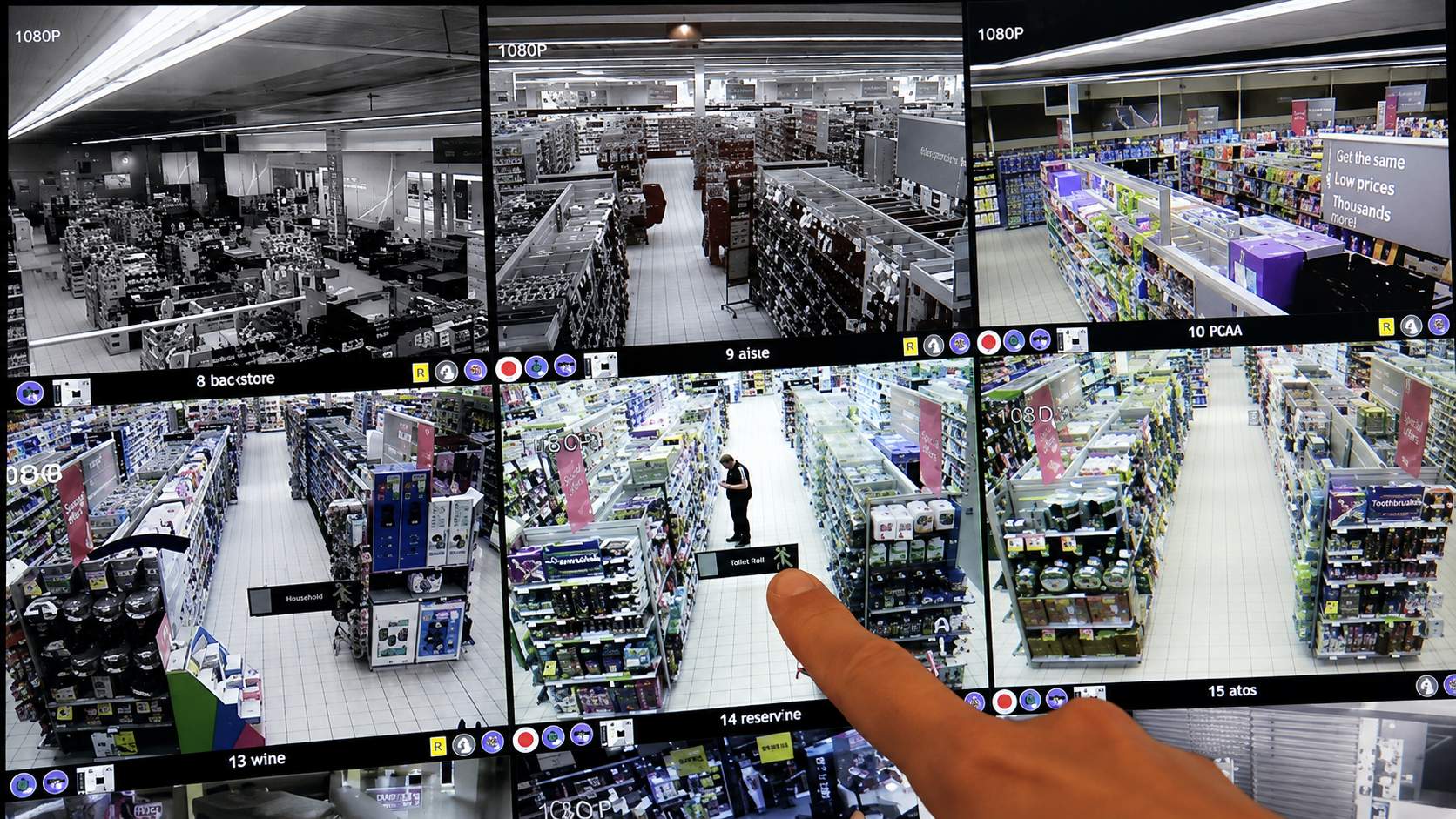
Modern CCTV systems no longer simply record footage. AI software can analyse customer movement, identify unusual behaviour and alert staff when someone appears to be concealing products or repeatedly visiting high-risk areas of the store.
Some systems monitor patterns rather than individual identities, allowing security teams to intervene early without disrupting genuine shoppers.
Other technologies use computer vision to detect unusual activity around self-service checkouts, helping staff identify accidental scanning errors as well as deliberate attempts to avoid payment.
These systems allow employees to focus on customer service while technology monitors hundreds of events simultaneously.
Facial recognition remains controversial.
One of the most talked-about developments is facial recognition.
Several major UK retailers have expanded the use of AI-powered facial recognition systems that compare images against watchlists of individuals previously linked to theft or violent behaviour. Staff receive alerts only when a potential match is detected, allowing trained employees to review the information before taking action.
Supporters argue the technology helps protect shop workers from repeat offenders, particularly those involved in organised retail crime.
Privacy campaigners, however, continue to question how facial recognition should be regulated, with concerns about data protection, transparency and the possibility of mistaken identification.
As a result, supermarkets adopting the technology typically combine AI alerts with human decision-making rather than relying entirely on automation.
Protecting staff is becoming just as important.
Retail crime affects more than lost stock.
The British Retail Consortium reports that incidents of violence and abuse against retail workers have climbed to more than 2,000 every day, with around 70 incidents involving a weapon daily.
Many supermarkets now see AI as a way to protect employees by identifying escalating situations before they become dangerous.
Early warnings can allow staff to request assistance, monitor repeat offenders or contact police before incidents develop into confrontation.
For workers across Newcastle and the North East, that additional layer of protection could prove just as valuable as preventing theft itself.
What shoppers can expect next.
Most customers may never notice the technology working around them.
Future supermarket security is likely to combine AI-powered cameras, smarter self-checkouts, electronic shelf monitoring and predictive software that identifies theft hotspots before problems arise.
Rather than replacing security staff, AI is expected to support faster decision-making while reducing false alarms and allowing employees to spend more time helping customers.
For supermarkets across Newcastle, Gateshead, Sunderland and the wider North East, investing in intelligent security could become increasingly important as retailers balance customer convenience with the need to reduce crime.
The technology will continue evolving, but one principle is already clear. The future of supermarket security will depend on combining artificial intelligence with experienced human judgement to create stores that are safer, more efficient and more welcoming for everyone.
Join the conversation.
Do you think AI is the right solution to tackle growing supermarket theft?
Crime News
How AI Is Tackling Shoplifting In The North East
Advertisement



Comments (0)
You must be logged in to post comments.
Don't have an account? Register here
No comments yet. Be the first to share your thoughts!