
For decades, the Tyne and Wear Metro has been one of the easiest rail networks in Britain to use for many passengers with reduced mobility, but the arrival of the new Stadler Class 555 trains has been billed as a major leap forward for accessibility.
The £362 million fleet has been designed to make boarding easier for wheelchair users, parents with pushchairs, cyclists, passengers with luggage and people with visual or hearing impairments. However, while the trains represent a significant improvement over the ageing Metrocars they replace, some accessibility challenges remain across the wider network.
So, how accessible are the new Metro trains, and do they live up to expectations?
Automatic sliding steps are one of the biggest improvements.
Perhaps the most important accessibility feature is one that many passengers may never even notice.
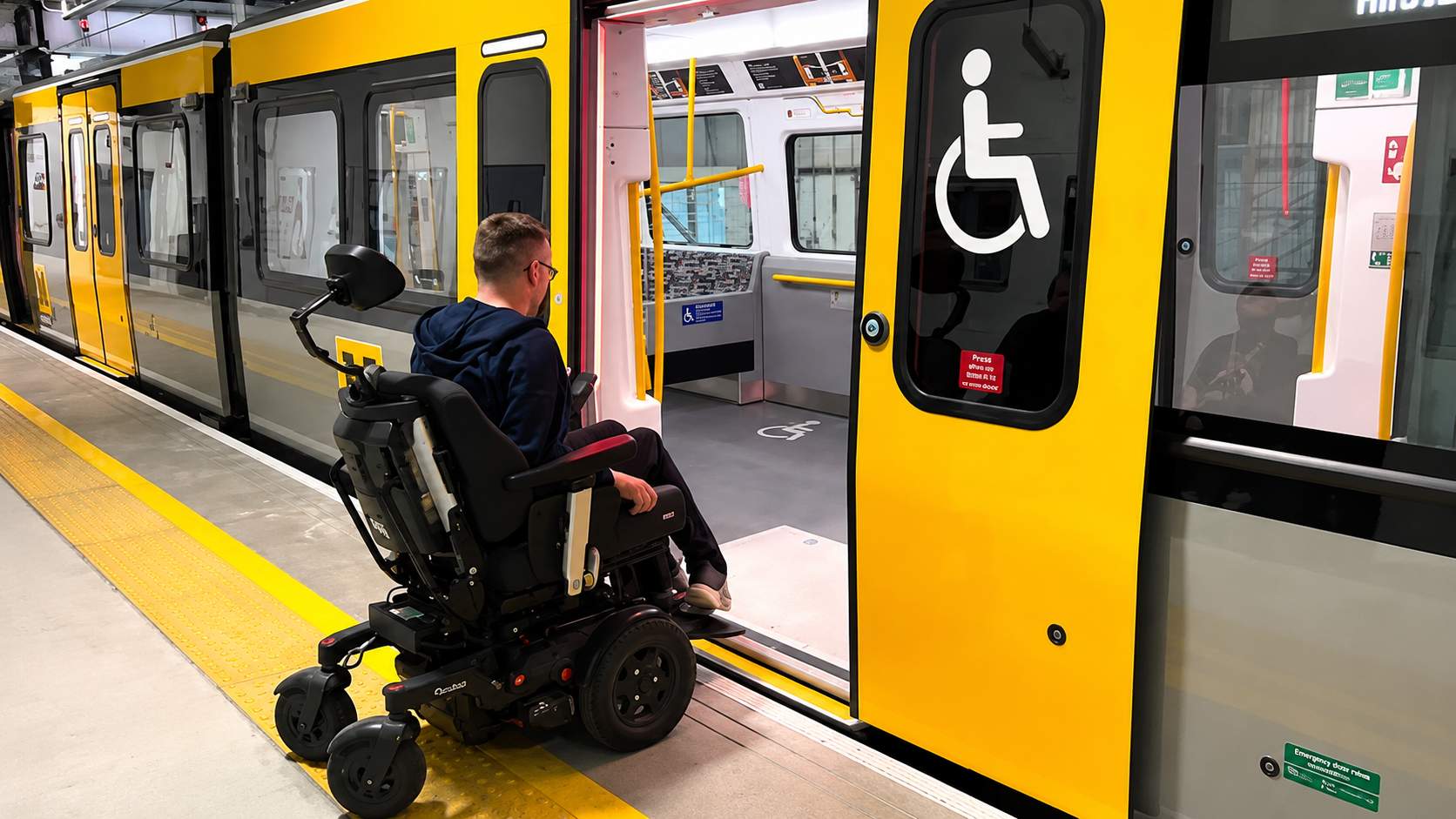
Every door on the new Metro trains is fitted with an automatic sliding step that extends when the train stops at a station. The step reduces the gap between the train and the platform, making boarding much easier for wheelchair users, people with walking aids, parents with pushchairs and anyone carrying heavy luggage.
This is a major change from the old Metrocars, where the platform gap often required assistance or the use of manual ramps at some locations.
The sliding step was one of the key reasons behind the new fleet's design and was specifically developed to meet modern rail accessibility standards.
Four wheelchair spaces on every train.
Accessibility inside the trains has also been significantly improved.
Each new Metro train includes four dedicated wheelchair spaces, compared with the much more limited provision on the original fleet. Nexus says the additional space has been designed to accommodate around 50,000 unsupported wheelchair journeys every year, allowing more people to travel independently across the network.
The wheelchair areas are clearly marked and positioned close to accessible doorways, making them easier to locate when boarding.
More room for pushchairs, bicycles and luggage.
The benefits are not limited to wheelchair users.
The trains include flexible multi-purpose areas that can be used for bicycles, pushchairs or large suitcases. Fold-down seats mean the space can adapt depending on passenger demand throughout the day.
This makes the trains particularly useful for families travelling to Newcastle city centre, visitors heading to Newcastle International Airport and cyclists exploring routes across the North East.
Better information for passengers.
Passengers with visual or hearing impairments should also find travelling easier.
The trains feature larger digital information screens, clearer destination displays, enhanced onboard announcements and improved lighting throughout the carriages. Contrasting colours have also been used around doors and key features to make navigation easier for partially sighted passengers.
These improvements are designed to make journeys more straightforward, particularly for people who may not be familiar with the Metro network.
The stations have been upgraded too.
The new trains could not simply arrive and start operating.
To make the automatic sliding steps work correctly, Nexus carried out extensive engineering work across the network. Platform heights were adjusted and track levels modified at many stations to ensure the gap between train and platform could be reduced as much as possible.
The Metro network includes 60 stations across Newcastle, Gateshead, Sunderland, North Tyneside and South Tyneside, all of which already offer step-free access through lifts, ramps or level access.
The wider network still presents some challenges.
While the trains themselves represent a significant improvement, accessibility does not begin and end with rolling stock.
Some passengers still report issues with station lifts being temporarily unavailable, locating the correct boarding point for wheelchair spaces and obtaining assistance at unstaffed stations. Discussions among local wheelchair users also suggest that clearer platform markings would make it easier to identify where accessible doors will stop.
Nexus continues to provide assisted travel services for passengers who require additional support, including manual boarding ramps where necessary.
Accessibility benefits everyone.
Although wheelchair access often receives the most attention, many of the improvements benefit almost every passenger.
Parents pushing buggies no longer have to negotiate the larger gaps found on older trains. Older passengers find boarding easier thanks to the reduced step between platform and train. Travellers with heavy shopping or suitcases also benefit from the flatter boarding experience.
Even cyclists have more dedicated storage space than was previously available.
In practice, accessibility improvements often improve the journey for everyone, not just disabled passengers.
Passenger feedback has generally been positive.
Special interest groups, including organisations representing people with physical disabilities, visual impairments and hearing impairments, were invited to test the trains before they entered passenger service. Feedback from those sessions helped shape several elements of the final interior design.
Since the trains entered service, many passengers have praised the wider gangways, improved wheelchair provision and easier boarding.
Some criticism has centred on the reduction in traditional seating, but this reflects a design choice to create wider walkways and more flexible space for wheelchairs, bicycles and pushchairs.
A major step forward for the North East.
No public transport system is perfect, and some accessibility challenges remain across parts of the Metro network. However, there is little doubt that the new Class 555 trains represent the biggest improvement in accessibility since the Tyne and Wear Metro first opened more than four decades ago.
Features such as automatic sliding steps, four dedicated wheelchair spaces per train, improved passenger information systems and flexible multi-purpose areas bring the Metro much closer to modern accessibility expectations.
As more of the new fleet enters daily service and further infrastructure improvements are completed, passengers across Newcastle and the wider North East should continue to see accessibility improve, making the Metro easier to use for everyone, regardless of age or mobility.
Join the conversation.
Have you travelled on one of the new Metro trains?
Travel News
How Metro's New Trains Help Disabled Passengers
Advertisement



Comments (0)
You must be logged in to post comments.
Don't have an account? Register here
No comments yet. Be the first to share your thoughts!