
Few pieces of post land as badly as a penalty charge notice. The envelope is thin, the photograph is unarguable, and the amount is enough to hurt without being enough to fight.
Newcastle issues a substantial number of these every year, across bus lanes, box junctions, restricted streets and parking bays.
A question follows almost automatically: is this about traffic, or is it about money?
The rules are not the same as a police fine.
A penalty charge notice from the council is a civil matter, not a criminal one. There are no points, no criminal record and no magistrates' court unless things go very wrong indeed.
Charges are set within national bands rather than invented locally. Bus lane and moving traffic contraventions sit in one band, parking contraventions in another, with the higher and lower rates depending on how serious the contravention is.
Almost all of them carry a discount for early payment, typically halving the amount if you pay within a fortnight. That discount is the reason so many people pay without arguing, even when they think they have a case.
Where the money legally has to go.
This is the part most drivers do not know, and it substantially changes the argument.
Income from parking enforcement is ring-fenced by law. Under road traffic legislation, a council cannot simply drop the surplus into its general fund and spend it on anything it likes.
Any surplus must go to transport-related purposes. In practice that means things like highway maintenance, public transport support, concessionary travel schemes, road safety work and environmental improvements linked to transport.
Councils are also required to publish an annual parking account setting out income, costs and how any surplus was applied. Newcastle publishes its figures, and they are a matter of public record rather than something you need to request.
The costs are larger than people assume.
Enforcement is not free money. The income has to cover civil enforcement officers, back office processing, correspondence, appeals administration, camera equipment, maintenance, signage and the cost of the adjudication service.
Off-street car parks bring their own costs in staffing, lighting, security, business rates and repairs.
The gap between gross income and net surplus is therefore considerable, and any honest assessment of whether the city is profiting has to look at the net position rather than the headline.
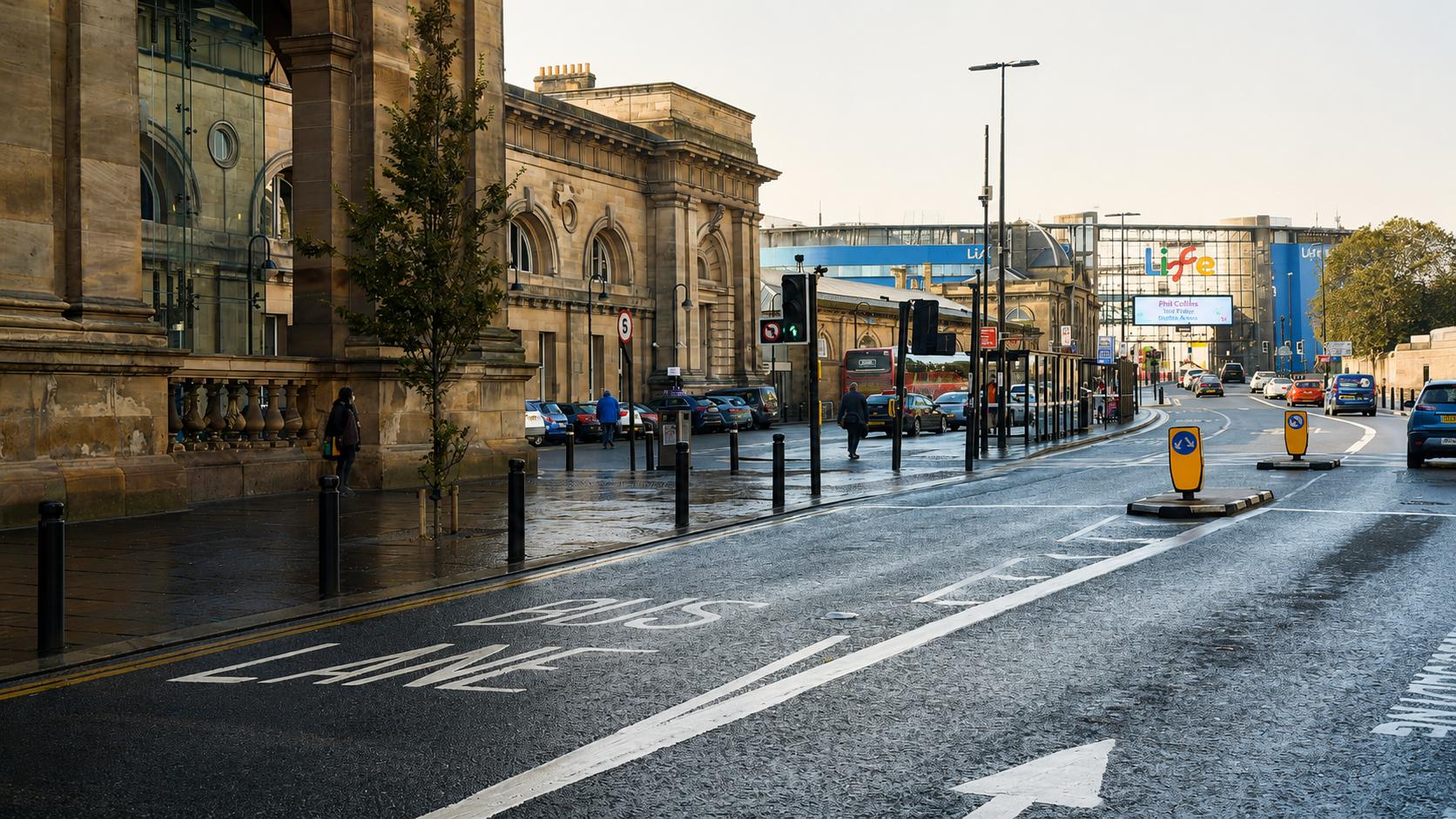
Bus lane cameras are a specific complaint.
Bus lane enforcement generates a disproportionate share of complaints, partly because the contraventions are often momentary and partly because drivers frequently do not realise they have committed one until the letter arrives.
The council's position is that bus lanes only work if they are kept clear, and that a lane which cars drift into is a lane that delivers no benefit to the buses using it.
The counter-argument is that a camera which catches thousands of drivers at the same location is evidence of a signage problem rather than a driving problem.
Both arguments can be true at once, and the fair test is whether the number of contraventions at a given site falls over time. Sites where the figure stays stubbornly high year after year deserve a hard look at the layout.
You can challenge, and people win.
There is a formal process. An informal challenge comes first, then a formal representation, then an appeal to an independent adjudicator at the Traffic Penalty Tribunal.
The adjudicator is genuinely independent of the council, the appeal costs nothing, and a meaningful proportion of appeals succeed.
Grounds that carry weight include unclear or obscured signage, a vehicle that had been sold, the loading being permitted, a valid permit that was not recorded, or procedural failures by the council.
Grounds that rarely succeed include not knowing the restriction existed, being in a hurry, or only stopping briefly.
The awkward truth in the middle.
Enforcement income cannot be spent freely, so the crude version of the accusation does not hold. But a council under financial pressure still benefits when income that would otherwise come from its own budget arrives from drivers instead.
That is not corruption. It is simply an incentive that sits quietly in the background, and the honest response is transparency: publishing site-by-site contravention numbers, reviewing signage where the figures are extreme, and being clear about what the surplus paid for.
Share your thoughts.
Have you ever appealed a Newcastle penalty charge notice, and did you get anywhere?
Local News
How Much Newcastle Makes From Bus Lane and Parking Fines
Advertisement



Comments (0)
You must be logged in to post comments.
Don't have an account? Register here
No comments yet. Be the first to share your thoughts!