
The future of the NHS has become one of the most fiercely contested political issues in Britain, with questions growing over how healthcare should be funded, delivered and reformed.
While every major political party says it supports healthcare that remains free at the point of use, significant differences have emerged over the role of private providers, NHS reform and whether the current funding model can survive long term.
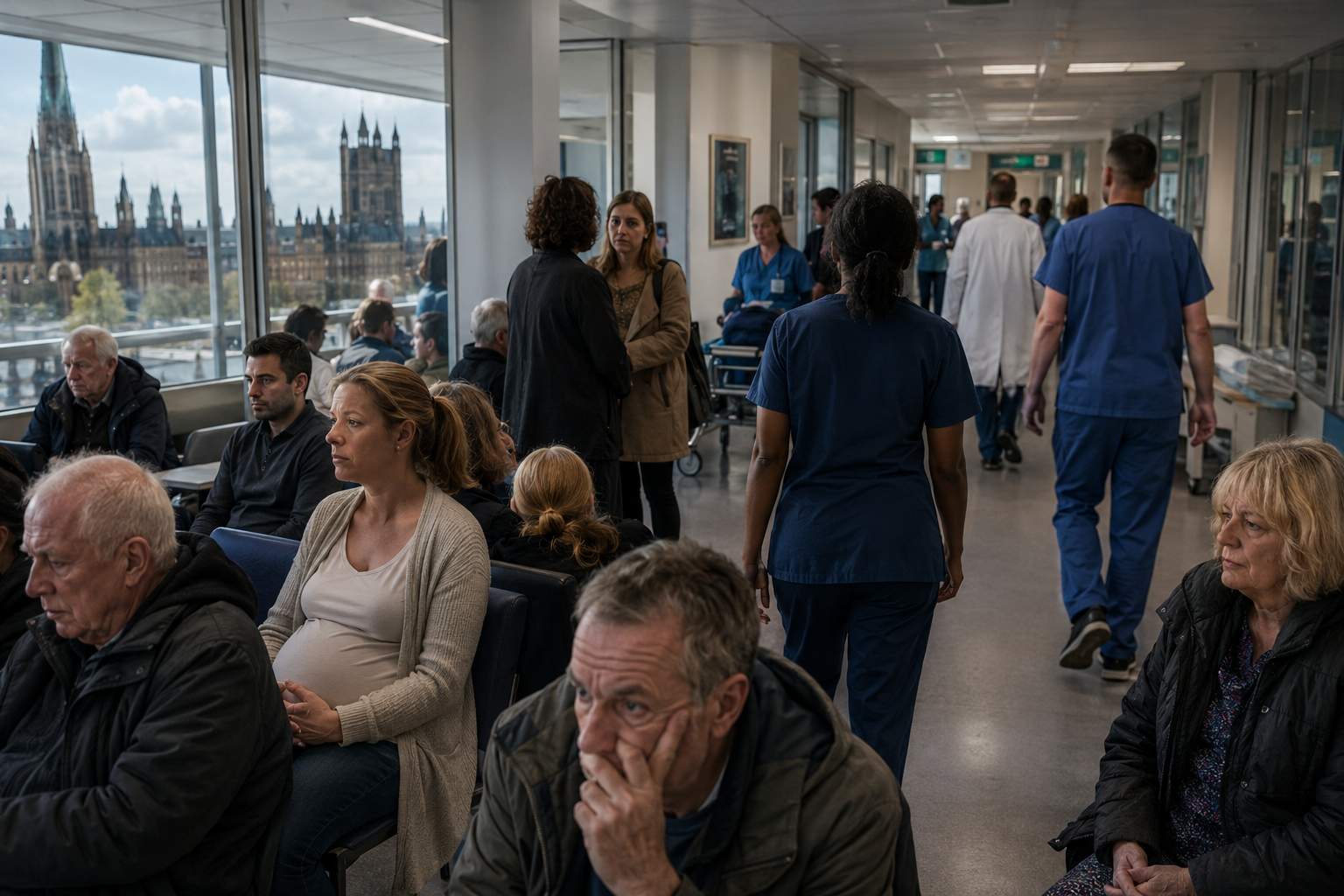
For residents across Newcastle and the wider North East, the debate is particularly important. The region continues to experience some of England's highest rates of health deprivation, while thousands of local patients remain on waiting lists for treatment.
According to NHS data, more than 80,000 patients are currently waiting for treatment through The Newcastle upon Tyne Hospitals NHS Foundation Trust alone. Nationally, NHS waiting lists remain above seven million treatment pathways, despite recent improvements.
Against this backdrop, comments made by senior politicians from Reform UK, the Conservatives and Labour have fuelled a wider debate about whether the NHS should remain exactly as it is or undergo significant change.
Reform UK And Nigel Farage's NHS Funding Comments.
No political party has attracted more attention in the NHS debate than Reform UK.
While Reform's official position states that healthcare should remain free at the point of use, comments made by leader Nigel Farage have repeatedly raised questions about whether the party would ultimately favour a different funding model.
In April 2025, Farage told Sky News:
"I do not want it funded through general taxation."
The Reform leader argued that the current NHS structure is failing patients and suggested Britain should examine alternative systems used elsewhere around the world like America.
Farage has previously expressed admiration for aspects of European healthcare systems that combine public healthcare with compulsory insurance contributions. Although he has stopped short of proposing direct charges for treatment, critics argue his comments indicate support for moving away from the NHS's traditional tax-funded model.
Reform's 2024 manifesto also proposed tax relief on private health insurance and greater use of private healthcare providers to tackle waiting lists.
Supporters say the approach could help reduce delays by increasing treatment capacity. With millions of patients waiting for appointments, scans and operations, many voters are frustrated with the pace of NHS recovery following the pandemic.
However, critics warn that increased reliance on private healthcare risks creating a two-tier system. In regions such as the North East, where average earnings remain lower than many parts of southern England, opponents argue that greater private sector involvement could widen inequalities between wealthier and poorer communities.
For Newcastle residents, the concern is not necessarily whether healthcare would remain free, but whether access and quality would become increasingly dependent on private provision rather than public services.
Labour's Defence Of A Tax-Funded NHS.
Labour has sought to position itself as the strongest defender of the traditional NHS model.
Prime Minister Keir Starmer and Health Secretary Wes Streeting have repeatedly pledged to maintain a healthcare system that remains free at the point of use and funded through general taxation.
Streeting has been particularly vocal in criticising Reform UK's stance. Responding to Farage's comments, he argued that moving away from tax-funded healthcare would undermine one of Britain's most valued public institutions.
Labour's strategy focuses on reducing waiting lists, expanding NHS capacity and increasing productivity rather than fundamentally changing how healthcare is funded.
The government has invested in additional appointments, diagnostic services and workforce expansion programmes designed to reduce pressure on hospitals and GP surgeries.
For Newcastle and the wider North East, Labour's position offers continuity. Patients would continue accessing healthcare through the existing NHS structure without any new funding mechanisms or insurance requirements.
The challenge facing Labour is proving that increased funding and operational reform can solve longstanding problems. Critics argue that despite record NHS spending in recent years, waiting lists remain historically high and patient demand continues to outpace available resources.
Supporters counter that reforming the NHS does not require changing its founding principles and point to recent reductions in waiting lists as evidence that progress is possible within the current model.
Conservative Questions Over Future NHS Reform.
The Conservative Party continues to support an NHS that remains free at the point of use, but comments from party leader Kemi Badenoch generated headlines during the Conservative leadership contest.
Speaking to the BBC, Badenoch said:
"There are many ways to deliver a free at the point of use service that doesn't require the Government to be involved in every aspect."
While she did not advocate an insurance-based healthcare system, critics interpreted the remarks as opening the door to future discussions about alternative methods of delivering healthcare services.
Badenoch later emphasised that she supports healthcare remaining free at the point of use, but her comments highlighted a growing debate within some Conservative circles about the long-term sustainability of NHS funding.
Historically, Conservative governments have expanded the use of private providers within the NHS. Supporters argue this increases patient choice and reduces waiting times. Critics view it as a gradual form of privatisation.
For residents across Newcastle and Northumberland, the Conservative approach could potentially deliver quicker access to treatment if additional private sector capacity were used effectively.
However, opponents fear that greater outsourcing could weaken local NHS services over time, particularly in areas where private healthcare markets are less developed than in major cities such as London and Manchester.
Liberal Democrats Focus On Investment Rather Than Privatisation.
The Liberal Democrats have taken a markedly different approach to the NHS debate.
Rather than discussing alternative funding models, the party has concentrated on increasing NHS investment and improving access to primary care services.
Senior Liberal Democrat figures have consistently supported a publicly funded NHS and have not advocated insurance-based healthcare or NHS privatisation.
The party has placed particular emphasis on recruiting more GPs, improving mental health services and tackling the crisis in social care.
For Newcastle residents, many of these proposals address issues regularly raised by patients, including difficulties obtaining GP appointments and lengthy waits for mental health support.
Supporters argue that strengthening community healthcare services could reduce pressure on hospitals and improve outcomes across the region.
Critics question whether the scale of spending proposed by the Liberal Democrats would require substantial tax increases, although the party argues that prevention and early intervention ultimately save money in the long term.
Green Party Opposition To Private Healthcare Expansion.
The Green Party has adopted one of the clearest anti-privatisation positions in British politics.
Party leaders have consistently opposed expanding the role of private healthcare companies within NHS services and argue that healthcare should remain overwhelmingly publicly provided.
The Greens support significantly increased NHS spending and have repeatedly warned against what they describe as the gradual marketisation of healthcare.
Supporters believe the party's position provides the strongest protection against privatisation and preserves the founding principles of the NHS.
For communities across Newcastle, Gateshead and Sunderland, where support for public services remains strong, this message may resonate with voters concerned about the growing role of private providers.
However, critics argue that the Green Party's spending commitments would require substantial tax increases and may be difficult to deliver during periods of economic pressure.
What The NHS Debate Means For The North East.
The NHS debate often centres on Westminster politics, but its consequences are felt most strongly in local communities.
The North East experiences some of the highest rates of chronic illness, disability and health inequality in England. Life expectancy remains lower than the national average in several communities across the region.
This means decisions about healthcare funding and reform could have a greater impact on North East residents than those living in wealthier parts of the country.
Supporters of Reform UK argue that introducing greater competition and private sector involvement could reduce waiting times for local patients.
Labour supporters argue that protecting a tax-funded NHS ensures equal access regardless of income.
Conservatives believe carefully managed reform and increased use of independent providers could improve efficiency.
The Liberal Democrats favour higher investment in frontline healthcare services, while the Greens want a stronger publicly owned healthcare system with minimal private sector involvement.
Ultimately, every major party agrees the NHS faces serious challenges. Where they disagree is how those challenges should be solved.
For Newcastle residents heading into future elections, understanding those differences may prove increasingly important as pressure on healthcare services continues to grow and the debate over the NHS's future becomes even more politically significant.
The Question Facing Voters.
The debate surrounding NHS privatisation is often more complex than campaign slogans suggest.
No major UK party is currently proposing charging patients for NHS treatment. However, significant differences exist regarding private sector involvement, funding mechanisms and long-term reform.
Reform UK has generated headlines because of Nigel Farage's comments about moving away from general taxation. Labour remains committed to the traditional NHS model. Conservatives have raised questions about future reform while supporting healthcare remaining free at the point of use. The Liberal Democrats and Greens continue to advocate increased public investment rather than structural change.
For voters across Newcastle and the North East, the key question is no longer whether the NHS needs reform. Most political parties agree that it does.
The real debate is about who can deliver shorter waiting times, better patient outcomes and a sustainable healthcare system without compromising access to care for future generations.
Share your views below.
Do you believe the NHS should remain entirely tax-funded, or is it time to consider models like private insurance?
Health News
How Political Parties Would Shape the NHS Going Forward
Advertisement





Comments (0)
You must be logged in to post comments.
Don't have an account? Register here
No comments yet. Be the first to share your thoughts!