
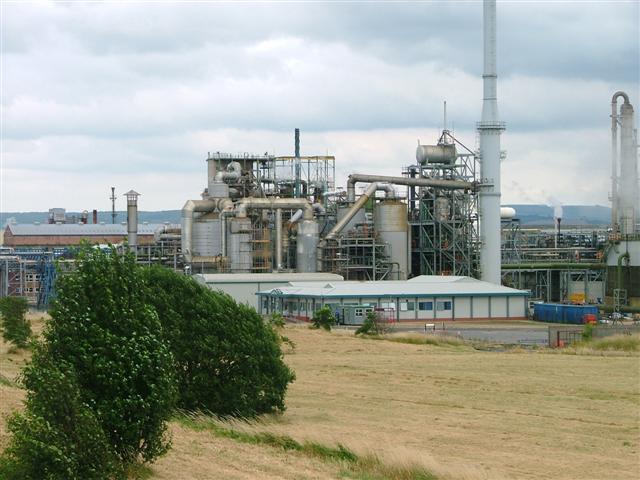
For much of the twentieth century, the skyline of Teesside was dominated by one of the largest industrial enterprises in the country. The chemical works of Imperial Chemical Industries, better known as ICI, at Billingham and Wilton, were among the greatest of their kind in the world, employing tens of thousands of people and shaping the economy and identity of the region for generations. The story of ICI on Teesside is a story of industrial ambition on a colossal scale.
Born of Wartime Need.
The origins of the great works lay in the First World War. The need for synthetic ammonia, used in the manufacture of explosives, led to the choice of Billingham, then a small village in County Durham, as the site for a major new chemical plant. The Cheshire firm of Brunner Mond took on the development, and from the early 1920s the plant began producing ammonia, turning after the war to the manufacture of fertilisers. The site grew rapidly, transforming the rural landscape and laying the foundation for an industrial complex of extraordinary scale.
The Birth of ICI.
In 1926 a momentous merger took place. Brunner Mond joined with three other major British chemical companies to form Imperial Chemical Industries, one of the largest industrial enterprises in the country and a giant of the global chemical industry. The Billingham works became a key part of the new company, and under ICI it continued to expand. At its peak the plant was the largest chemical factory in the British Empire, employing many thousands of people and producing fertilisers and other chemicals on a scale that few sites anywhere could match.
A Second Giant at Wilton.
After the Second World War, ICI built a second enormous site on the other side of the River Tees at Wilton. While Billingham had been based largely on coal, Wilton was based on the petrochemicals that were becoming central to the modern chemical industry, and the two sites were linked by pipelines carried through a tunnel beneath the river. Wilton grew into a vast complex in its own right, employing many thousands of workers and producing a huge range of products, from plastics to synthetic materials. Together the two sites made Teesside one of the great chemical-producing regions of the world.
Feeding the World and More.
The products of the Teesside works touched countless aspects of modern life. The fertilisers made there helped to feed a growing world, while the plants produced plastics, synthetic fibres, dyes, and a host of other chemicals that found their way into everyday products. During wartime the works played a vital role, producing materials essential to the national effort. The sheer range and quantity of what was manufactured on Teesside reflected the central importance of the chemical industry to the modern economy and the leading position that ICI held within it.
An Industrial Community.
ICI was far more than a collection of factories; it was the heart of a whole way of life on Teesside. Generations of families spent their entire working lives at Billingham or Wilton, and the company looked after its workforce with a paternalism characteristic of the great industrial firms of the age. There were sports clubs, social facilities and a strong sense of community built around the works. To work for ICI was a source of pride and security for tens of thousands of people, and the company shaped the towns and communities of the area in profound ways.
A Place in Culture.
The scale and modernity of the Billingham works made a powerful impression on those who saw it. The writer Aldous Huxley, who visited the plant, is said to have drawn inspiration from its ordered, technological world, and the site has long been associated with visions of the industrial future. The towers, pipework and lights of the chemical works became a striking feature of the Teesside landscape, an emblem of an age of scientific progress and industrial confidence. The works left a mark not only on the economy but on the imagination.
A Changing Legacy.
Like the other great industries of the North East, the chemical industry on Teesside changed enormously over time, with restructuring, new ownership and a reduction in the vast workforces of the past. ICI itself eventually broke up, and the sites passed to successor companies, though chemical and process industries continue on Teesside to this day. The legacy of ICI endures in the skills, the infrastructure and the industrial heritage of the region. For generations, the chemical giant dominated Teesside, providing work, prosperity and a powerful sense of identity that remains part of the area's story.
Science and the Modern Age.
The ICI works on Teesside were not only places of production but centres of scientific innovation. The chemistry practised there was at the cutting edge of its day, and the company employed talented scientists and engineers who pushed forward the boundaries of what was possible.
The development of synthetic ammonia, the production of new fertilisers, the creation of plastics and synthetic materials, all represented genuine advances that had a profound impact on the wider world. ICI became one of the most important industrial research organisations in the country, and discoveries made within the company found applications across countless fields.
The works embodied a particular vision of progress, in which science and industry combined to improve agriculture, manufacture new materials and raise standards of living. For the bright young chemists and engineers who came to Teesside to work, the great plants offered the chance to be part of something genuinely modern and important.
This spirit of scientific ambition was central to the identity of ICI and to the pride that the region took in its chemical industry. The legacy of that innovation endures in the continuing process industries of Teesside and in the wider story of twentieth-century science.
We want to hear from you.
ICI made Teesside one of the great chemical-producing regions in the world.
What memories does your family have of working life at ICI on Teesside?
Business News
ICI on Teesside: The Chemical Giant That Dominated a Region
How ICI's huge chemical works at Billingham and Wilton dominated Teesside for generations, employing tens of thousands and shaping its identity.
Advertisement





Comments (0)
You must be logged in to post comments.
Don't have an account? Register here
No comments yet. Be the first to share your thoughts!