
For most people across the North East, July 4 is simply another summer's day. Across the Atlantic, however, it marks one of the biggest national celebrations in the United States. Independence Day commemorates the adoption of the Declaration of Independence in 1776, when thirteen American colonies formally declared they would no longer be ruled by Britain. Nearly 250 years later, the story remains fascinating, especially when viewed from the opposite side of history.
While Newcastle upon Tyne played no direct role in the American Revolution, the city and wider North East were closely connected to the industries, trade and military strength that helped shape Britain's global empire during the eighteenth century. Looking back today offers a chance to understand not only how America was born, but how events across the Atlantic influenced Britain, including communities here in the North East.
Why July 4 became America's national day.
The Declaration of Independence was approved by the Continental Congress on July 4, 1776, although the vote for independence had actually taken place two days earlier. Written primarily by Thomas Jefferson, the document declared that the colonies were free from British rule and set out ideals that continue to influence democracies around the world.
The declaration itself did not end the conflict. Fighting continued until Britain formally recognised American independence through the Treaty of Paris in 1783 after years of war.
For Britain, losing the American colonies was a significant political and military setback. Yet historians often point out that it also encouraged Britain to expand its influence elsewhere, particularly across Asia and later Australia, changing the course of the British Empire for generations.
Newcastle's place in Britain's imperial story.
Although no famous battles linked Newcastle directly to the American Revolution, the city was an important industrial centre during the period.
The River Tyne exported huge quantities of coal that powered homes, businesses and industries throughout Britain. Newcastle shipbuilding, engineering and manufacturing would become increasingly important during the decades that followed the loss of the American colonies.
Many North East families also served in the British Army and Royal Navy throughout the eighteenth century. While records show soldiers came from every corner of Britain, including Northumberland and County Durham, the conflict would have touched families across the region as Britain attempted to retain control of its colonies.
Trade routes also connected Tyneside merchants with ports across the Atlantic, making America an increasingly important commercial partner long after independence was secured.
The surprising links that remain today.
Relations between Britain and the United States have changed dramatically since the eighteenth century.
Instead of conflict, the two nations are now among each other's closest economic and diplomatic partners. According to UK Government figures, annual trade in goods and services between the UK and the US exceeds £300 billion, making America Britain's largest individual trading partner.
The North East also benefits from strong American investment.
Global companies with US connections employ thousands of people across the region in advanced manufacturing, pharmaceuticals, technology and offshore engineering, helping to support local jobs and exports.
Newcastle University also attracts students from across North America every year, while tourism flows in both directions continue to grow.
July 4 by the numbers.
Some of the statistics surrounding Independence Day are remarkable.
Around 150 million hot dogs are estimated to be eaten across the United States during July 4 celebrations each year.
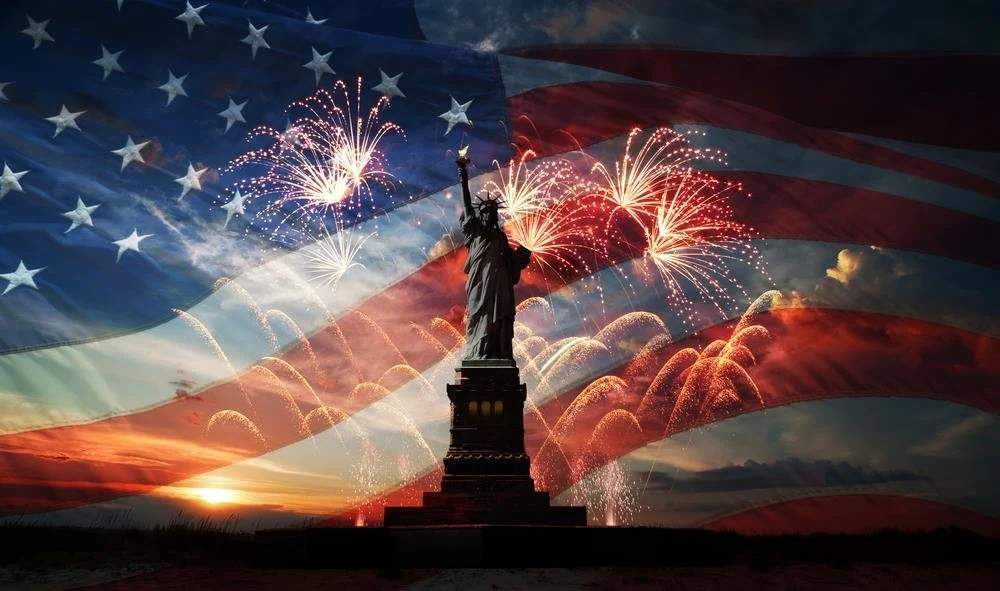
The famous Macy's Fourth of July Fireworks in New York attracts millions of television viewers annually and remains one of the world's largest fireworks displays.
The United States has grown from a population of approximately 2.5 million people in 1776 to more than 336 million today.
More than 340 million people are expected to travel across America during the Independence Day holiday period in recent years, making it one of the busiest travel weekends on the US calendar.
This year also carries extra significance as America celebrates its 250th anniversary since declaring independence, with nationwide commemorations planned throughout 2026.
A British perspective on an American celebration.
For British audiences, July 4 can sometimes be viewed simply as the day Britain "lost America". History is far more nuanced.
Many people living in Britain during the eighteenth century had little say over government policy themselves, and opinions about the war varied considerably. Some politicians believed compromise was possible, while others strongly opposed the conflict altogether.
Modern historians increasingly see the American Revolution as a turning point that reshaped not only the United States but Britain itself. The loss prompted military reform, encouraged new overseas ambitions and eventually contributed to Britain's growing industrial strength during the nineteenth century.
For cities such as Newcastle, whose fortunes became increasingly tied to heavy industry and international trade, those wider global changes helped shape the economy that would define the North East for generations.
Why July 4 still matters in Britain today.
Although fireworks, parades and barbecues dominate modern Independence Day celebrations, the anniversary also reminds us how closely British and American history remains connected.
Whether through shared language, culture, business, education or tourism, the relationship between Britain and the United States continues to evolve.
From Newcastle to New York, nearly two and a half centuries of shared history have transformed former rivals into close allies. Looking back at July 4 offers an opportunity to appreciate not only how nations change, but how events thousands of miles away can leave a lasting mark on communities here in the North East.
Newcastle History
July 4th - The British Side Of America's Birthday
Advertisement




Comments (0)
You must be logged in to post comments.
Don't have an account? Register here
No comments yet. Be the first to share your thoughts!