
In the days when Britain's naval power depended on great fleets of sailing ships, the navy faced a constant struggle to find enough men to crew its vessels. The solution, brutal and much feared, was the press gang, which seized men by force and carried them off to serve at sea. On Tyneside, with its seafaring population, the press gang was a dreaded presence, and its activities are a grim and fascinating part of the region's maritime history.
The Navy's Need for Men.
The sailing navy required enormous numbers of men to crew its ships, particularly in times of war, and finding enough willing recruits was a perpetual problem. Life in the navy was hard and dangerous, the pay was poor and the conditions harsh, and there were never enough volunteers to meet the need. To make up the shortfall, the authorities resorted to impressment, the practice of compelling men to serve in the navy whether they wished to or not. This was carried out by the press gang, a party of sailors who would seize suitable men and force them into naval service, supplying the manpower that the fleet so desperately needed.
The Work of the Press Gang.
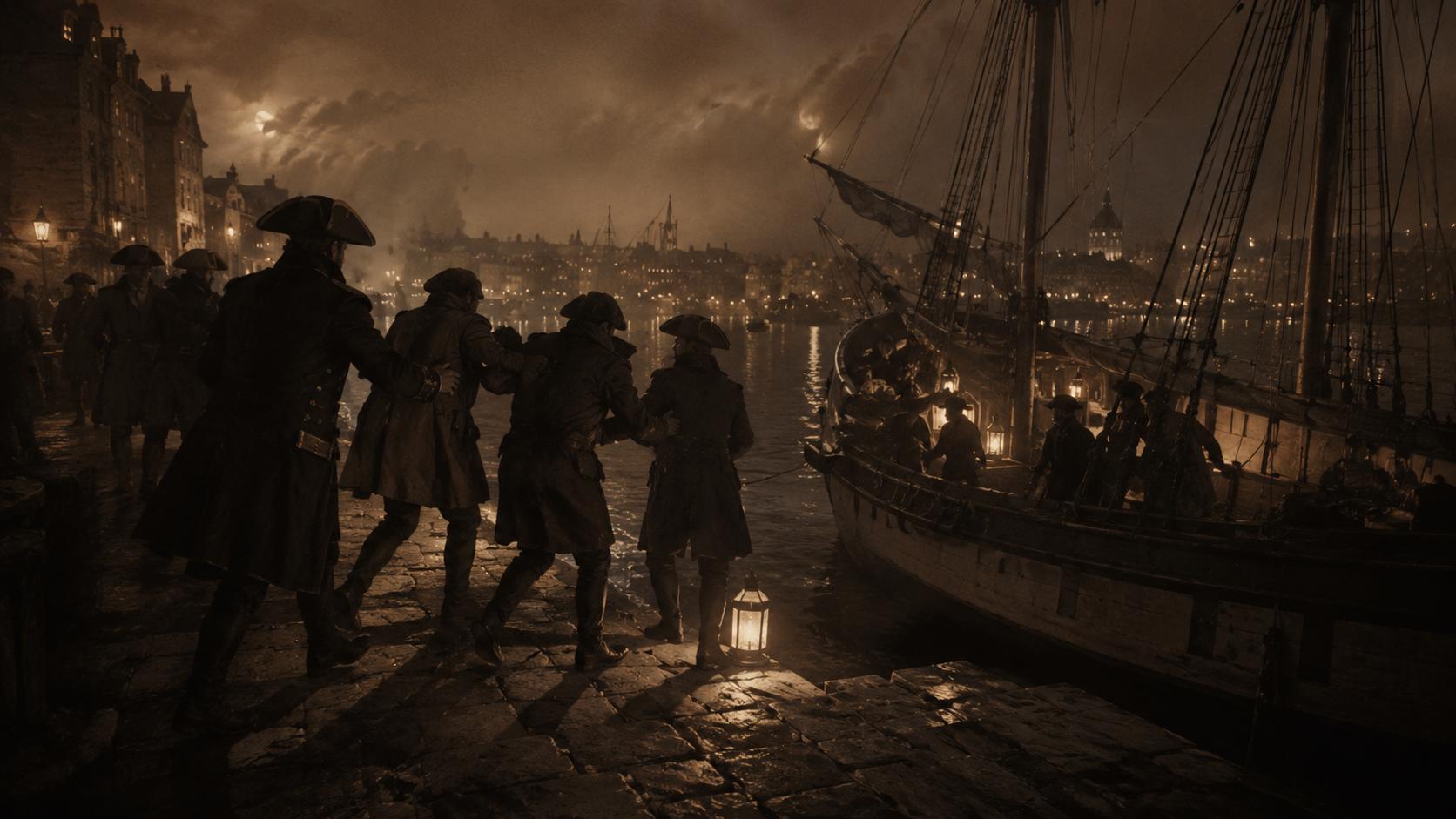
The press gang operated by seizing men and carrying them off to serve in the navy, often with little ceremony and against their will. The gang would descend on ports, taverns and other places where suitable men might be found, and seize those they judged fit for service at sea. Seafaring men were particularly sought after, for their experience made them valuable to the navy, but others might be taken as well. The men who were seized had little recourse, and they could find themselves carried off to a ship and a life at sea with terrifying suddenness. The press gang was a brutal instrument, and its methods were rough and often violent.
A Dreaded Presence on Tyneside.
Tyneside, with its large seafaring population and its busy ports, was a prime hunting ground for the press gang, and its activities were greatly feared in the region. The men of the river and the coast, with their seafaring skills, were exactly the kind of recruits the navy wanted, and the press gang was a constant threat to them. The arrival of the press gang could spread alarm through the riverside communities, as men sought to avoid being seized and carried off. The press gang was a dreaded presence on Tyneside, and the fear of impressment hung over the seafaring communities of the region.
Resistance and Evasion.
The men of Tyneside did not submit meekly to the press gang, and there was often determined resistance and evasion. Men sought to hide or to escape when the press gang was about, and communities might rally to protect their own from being seized. Encounters between the press gang and those it sought to take could turn violent, as men fought to avoid impressment and the communities resisted the seizure of their menfolk. This resistance reflected the deep unpopularity of the press gang and the lengths to which men would go to avoid being carried off to the navy. The struggle between the press gang and the communities it preyed upon was a bitter one.
The Impact on Families.
The press gang's seizure of men had a devastating impact on families and communities. When a man was taken, his family might be deprived of its breadwinner and left to fend for itself, often with little knowledge of his fate. The sudden loss of a husband, father or son to the press gang could plunge a family into hardship and distress, and the uncertainty about whether the man would ever return added to the anguish. The press gang thus inflicted suffering not only on the men it seized but on the families and communities they left behind, and its activities were a source of real hardship and grief.
A Controversial Practice.
The practice of impressment was controversial even in its own time, raising difficult questions about the liberty of the subject and the powers of the state. That men could be seized by force and compelled to serve against their will sat uneasily with notions of freedom, and the press gang was widely resented and condemned. Yet the navy's need for men was pressing, and the authorities continued to rely on impressment to crew the fleet. The tension between the demands of naval power and the liberty of the individual was never fully resolved, and the press gang remained a controversial and much-hated institution throughout its existence.
A Grim Maritime Heritage.
The press gang is a grim but fascinating part of the maritime heritage of Tyneside and the North East. The seizure of men by force to serve in the navy, the fear it spread through the seafaring communities, the resistance it provoked and the hardship it caused all combine to form a dark chapter in the region's history. Though the practice of impressment has long since passed into history, the memory of the press gang lingers in the maritime story of the region. It is a reminder of the harsh realities of the age of sail, and of the price that the seafaring communities of the North East sometimes paid for the nation's naval power.
Liberty and the Needs of the State.
The practice of impressment raised, in an acute form, a fundamental tension between the liberty of the individual and the needs of the state. On the one hand stood the principle of personal freedom, the idea that a man should not be seized by force and compelled to serve against his will, a principle deeply rooted in the traditions of the country.
On the other hand stood the pressing needs of the navy, on which the security and prosperity of the nation were thought to depend, and which could not be met by voluntary recruitment alone.
The press gang stood at the point where these two principles collided, embodying the willingness of the state to override individual liberty in the service of what it regarded as a greater necessity.
This tension was never comfortably resolved, and impressment remained controversial throughout its existence, criticised by those who valued liberty and defended by those who emphasised the needs of the navy.
The debate over impressment reflected wider questions about the proper balance between individual freedom and the demands of the state, questions that remain relevant in different forms to this day. The press gang was a stark reminder that the freedoms enjoyed by individuals could be overridden when the state judged its needs to be sufficiently pressing, and the resentment it provoked reflected the strength of the attachment to personal liberty.
The history of impressment thus illuminates not only the harsh realities of the age of sail but also the enduring tension between liberty and the needs of the state, a tension that lay at the heart of the controversy surrounding the press gang.
Join the conversation.
The press gang once seized men by force from the seafaring communities of Tyneside to crew the navy.
Did any of your seafaring ancestors have a brush with the dreaded press gang?
Newcastle History
Taken for the King: The Press Gang on Tyneside
A look at the press gang on Tyneside, the dreaded naval impressment that seized seafaring men by force, and the hardship it caused families.
Advertisement



Comments (0)
You must be logged in to post comments.
Don't have an account? Register here
No comments yet. Be the first to share your thoughts!