
For six glittering months in 1929, a corner of Newcastle was transformed into a dazzling city of palaces, pavilions and pleasure grounds. The North East Coast Exhibition was an enormous world's fair held in what is now Exhibition Park, and it drew millions of visitors to celebrate the industry, art and ambition of the region. Held just as economic clouds were gathering, it was a magnificent and defiant display of North East pride that is still remembered with great affection.
A Wembley of the North.
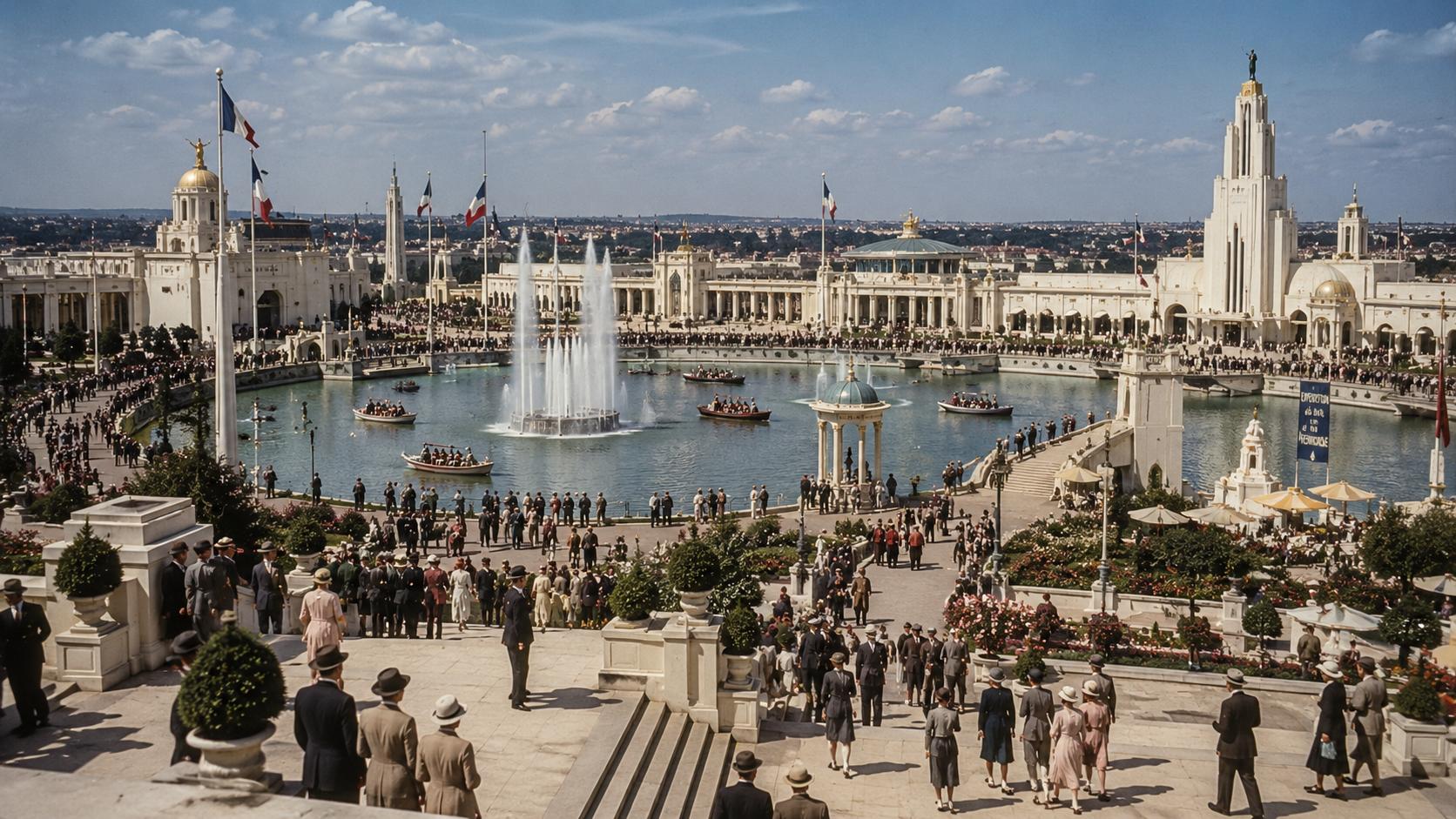
The exhibition was conceived as a grand showcase for the North East at a difficult moment in its history. Held five years after the famous British Empire Exhibition at Wembley, it was sometimes billed as a Wembley of the North, intended to celebrate and encourage the region's heavy industries and to attract investment and confidence. A huge site of around 125 acres was carved out of the Town Moor to host it, and a whole temporary city of grand buildings rose up where there had been open grassland. It was an undertaking of breathtaking ambition for the time.
Opened by a Prince.
The North East Coast Exhibition was formally opened on 14 May 1929 by the Prince of Wales, the future King Edward VIII, before huge and excited crowds. From that day until it closed in late October, the exhibition was a hive of activity, drawing visitors from across the region and far beyond. The opening was a moment of enormous civic pride, a chance for Newcastle and the wider North East to put themselves on display before the nation and the world. The presence of royalty underlined just how significant the event was considered to be.
Palaces of Industry and Art.
At the heart of the exhibition stood a series of grand pavilions designed in the fashionable Art Deco style of the day, the work of architects experienced in theatre and cinema design. There were palaces dedicated to engineering, where great firms and shipbuilders showed off their achievements, and to industries, where visitors marvelled at new inventions and modern conveniences. A Palace of Arts displayed paintings and sculpture, while ornamental lakes, fountains and gardens turned the whole site into a place of beauty as well as instruction. It was a feast for the eyes as much as a showcase of industrial might.
Spectacle and Controversy.
Like many such exhibitions of its era, the event was not only about industry but also about entertainment and spectacle, and it included an amusement park to thrill the crowds. It also featured, however, a so-called African village, in which people were brought to live on display for visitors to observe. Viewed from today, this kind of human exhibition is rightly seen as a deeply troubling and dehumanising practice, a stark reflection of the colonial attitudes of the period. Acknowledging this uncomfortable aspect honestly is an important part of understanding the exhibition and the world that produced it.
Four Million Visitors.
By any measure, the exhibition was an extraordinary popular success. Over the course of its six-month run, more than four million people passed through its gates, with tens of thousands attending on busy days and a vast crowd turning out on the very first day alone. For a region soon to be hit hard by the Great Depression, the exhibition offered a tremendous boost to morale, a reminder of the skill, energy and pride of the North East at a moment when such reassurance was badly needed. It brought communities together and left a powerful impression on all who attended.
What Survives Today.
When the exhibition closed, most of its grand temporary buildings were dismantled, and Exhibition Park gradually returned to its role as a public open space. One major building survived, however: the former Palace of Arts, which still stands in the park today and in recent times has found new life as a popular brewery and events venue. Along with old photographs, postcards and film, it serves as a tangible link to that remarkable summer when Newcastle hosted a world's fair. The North East Coast Exhibition of 1929 remains a proud and fascinating chapter in the story of the city and its people.
A Glimpse of a Vanished World.
Looking back at the North East Coast Exhibition today offers a fascinating glimpse into the hopes and attitudes of a vanished world. It captured a region at a particular moment, proud of its mighty industries of coal, shipbuilding and engineering, and determined to show off its achievements to the world even as harder times loomed. The optimism and confidence on display would soon be tested severely by the Great Depression, which hit the industrial North East with particular ferocity. Yet for that one bright summer, millions of people were able to set aside their worries and marvel at the spectacle, the inventions and the sheer ambition of it all. The exhibition also reflected, in its more troubling features, the unquestioned imperial assumptions of the age, which makes it a valuable subject for honest reflection as well as celebration. For local historians, the surviving photographs, films and the Palace of Arts itself provide a rich window onto a defining episode in the city's story, and a powerful example of a community coming together to celebrate itself.
Have your say.
Let us know what you think in the comments, as we read every single one, and tell us if your own family ever passed down memories of the great exhibition.
Can you imagine four million people visiting a world's fair right here in Newcastle?
Newcastle History
The 1929 North East Coast Exhibition
For six months in 1929, over four million people flocked to Exhibition Park for the North East Coast Exhibition, a dazzling showcase of the region's industry, art and ambition. Here is the story.
Advertisement

Comments (0)
You must be logged in to post comments.
Don't have an account? Register here
No comments yet. Be the first to share your thoughts!