
When people think of the industries that made Tyneside great, they usually picture coal, ships and heavy engineering. Yet for centuries the region was also one of the most important glassmaking centres in the entire world. From delicate hand-painted drinking glasses to vast quantities of everyday pressed glassware, the furnaces of the Tyne produced glass that travelled across the globe, and the story of this glittering industry is a fascinating and often overlooked part of the region's heritage.
A River Made for Glass.
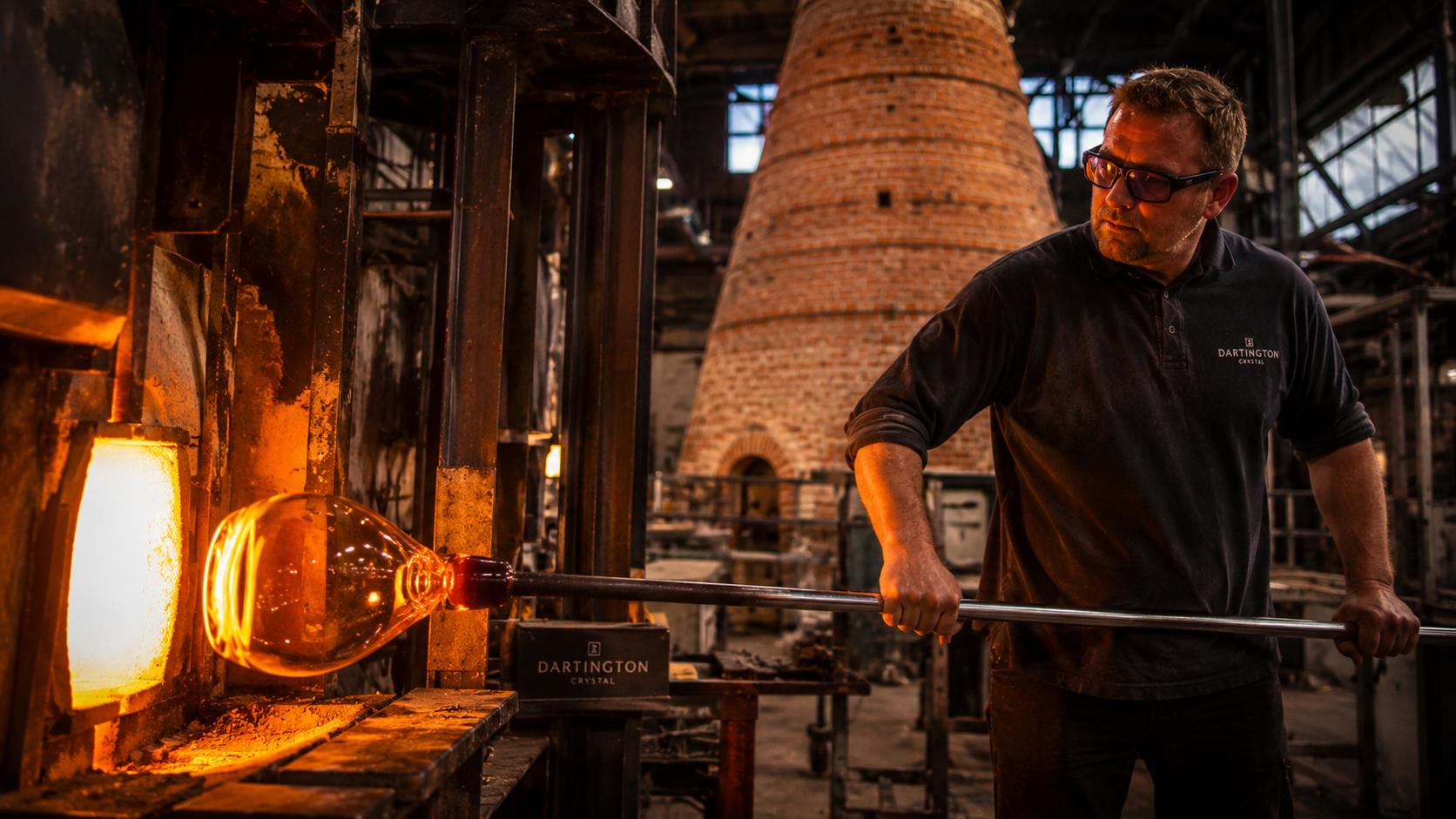
Glassmaking arrived on the Tyne many centuries ago and flourished thanks to a perfect combination of local advantages. The making of glass requires intense heat, and intense heat requires fuel, and the Tyne sat at the heart of one of the greatest coalfields on earth. With cheap and abundant coal close at hand, along with the other raw materials and a river to carry the finished products away to market, Tyneside was ideally placed to become a glassmaking powerhouse. Over the years, glasshouses sprang up along both banks of the river, and the industry grew into one of the major employers of the region.
Why Tyneside.
The success of glass on the Tyne was about more than just cheap fuel. The river gave easy access to ports and shipping, allowing glassware to be exported far and wide, while the region's growing population and industries provided a ready market for everything from window glass to bottles and tableware. Generations of skilled glassmakers passed their craft down through families and apprenticeships, building up a deep reservoir of expertise. By the eighteenth and nineteenth centuries, the area was producing an extraordinary range of glass, and Tyneside names became known to collectors and customers around the world.
The Beilby Family.
Among the most celebrated of all Tyneside glassmakers were the Beilby family, who worked in Newcastle in the eighteenth century. They became famous for their exquisite enamelled and decorated glassware, painting delicate designs onto fine drinking glasses with remarkable skill and artistry. Beilby glass is now treasured by collectors and museums, and fine examples can be admired in the city's own Laing Art Gallery, a reminder that Tyneside glass could be a genuine work of art as well as a useful object. The reputation of the Beilbys helped cement Newcastle's standing as a centre of high-quality glass.
The Lemington Cone.
One of the most striking survivals of the region's glassmaking past is the great glass cone at Lemington, to the west of Newcastle. These towering brick cones once housed the furnaces and provided the draught needed to reach the searing temperatures glassmaking demanded, and they were a dramatic feature of the industrial landscape. Many were eventually demolished as the industry changed, but the Lemington cone endured and stands today as one of only a handful of such structures left in the whole country. It is a powerful and evocative monument to an industry that once roared along the banks of the Tyne.
Sowerby and the Age of Pressed Glass.
In the Victorian era, glassmaking on Tyneside reached an industrial scale. Firms such as Sowerby, based across the river in Gateshead, became enormous producers of pressed glass, a technique that allowed decorative glassware to be made quickly and affordably for a mass market. At its height, Sowerby's works was one of the largest pressed-glass manufacturers in the world, turning out vast quantities of ornamental and household glass that found its way into homes across Britain and beyond. This was glass not just for the wealthy but for ordinary people, and it brought a touch of decoration into countless Victorian households.
A Legacy Still Shining.
Like so many of the region's great industries, large-scale glassmaking on the Tyne eventually declined as the world changed and competition grew. Yet the legacy of those centuries of glassmaking endures in many forms. The surviving Lemington cone, the treasured Beilby and Sowerby pieces in museum collections and the skills passed down through generations all keep the memory alive. The next time you admire a piece of fine old glass, there is a fair chance it began its life in the heat of a furnace beside the River Tyne, part of a glittering industry that helped make the North East famous far beyond its own shores.
Glass and the Wider Economy.
The glass industry did not exist in isolation; it was deeply bound up with the wider industrial life of the region. Glassmaking drew on the same abundant coal that fired the region's furnaces and foundries, and it supported a host of related trades, from the makers of bottles for the local breweries to the suppliers of window glass for the region's rapidly growing towns. Skilled glassworkers were valued craftsmen, and their expertise was passed carefully from one generation to the next, creating dynasties of glassmaking families. The products of the Tyne travelled out along the same shipping routes that carried the region's coal, ships and engineering, reaching markets across Britain and around the world. In this way, glass took its place alongside the more famous industries as part of the great web of enterprise that made the North East one of the workshops of the world. To overlook it is to miss an important strand of the story, for the gleam of Tyneside glass once brightened tables, windows and cabinets in homes far beyond the banks of the river that produced it.
Share your thoughts.
We would love to hear your memories and opinions, so leave a comment below, especially if you have any old Tyneside glass treasured in your family.
Did you know that Tyneside was once one of the greatest glassmaking regions in the world?
Newcastle History
The Glassmaking Heritage of Tyneside
For centuries Tyneside was one of the world's great glassmaking centres, from exquisite Beilby enamelled glass to the towering Lemington cone and Sowerby's vast pressed-glass works. A glittering, often forgotten industry.
Advertisement




Comments (0)
You must be logged in to post comments.
Don't have an account? Register here
No comments yet. Be the first to share your thoughts!