
Off the wild and beautiful Northumberland coast lies Holy Island, a small tidal island steeped in history and accessible only when the sea allows. It is here, in a place of ancient monasteries and timeless landscapes, that one of the North East's most distinctive drinks is made. Lindisfarne Mead, a honeyed drink rooted in the island's monastic past, has become famous far beyond the region's shores.
The Island of Lindisfarne.
Holy Island, also known as Lindisfarne, is one of the most evocative places in the whole of England. Cut off from the mainland twice a day by the rising tide, which covers the causeway and leaves the island isolated, it has a unique, almost otherworldly atmosphere. Lindisfarne holds an extraordinary place in English history as an early centre of Christianity, where a monastery was founded in the seventh century and where the magnificent Lindisfarne Gospels were later created. It is against this rich and ancient backdrop that the tradition of mead-making on the island draws its inspiration.
What Is Mead.
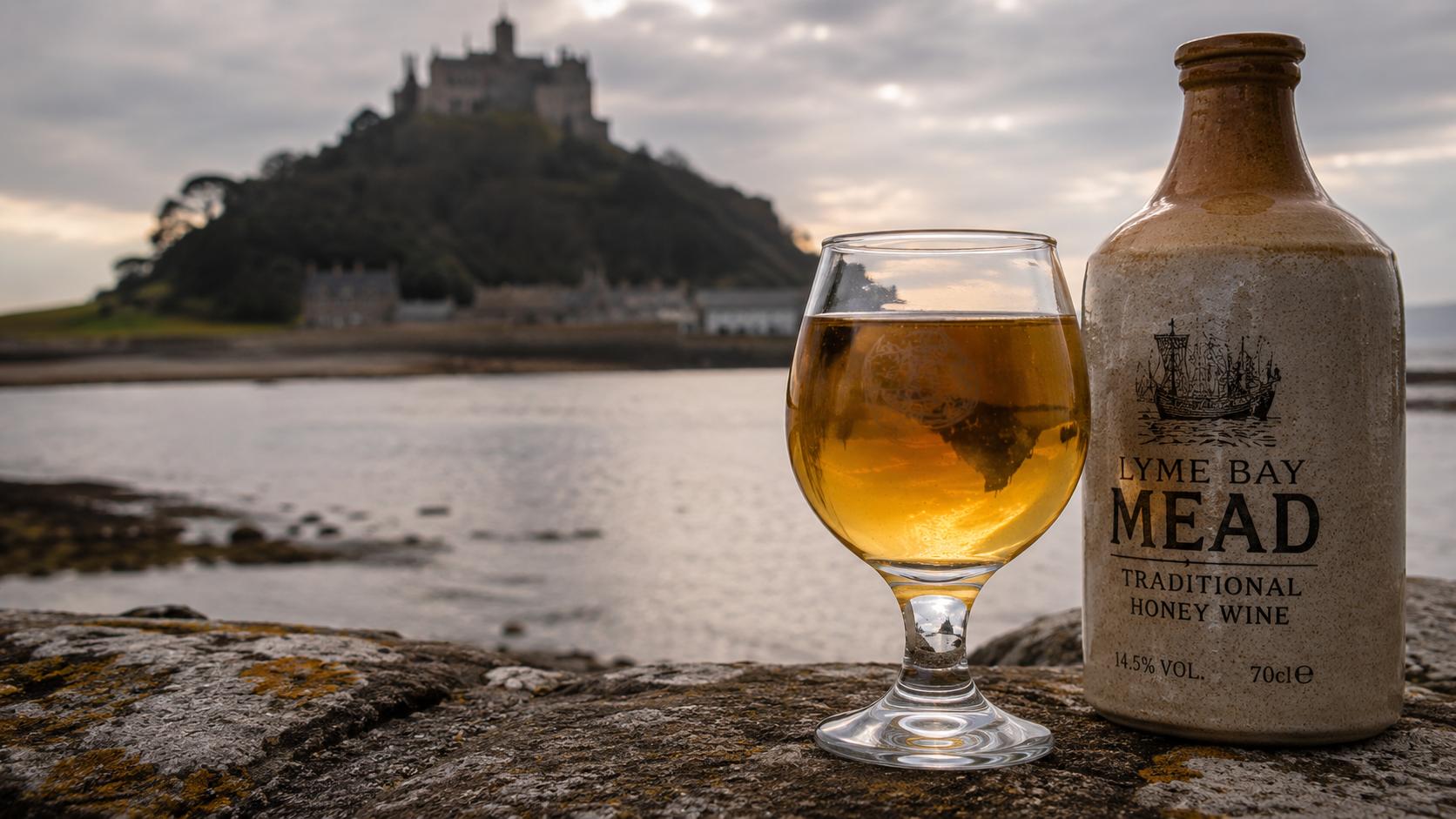
Mead is widely regarded as one of the oldest alcoholic drinks known to humankind, made in its most basic form by fermenting honey with water. Often poetically described as the nectar of the gods, it has been enjoyed for thousands of years, long predating many other drinks. In the medieval period, the monks of Lindisfarne, like religious communities elsewhere, are believed to have made and drunk mead, and it is this monastic association that gives the modern Lindisfarne product its sense of deep historical connection. The drink ties the present day back to the island's distant past in a very tangible way.
A Modern Revival.
Although mead became something of a rarity in Britain after the medieval era, it enjoyed a revival on Holy Island in the twentieth century. St Aidan's Winery, named in honour of the saint who founded the island's monastery, was established to produce Lindisfarne Mead, reviving the tradition and drawing directly on the island's heritage for inspiration. The winery has been welcoming visitors to its showroom since the late 1960s, offering free samples and the chance to take a bottle home. It has grown into a much-loved attraction, drawing large numbers of visitors each year and helping to keep the ancient craft of mead-making alive.
More Than Simple Honey Wine.
Lindisfarne Mead is, in fact, a rather special and distinctive drink. Rather than being a plain honey wine, it is a fortified drink made by blending honey with fermented grape juice, herbs and the pure natural water drawn from the island's own well, then strengthening it with fine spirits. Because it includes grapes as well as honey, it is technically a type of mead known as a pyment. The result is a rich, sweet, golden drink that can be enjoyed in a variety of ways: served chilled as an aperitif, sipped at room temperature, or even gently warmed, depending on the season and personal taste. Its versatility is part of its charm.
A Drink Steeped in Romance.
Part of the appeal of Lindisfarne Mead lies in the romance and folklore that surround mead itself. The drink has long been associated with celebration, fertility and good fortune, and there is a charming old tradition linking mead to the origin of the word honeymoon, from the custom of newlyweds drinking it for a month after their wedding. Combined with the mystical, history-laden setting of Holy Island, these associations give Lindisfarne Mead an atmosphere quite unlike that of any ordinary drink. It feels like something out of an older, more enchanted world, which is precisely the appeal.
A Taste of Northumberland Heritage.
Today, Lindisfarne Mead is enjoyed not only across Britain but around the world, with bottles exported to international markets and millions sold over the years. Yet it remains firmly rooted in its remarkable island home, made in the same special place that gives it its name and its story. For visitors to Holy Island, a trip to the winery to sample the mead is an essential part of the experience, a way of tasting the island's history alongside its scenery and its sense of peace.
Lindisfarne Mead is far more than just a drink; it is a glass of Northumberland heritage, a link to the monks and the ancient traditions of one of England's most extraordinary places. To sip it is to taste a little of the magic of Holy Island itself.
Crossing the Tides to the Winery.
Part of the magic of Lindisfarne Mead is bound up with the experience of reaching the place where it is made. Holy Island is accessible only across a causeway that is covered by the sea twice a day, so any visit must be carefully timed around the tides, adding a sense of adventure and occasion to the journey. Cross at the wrong moment and you risk being cut off, a quirk of the island that gives it much of its romance and mystery. Those who do make it across find a peaceful, atmospheric place of ancient ruins, wide skies and quiet beauty, with the winery and its craft shop offering a warm welcome. Sampling the mead in its island home, surrounded by the history that inspired it, is an experience quite unlike buying it from a shelf. It connects the drink to its setting in a powerful way, making the tasting feel like part of a larger story. For many visitors, that sense of place is exactly what makes Lindisfarne Mead so memorable.
Have your say.
Let us know what you think in the comments, as we read every single one, and tell us whether you have ever sampled Lindisfarne Mead on Holy Island.
Would you drink your Lindisfarne Mead chilled, at room temperature, or warmed?
Food & Drink News
Lindisfarne Mead: The Drink of Holy Island
The story of Lindisfarne Mead, the honeyed drink made at St Aidan's Winery on Holy Island, inspired by the island's ancient monastic past.
Advertisement


Comments (0)
You must be logged in to post comments.
Don't have an account? Register here
No comments yet. Be the first to share your thoughts!