
Few foods are as closely tied to the North East of England as pease pudding. This thick, smooth, savoury spread made from split peas is a cornerstone of the region's traditional cooking, beloved across Tyneside, Northumberland and County Durham. Mild, comforting and endlessly useful, it is the kind of humble dish that quietly defines a place, and for generations of Geordies it has been a taste of home.
An Old English Dish.
Pease pudding has a very long history, stretching back centuries in English cooking. It is made by simmering dried split yellow peas, traditionally in a cloth or bag, often alongside a piece of boiling meat such as a ham hock or bacon joint, until they break down into a thick, smooth paste. The result is a dense, savoury pudding with a gentle, earthy flavour and a satisfying, almost buttery texture. While versions of the dish were once eaten widely across the country, it is in the North East that pease pudding has truly endured and become woven into everyday life.
The Famous Nursery Rhyme.
Most people in Britain know pease pudding without realising it, thanks to the old nursery rhyme that begins with the line about pease pudding hot and pease pudding cold. The verse, which goes on to mention pease pudding in the pot nine days old, hints at one of the dish's great virtues: it keeps well and can be enjoyed hot or cold, fresh or after several days. That practicality made it an invaluable staple in households where food could not be wasted, and it explains why the dish became such a reliable part of the regional diet. The rhyme has kept the name alive even in places where the dish itself has faded.
The Perfect Partner to Ham.
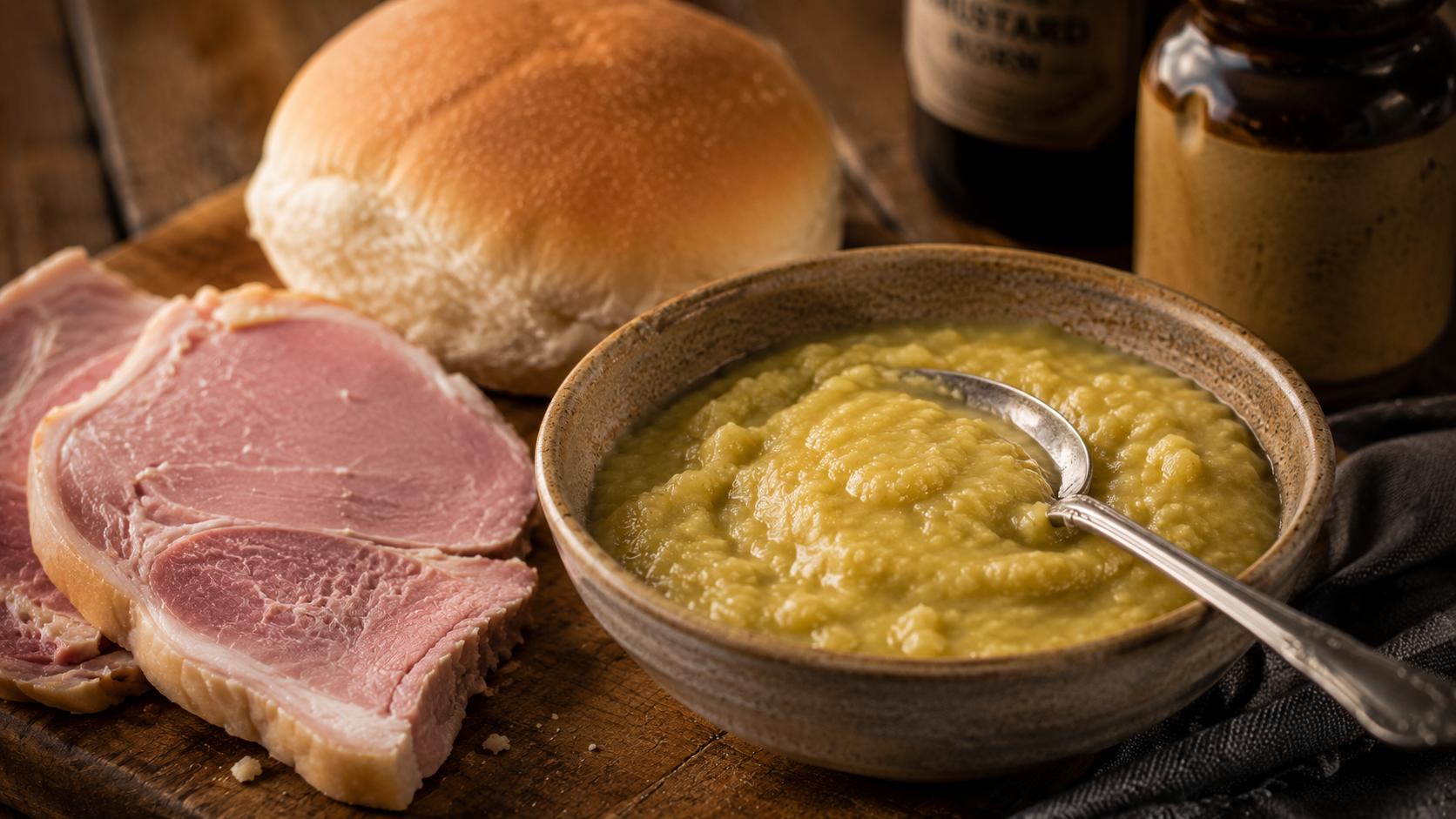
In the North East, pease pudding is most famous as the inseparable companion of ham. The classic combination of ham and pease pudding, piled into a soft bread bun or, better still, a stottie cake, is one of the region's signature sandwiches, sold at bakeries, butchers and sandwich shops across the area. The smooth, mild pudding balances the salty richness of the ham perfectly, and the two together make a lunch that is filling, comforting and unmistakably local. For many Geordies, that ham and pease pudding stottie is the very definition of a proper bite to eat.
A Thrifty and Nourishing Food.
Like many of the North East's best-loved foods, pease pudding owes its popularity in part to its thrift. Dried peas were cheap, filling and nourishing, and cooking them alongside a piece of meat made the most of limited resources, feeding hard-working families through long shifts in the pits, the shipyards and the factories. The dish provided valuable protein and energy at very little cost, which made it a sensible and welcome part of the working-class table. That heritage of making something hearty and satisfying from simple, affordable ingredients is part of what makes pease pudding feel so genuinely of the region.
How It Is Enjoyed Today.
Pease pudding remains widely available across the North East, sold in tubs at supermarkets, butchers and delicatessens, and still made at home by those who keep the tradition going. It is spread thickly in sandwiches, served as a side with boiled ham or gammon, dolloped alongside saveloys and other cooked meats, or simply enjoyed on its own. Some modern cooks have rediscovered it as a tasty, naturally high-protein and meat-free option in its own right, giving an ancient dish a fresh lease of life. However it is served, it continues to bring a touch of comforting tradition to the table.
A Taste of Home.
For people from the North East, pease pudding is far more than just food. It carries powerful associations of childhood, family meals and the everyday rhythms of life in the region, a simple pleasure that connects the generations. Those who move away often find that a tub of pease pudding, or a ham and pease pudding stottie, is one of the things they crave most, a small but deeply meaningful taste of home. It is proof that the most ordinary dishes can hold the strongest sense of belonging.
In a world of ever-changing food fashions, pease pudding carries on much as it always has, quietly nourishing and comforting the people of the North East. It is a humble dish with a proud heritage, and one that the region continues to cherish.
Pease Pudding Beyond the Sandwich.
While the ham and pease pudding sandwich is its most famous outing, pease pudding is far more versatile than that single role suggests. It makes an excellent side dish alongside boiled bacon, gammon or sausages, its smooth, mild texture balancing richer, saltier flavours beautifully. It can be spread on toast, dolloped onto a plate of cooked meats, or simply eaten warm with a knob of butter stirred through. In recent years, food-conscious cooks have rediscovered pease pudding as a naturally high-protein, meat-free option that fits well with modern eating habits, giving this ancient dish a fresh relevance. Some restaurants and delis have begun to feature it proudly as a regional speciality, introducing it to a new audience. For all these modern twists, though, pease pudding remains at its best in its simplest forms, enjoyed the way it has been for generations. It is a humble food that rewards those who take the time to appreciate it, and its quiet revival is a heartening sign that good traditions can endure.
Join the conversation.
Tell us your own stories and views in the comments section, especially whether you are firmly in the ham and pease pudding stottie camp.
Do you prefer your pease pudding hot or cold?
Food & Drink News
Pease Pudding: A North East Tradition
The story of pease pudding, the thick savoury split-pea spread that is a cornerstone of North East cooking and the perfect partner to ham.
Advertisement

Comments (0)
You must be logged in to post comments.
Don't have an account? Register here
No comments yet. Be the first to share your thoughts!