
Few city residents provoke stronger feelings than the gull. To some they are simply part of the soundtrack of a coastal region, wheeling above the Quayside on a summer evening. To others they are a nuisance that starts screaming at four in the morning.
What is beyond dispute is that gulls have become firmly established well inland, nesting on rooftops across Newcastle and Gateshead rather than the cliffs their ancestors used. That shift has happened within living memory.
Here is why urban gulls have thrived, what the law actually says about them, and what genuinely helps reduce conflict.
They are not really one species.
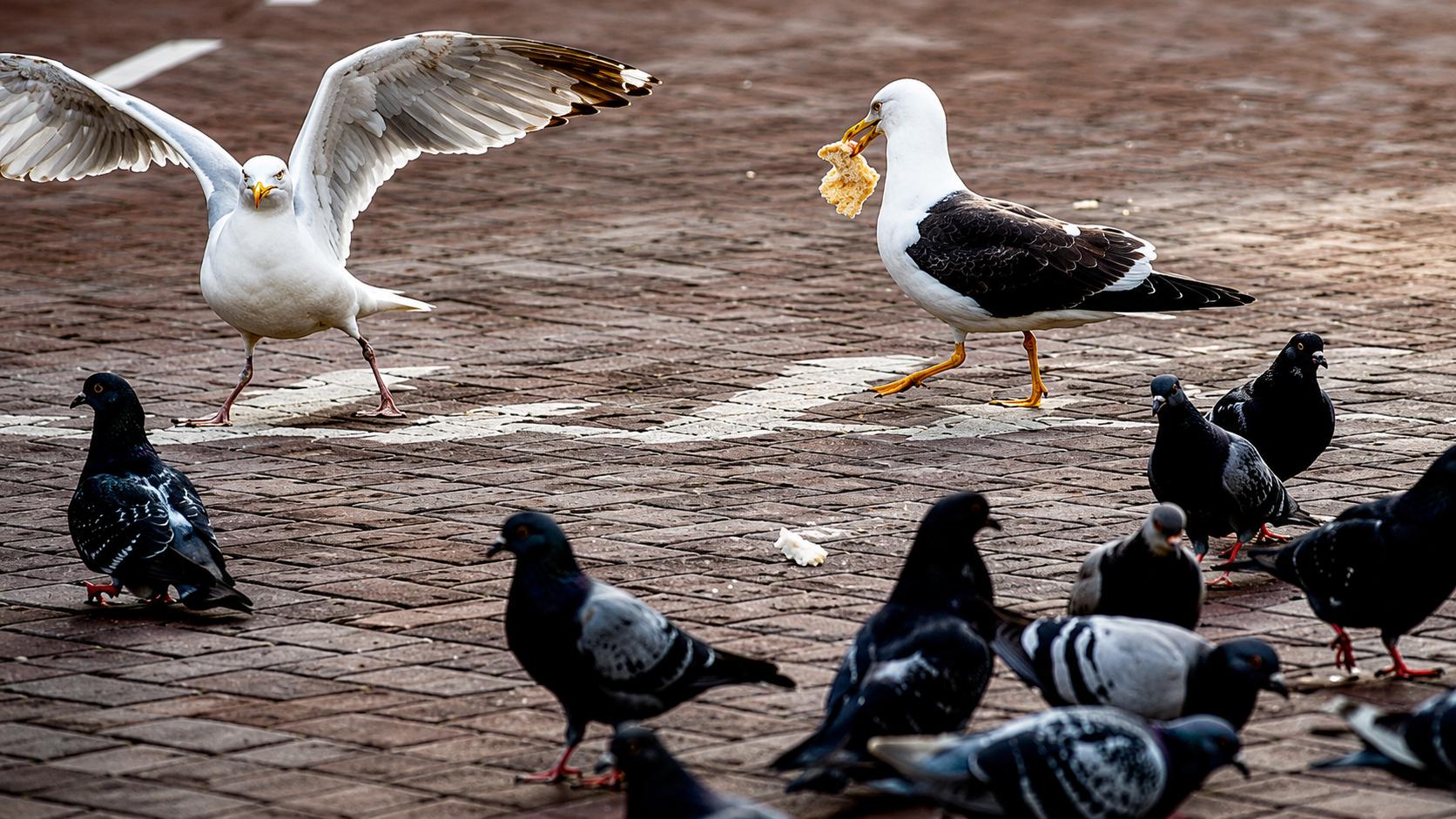
The word seagull covers several different birds, and the distinction matters. In the North East, the two most commonly seen in urban areas are the herring gull and the lesser black-backed gull.
Herring gulls are the large, pale grey birds with pink legs and a red spot on the bill, and they are the ones responsible for the loud, laughing call most people associate with the seaside. Lesser black-backed gulls are darker across the back with yellow legs.
Smaller species, including black-headed gulls, are common on playing fields and near water but rarely feature in complaints about rooftop nesting. Getting the identification right matters, because legal protections and behaviour differ.
Their conservation status surprises people.
Here is the fact that tends to stop conversations. Despite appearing abundant in towns and cities, the herring gull is a species of serious conservation concern in the United Kingdom, having declined substantially at its natural coastal colonies.
The population visible on rooftops represents a redistribution as much as an increase. Birds have moved from cliffs and islands into urban areas where predators are scarce, warmth is plentiful and food is easy to find.
That combination makes cities genuinely attractive nesting habitat. A flat roof with a parapet closely resembles a cliff ledge from a gull's perspective, with the added advantage that no fox or large predator can reach it.
The law protects them and their nests.
All wild birds in Britain, including gulls, are protected under the Wildlife and Countryside Act 1981. It is an offence to intentionally kill or injure them, or to damage or destroy an active nest or its eggs.
That protection is why property owners cannot simply remove a nest once eggs have been laid. Action must be taken outside the breeding season, or under a licence issued by the appropriate authority where specific criteria are met, typically relating to public health and safety.
Licensing has tightened considerably in recent years precisely because of the declining conservation status of the species involved. Anyone told that a nest can be cleared on demand during spring or summer should be sceptical.
Nesting season explains the aggression.
Gulls become noticeably bolder between roughly late spring and midsummer. This is not random hostility, it is parental defence.
Once chicks hatch, adults will dive at anyone approaching the nest site, sometimes making contact. Chicks that fall or flutter from roofs before they can fly properly often end up at ground level, with parents guarding them fiercely from above.
The behaviour fades once young birds fledge. Understanding it as a temporary, seasonal response rather than permanent aggression makes those weeks considerably easier to tolerate.
Food is what keeps numbers high.
Every serious study of urban gulls arrives at the same conclusion. Availability of food drives population density more than anything else.
Discarded takeaway waste, overflowing bins, food dropped in city centre streets and deliberate feeding all sustain far more birds than an area could otherwise support. A single reliable food source can support many pairs.
Deliberate feeding is particularly counterproductive. It teaches gulls to associate people with food, which is precisely how a bird ends up snatching a sandwich from someone's hand on Northumberland Street.
Proofing works better than reacting.
For property owners, prevention outside the breeding season is far more effective than attempting to react during it. Options include netting over roof voids and light wells, wire or spike systems on parapets and ledges, and post and wire arrangements that make landing awkward.
Any such work should be installed properly by a competent contractor. Poorly fitted netting can trap birds, which creates both a welfare problem and a legal one.
Bin management is the other half of the equation. Secure lids, prompt collection of trade waste and covered communal storage remove the incentive that draws birds to a building in the first place.
Coexistence is realistic.
Gulls are intelligent, adaptable and long lived, with individuals capable of reaching considerable age. They are also genuinely impressive fliers, something easier to appreciate from a bench on the Quayside than beneath a nest at dawn.
Complete removal from a city the size of Newcastle is neither legally possible nor ecologically desirable. Reducing conflict is a realistic goal, and it rests mainly on managing food waste and proofing buildings sensibly.
For the few weeks each year when the noise peaks, earplugs and a certain grim humour remain the most widely used solution across the region.
Share your thoughts.
Do gulls bother you where you live, or are they just part of the scenery?
Local News
Living With Newcastle's Urban Seagull Population
Gulls divide opinion across Newcastle like few other city residents, but the birds behind the noise are more legally protected than most people expect.
Advertisement




Comments (0)
You must be logged in to post comments.
Don't have an account? Register here
No comments yet. Be the first to share your thoughts!