
As millions of people across the UK enjoy the arrival of summer, weather experts are warning that the country could face further heatwaves in the coming months following an unprecedented spell of spring heat.
The Met Office has indicated that temperatures are likely to remain above average throughout June, July and August, raising the prospect of additional heatwaves and periods of unusually warm weather. The forecast comes just days after Britain recorded its hottest May temperature on record, with thermometers reaching 35.1C at Kew Gardens in London.
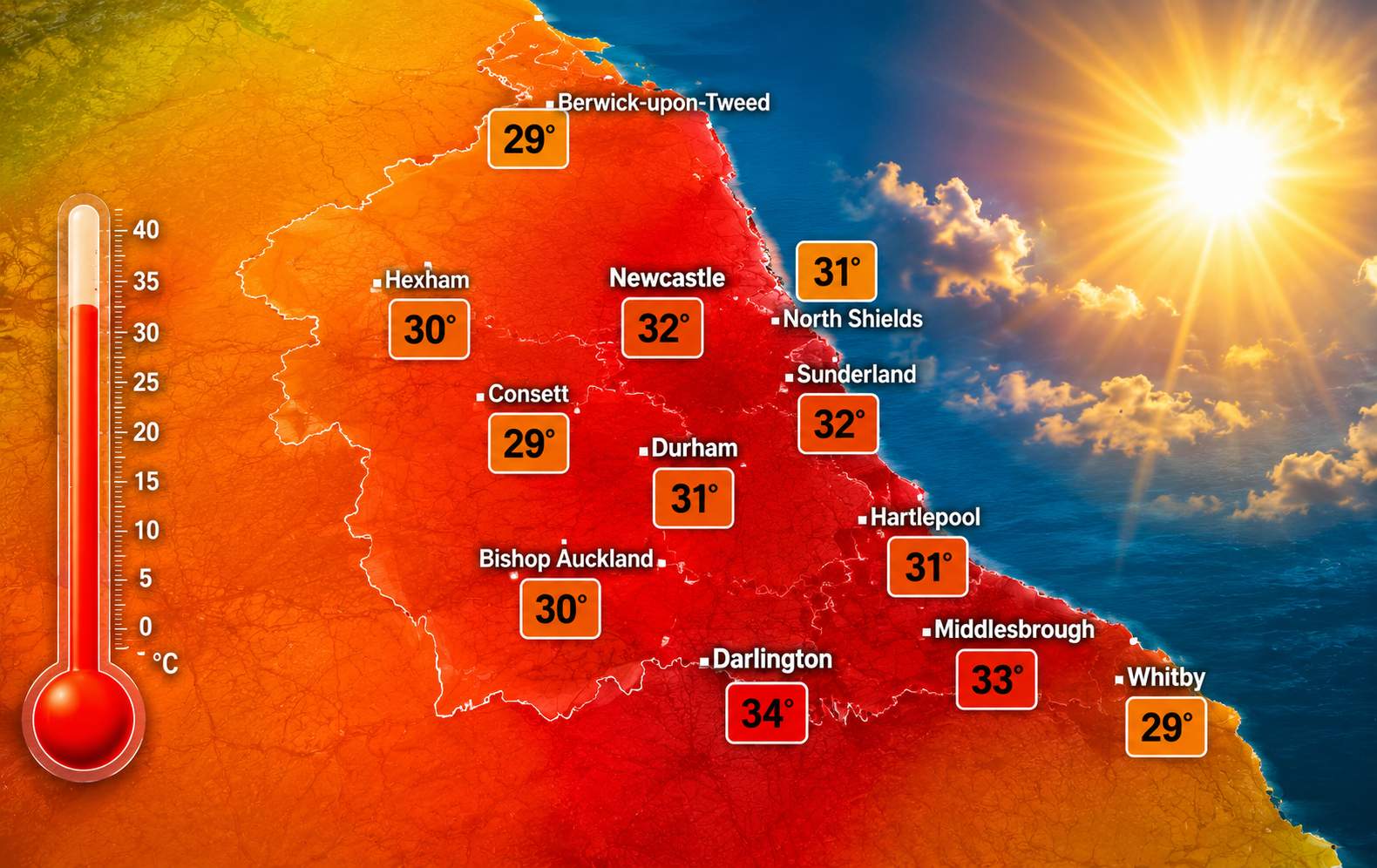
For Newcastle and the wider North East, the outlook suggests residents may need to prepare for a summer that could be significantly warmer than many have come to expect.
Why Forecasters Believe More Heat Is On The Way.
The Met Office's latest seasonal outlook points towards a greater likelihood of warmer-than-average conditions across much of the UK during meteorological summer, which runs from June through August.
Forecasters say there is an increased risk of heatwaves developing, with several periods of intense heat possible during the season. While long-range weather forecasting can never predict exact temperatures months in advance, experts are increasingly confident that the broader climate signal favours warmer conditions.
The warning follows a remarkable spring that shattered records across the country. The May heatwave brought temperatures more commonly associated with southern Europe, triggering heat-health alerts and prompting health officials to advise vulnerable people to take precautions.
Meteorologists say the combination of a warming climate and naturally occurring weather patterns is increasing the likelihood of these extreme events occurring more frequently.
Newcastle Could Experience More Hot Spells.
Although the highest temperatures are typically recorded in southern England, Newcastle and surrounding areas have not escaped recent warming trends.
The North East has experienced several notable heatwaves in recent years, with temperatures regularly climbing into the high twenties and low thirties during prolonged periods of high pressure.
If current forecasts prove accurate, Newcastle residents could see several bursts of hot weather during the summer. While many people welcome sunshine, prolonged heat can place pressure on health services, public transport networks and water supplies.
Businesses in the city centre, tourism operators along the Northumberland coast and hospitality venues across Tyneside may benefit from increased visitor numbers during warmer periods. However, experts also warn that extreme heat can create challenges for infrastructure and vulnerable residents.
The UK's Climate Is Changing.
One of the most significant findings from recent climate research is how dramatically British summers have changed over recent decades.
According to the Met Office, the UK's five warmest summers on record have all occurred since 2003. Summer 2025 became the warmest UK summer ever recorded, with an average temperature of 16.1C, overtaking previous record holders including 2018, 2006 and the famous summer of 1976.
Climate data also shows the UK is warming by around 0.25C per decade. Scientists say this long-term trend means that hot weather events which were once considered unusual are becoming increasingly common.
The Met Office has further warned that hotter-than-average summers are now around twice as likely compared with climate conditions observed during the late twentieth century.
What El Niño Means For UK Weather.
One factor attracting growing attention among climate scientists is the possible return of El Niño.
El Niño is a naturally occurring climate pattern that develops when sea surface temperatures in parts of the Pacific Ocean become unusually warm. Although it occurs thousands of miles away from Britain, it can influence weather patterns across the globe.
The World Meteorological Organization recently warned there is an 80 percent chance of El Niño developing before September 2026 and a 90 percent chance before November.
Globally, El Niño years tend to be warmer than average because additional heat is released from the Pacific Ocean into the atmosphere. Scientists say the previous El Niño event helped contribute to record global temperatures and played a role in making 2024 the hottest year ever recorded worldwide.
For the UK, the relationship is more complicated. El Niño does not automatically guarantee a hotter British summer, but it can influence atmospheric patterns that affect temperatures, rainfall and storm tracks. Experts stress that it shifts the odds rather than determining the outcome.
How La Niña Differs From El Niño.
La Niña is effectively the opposite phase of the same climate cycle.
During La Niña, sea surface temperatures in the tropical Pacific become cooler than average. Globally, La Niña years are often slightly cooler than El Niño years, although modern La Niña years are still warmer than many El Niño years from previous decades because of ongoing climate change.
Research from the Met Office shows both El Niño and La Niña can influence UK weather patterns, particularly during winter. Some studies suggest El Niño can increase the likelihood of colder UK winters, while La Niña can affect rainfall patterns and storm activity.
However, experts caution that neither event acts alone. The UK's weather is also influenced by the jet stream, Atlantic Ocean temperatures, high-pressure systems and other climate drivers.
Heatwaves Are Becoming More Common.
Statistics increasingly show that extreme heat is no longer a rare occurrence in Britain.
The UK recorded its highest-ever temperature of 40.3C during July 2022, a figure that would have seemed almost unimaginable a generation ago. Scientists now believe temperatures even higher than this are possible in future decades if warming trends continue.
Research commissioned by the Met Office suggests heatwaves that once lasted a week or two could eventually persist for a month or longer under current climate conditions. Some modelling even indicates that two-thirds of summer days could exceed key heatwave thresholds in parts of England.
Meanwhile, the Royal Meteorological Society reports that extreme weather events are now expected to occur every year as a feature of the UK's changing climate.
What This Could Mean For The North East.
For Newcastle, Sunderland, Gateshead and surrounding communities, hotter summers could bring both opportunities and challenges.
Tourism businesses may benefit from more visitors seeking seaside destinations such as Tynemouth, Whitley Bay and the Northumberland coastline. Outdoor events, festivals and hospitality venues could also see increased demand during prolonged warm spells.
However, health professionals warn that older people, young children and those with existing medical conditions face greater risks during periods of extreme heat. Heat exhaustion and heatstroke can develop quickly when temperatures remain high for several days.
Infrastructure may also face additional strain. Rail services, roads and water resources are all vulnerable during prolonged periods of exceptionally warm weather.
Why Experts Are Watching This Summer Closely.
Meteorologists are monitoring several factors that could shape the months ahead, including Atlantic sea temperatures, developing El Niño conditions and ongoing climate trends.
While nobody can say with certainty exactly how hot this summer will become, the evidence increasingly points towards a greater likelihood of above-average temperatures and more frequent heat spikes.
For Newcastle residents, that could mean another summer featuring extended sunshine, warm evenings and potentially several heatwave events before autumn arrives.
As climate records continue to fall and global temperatures rise, what was once considered unusual summer weather may soon become the new normal across much of the UK.
Have you noticed summers becoming hotter in Newcastle over the past decade?
Local News
Met Office Warns Another Newcastle Heatwave Could Be Just Weeks Away
Advertisement





Comments (0)
You must be logged in to post comments.
Don't have an account? Register here
No comments yet. Be the first to share your thoughts!