
Newcastle International Airport is in an expansive mood. After record-breaking passenger numbers and a string of new routes, the region's main gateway has set out an ambitious plan for the next fifteen years, backed by major investment. For a region that has long argued it needs better connections, the airport's growth is among the more upbeat transport stories of recent times.
An Airport on the Rise.
The airport has been growing strongly. Newcastle handled around 5.21 million passengers in 2024 and expected roughly 5.4 million in 2025, with a record six million within reach as airlines add destinations and frequencies. The airport has also collected accolades, having been named the world's best airport in the category for hubs with fewer than five million passengers in both 2023 and 2024, a point its leadership has been keen to highlight.
The Masterplan.
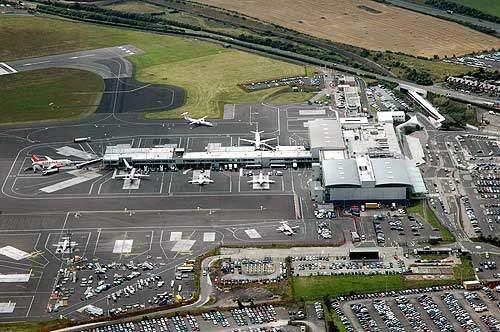
The centrepiece of the airport's ambitions is its Masterplan 2040, adopted in early 2026 after a public consultation. The plan targets growth to eight million passengers by 2035 and nine million by 2040, up from the 2023 baseline. The airport says the plan could contribute 1.9 billion pounds in gross value added to the North East economy, up from around 1 billion pounds, employ 5,000 staff on site, up from 3,200, and support tens of thousands of jobs through its supply chain. Major proposals include extending the terminal pier to add more than twenty aircraft stands, a long-discussed runway extension to allow a broader range of destinations, and a large new cargo facility branded AirLink.
The Expansion.
Much of this is already moving from paper to construction. The airport has announced a 60 million pound expansion, with work beginning on a three-storey extension to the terminal building to provide a larger departure lounge, more seating and food outlets, additional check-in desks and self-service bag drops, and extra baggage carousels in arrivals. The aim is to handle the rising passenger numbers more comfortably and to reduce the reliance on remote aircraft stands that require passengers to be bussed to and from the terminal.
New Routes and Airlines.
The growth is being driven in part by airlines expanding their presence. easyJet is opening a three-aircraft base at Newcastle, adding a string of new routes, while Ryanair has based an additional aircraft and added city-break destinations, and Jet2 has added new Greek and Italian leisure routes, alongside high-demand connections such as Malta. For travellers in the North East, the practical upshot is more choice of destinations without the need to travel south to larger airports.
Questions of Growth.
Ambitious expansion inevitably raises questions, particularly around the environment. The airport has set out a goal of reaching net zero carbon for its own operations by 2035, with measures including expanding on-site solar generation and renewable energy, but the broader climate impact of flying more passengers is a tension that growth plans across the aviation industry must navigate. The proposed runway extension and cargo facility will also face the usual scrutiny over noise, traffic and planning. Supporters argue that good regional connectivity is essential for jobs, investment and inbound tourism, and that growth at Newcastle reduces the need for North East travellers to drive long distances to other airports.
A Gateway's Prospects.
On the evidence of its recent performance and its published plans, Newcastle Airport's prospects look strong. Passenger numbers are rising, airlines are investing, and a clear long-term strategy is backed by real money and early construction. The challenges, from financing the bigger projects to reconciling growth with environmental commitments, are real but not unusual for a successful regional airport. For the wider North East, a thriving gateway is widely seen as an asset, and the coming years will show whether the airport can deliver the connectivity and economic benefit its Masterplan promises.
Connectivity and the Regional Economy.
The reason a growing airport matters so much to the North East goes beyond the convenience of more holiday destinations, important though that is to travellers. Good air connectivity is widely regarded as a significant factor in a region's economic prospects, influencing where businesses choose to locate, how easily local firms can reach customers and suppliers, and how attractive the area is to inbound tourists and investors. The airport's own analysis, set out in its Masterplan, frames its growth explicitly in these terms, pointing to the gross value added it contributes to the regional economy, the thousands of jobs it supports directly and through its supply chain, and its role as a gateway connecting the North East to the wider world. For a region that has long argued it is under-served by national infrastructure investment, a successful and expanding airport is a rare piece of good news that is largely within local and commercial control rather than dependent on decisions made elsewhere. The proposed cargo facility, in particular, is pitched as opening up global markets for local businesses. None of this removes the legitimate questions about environmental impact and the balance between growth and sustainability, which the airport seeks to address through its net zero commitments for its own operations. But it does explain why the airport's expansion is generally welcomed across the region's business and political leadership, and why its continued success is treated as a matter of regional importance rather than simply a question for travellers planning their next trip abroad. The long-debated runway extension, in particular, is presented as the key that would unlock a wider range of long-haul and charter destinations, reducing the need for North East passengers to travel to airports further south to reach them. For the moment, the direction of travel is firmly towards growth, with construction already under way and airlines competing to add seats. The test for the years ahead will be whether the airport can expand its terminal, its routes and its cargo operations while keeping the passenger experience smooth and holding to its environmental commitments, rather than letting rapid growth outpace the infrastructure meant to support it.
Have your say.
Newcastle Airport has set out an ambitious growth plan backed by a major expansion and new routes.
Which new flight route from Newcastle would you most like to see?
Travel News
Cleared for Takeoff: The Future of Newcastle Airport
Newcastle Airport's Masterplan 2040 targets nine million passengers, backed by a £60m expansion and new airline routes. We look at the plans and the questions.
Advertisement




Comments (0)
You must be logged in to post comments.
Don't have an account? Register here
No comments yet. Be the first to share your thoughts!