
Newcastle Central is not simply a place to catch a train. It is one of the most important buildings in the city, and arguably one of the most important railway buildings in the world.
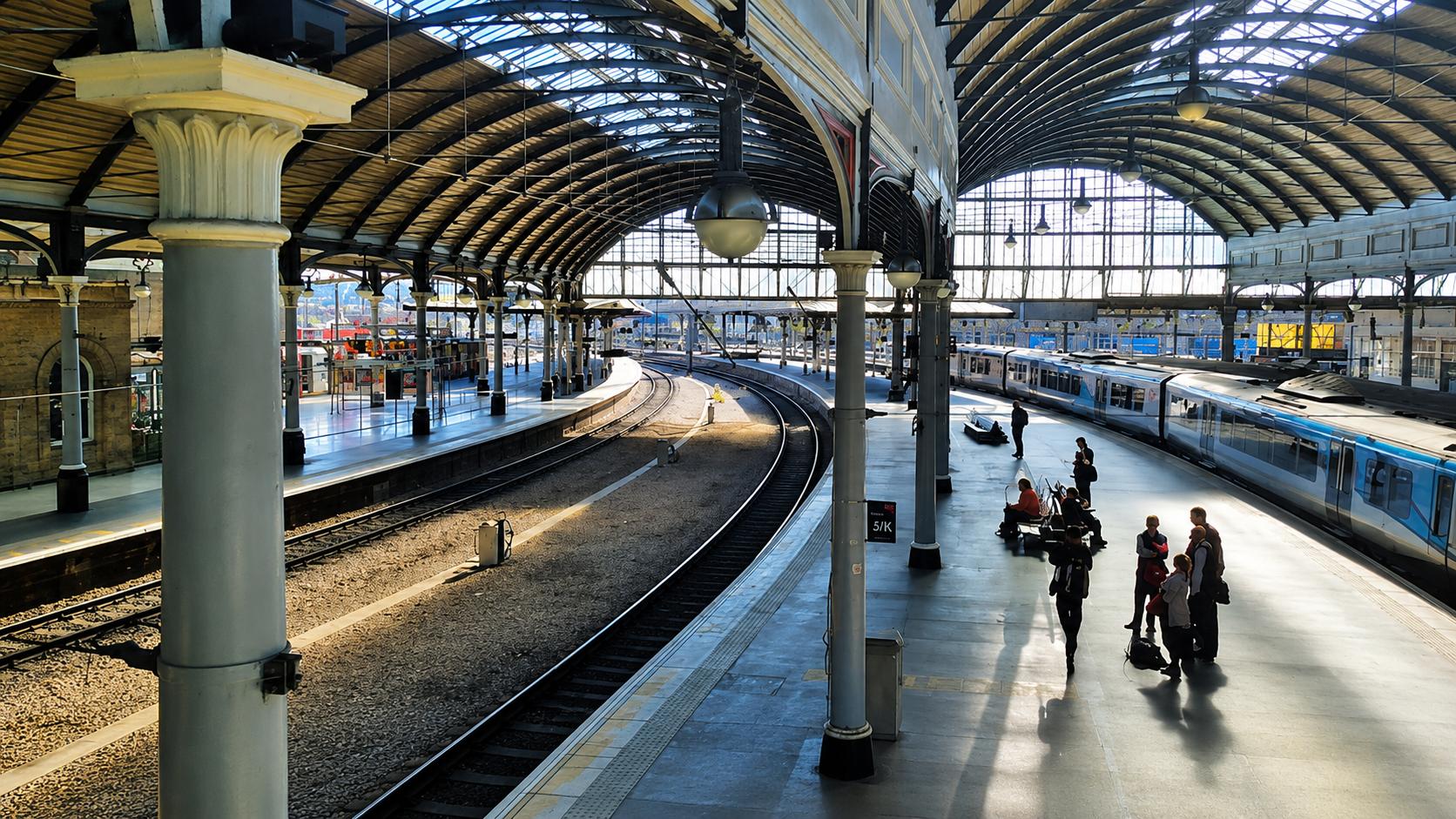
John Dobson's great curved train shed, opened in the 1850s, was the first of its kind on that scale. Its combination of curved wrought-iron roof arches and a monumental classical portico set a template that stations across the world followed.
It is Grade I listed, which places it in the top tier of protected buildings in England, alongside cathedrals and palaces.
And it is still, first and foremost, a working railway station handling millions of passengers a year.
The tension at the heart of the building.
Every decision about Central Station involves the same conflict. It is a heritage asset of the highest significance, and it is a piece of operational infrastructure that has to serve modern passenger numbers.
Those two requirements pull in opposite directions constantly. Retail units generate the income that funds maintenance but clutter the concourse. Barriers improve revenue protection but interrupt sightlines through a listed interior. Modern signage and lighting are necessary and rarely sympathetic.
The station has been through several rounds of this. The portico was reglazed and restored, the taxi arrangements and forecourt have been reworked to prioritise pedestrians, and successive schemes have opened up views of the original architecture that had been obscured for decades.
What the recent work achieved.
The most visible change of recent years has been to the space outside. For a long time the area in front of the portico functioned largely as a car park and taxi rank, which meant that one of the great architectural set pieces in northern England was best appreciated between vehicles.
Reordering that space to favour pedestrians did more for the building than any amount of internal work, because it allowed the portico to be seen as intended.
Inside, work has focused on opening up the concourse, improving circulation and restoring elements of the original fabric where later interventions had covered them.
The pressures still to be solved.
Capacity is the persistent one. Central sits on the East Coast Main Line and also handles Metro interchange, local services, cross-country routes and the Tyne Valley line to Carlisle.
Track layout and platform capacity constrain how many services can be run, and any national growth in rail services eventually arrives as a question about the throat of Newcastle Central.
Accessibility remains a live issue in a building where lifts and step-free routes have had to be inserted into a Victorian structure rather than designed in from the start.
The King Edward VII Bridge and the High Level Bridge, both approaching the station, are themselves heritage structures with their own maintenance demands and their own limits on capacity.
The area around it is changing faster than the station.
Neville Street, Forth Banks, the former Stephenson Quarter and the land towards the Quayside have all seen substantial development interest, and the station is the anchor for all of it.
That creates opportunity and risk in equal measure. A station surrounded by activity is better used and better watched. A station surrounded by construction is harder to reach and less pleasant to arrive at.
The wider debate about rail investment in the North, including capacity between Newcastle, Leeds and Manchester, is beyond the station itself but determines what it will need to handle in future decades.
Why it matters beyond the trains.
For a substantial share of visitors, Central Station is the first thing they see of Newcastle. Arriving under Dobson's roof and stepping out under the portico is a genuinely impressive introduction to a city, and few places in Britain do it better.
That first impression has economic value, and it is one of the reasons investment in the station attracts support from people who never use it.
It is also a piece of the city's identity in a way that few buildings manage. Newcastle's claim to have given the world the railways runs through Stephenson, through the works that built the locomotives, and through this station.
Share your thoughts.
What would you change about Newcastle Central Station if the budget were not a problem?
Local News
Newcastle Central Station's Next Chapter
Advertisement




Comments (0)
You must be logged in to post comments.
Don't have an account? Register here
No comments yet. Be the first to share your thoughts!