
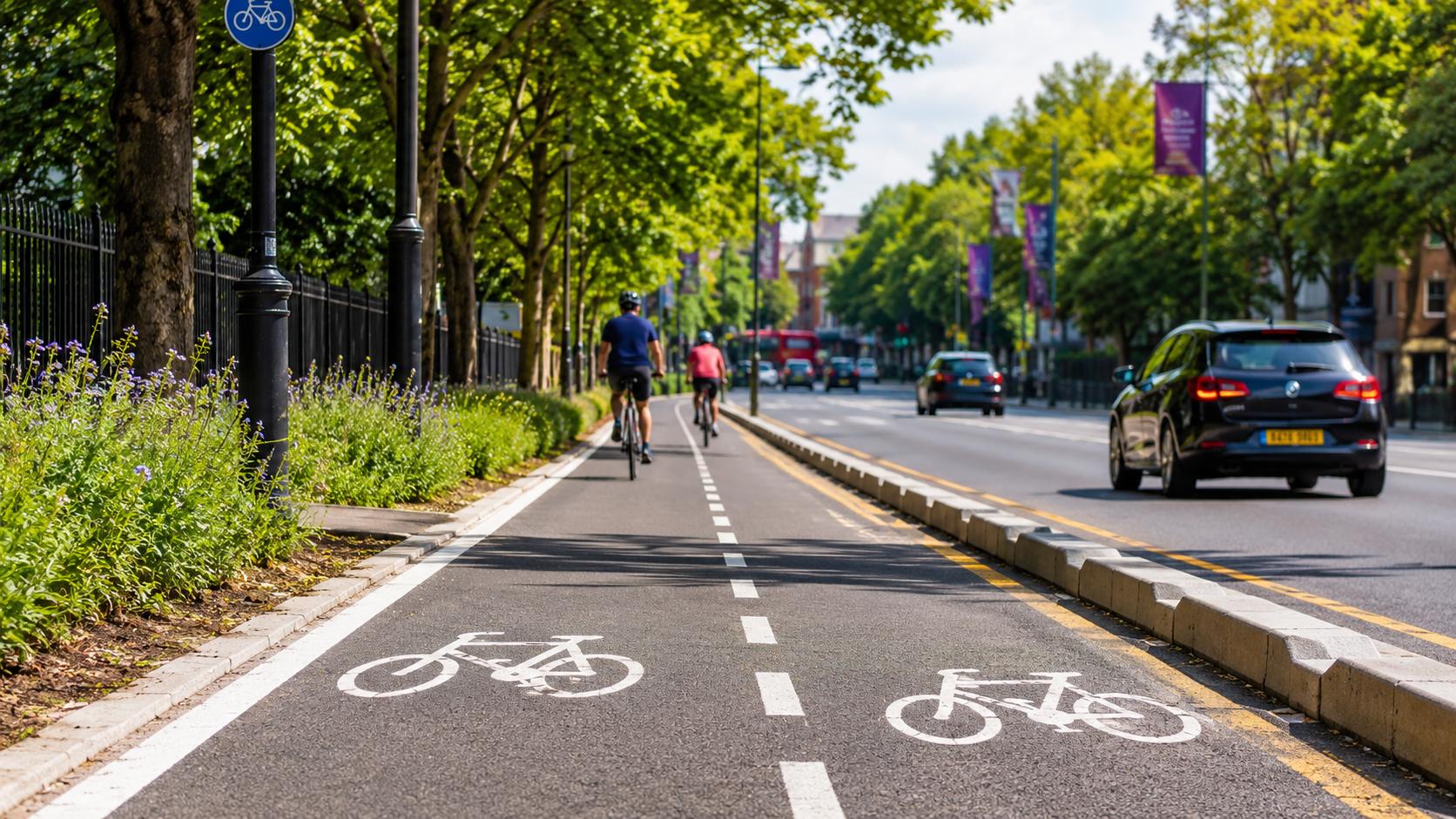
For more than a decade, Newcastle has been pouring money and political capital into making itself a cycling city, building lanes, redesigning junctions and applying for grant after grant. The investment is real and substantial. The harder question, and one that often gets lost in the noise, is whether all this spending is actually getting more people on their bikes.
A Long Push.
Newcastle's modern cycling drive can be traced back well over a decade. The council launched a "Newcastle Fit for Cycling" programme in 2011, backed by around 5.7 million pounds of Department for Transport money, with the aim of building a network of strategic cycle routes feeding into the city centre. Since then the city has continued to bid for and win funding for new schemes, gradually extending its network of lanes and crossings across the city.
Money on the Table.
More recent investment has continued to flow. Newcastle City Council announced in 2023 that the city's West End would receive 3.85 million pounds for safer walking and cycling routes along Elswick Road, as part of a wider 17.7 million pound package secured for the North East through a regional bid to Active Travel England.
At a national level, the government has reaffirmed its commitment to active travel, with the Department for Transport announcing in June 2026 a new cycling and walking strategy backed by more than 4.5 billion pounds over five years, and setting targets for 55 per cent of short trips in towns to be walked or cycled by 2035. The North East's own active travel strategy similarly aims for half of all shorter journeys to be made actively.
The Question of Results.
What is far harder to find is robust, up-to-date evidence on whether all this infrastructure is translating into significantly higher cycling rates in Newcastle. Investment figures and ambitious targets are well documented and easy to quote.
Reliable local data on how many more people are actually cycling, and how often, is much thinner on the ground, and any honest assessment has to acknowledge that gap rather than paper over it with a confident number. Cycling rates are shaped by many factors beyond infrastructure, including weather, topography, the price of alternatives and simple habit, which makes isolating the effect of any one scheme genuinely difficult.
A Contested Cause.
Cycling infrastructure is also politically charged in Newcastle, as it is across the country. New lanes have drawn both enthusiastic support from campaigners and complaints from some drivers and businesses about road space, congestion and access, and the issue has featured in local election campaigning in the city.
Supporters argue that building safe, connected routes is the only way to draw in the many people who say they would cycle if they felt safe doing so, and they point to the health and congestion benefits.
Critics question the cost and the disruption, and ask whether the lanes are being used heavily enough to justify the road space given over to them. Both sides, in truth, would benefit from better public data.
The Bigger Picture.
Newcastle's experience reflects a national debate about active travel. Government bodies and campaigners point to the potential of cycling and walking to cut congestion, improve health and reduce emissions, and the funding settlements of recent years have been broadly welcomed by cycling organisations after earlier cuts.
Yet turning investment into a genuine shift in how people travel is a long-term project, measured in decades rather than budget cycles, and the results of money spent today may not be fully visible for years. For a city not historically known as cycle-friendly, the ambition is significant, but the jury on its impact is still out.
A Fair Verdict.
The fairest verdict on Newcastle's cycling investment, on the evidence readily available, is that the commitment and the spending are clear, while the measurable results are not yet.
The city has built genuine infrastructure and continues to win funding, and its targets are in line with national ambitions. Whether that adds up to a meaningful, lasting increase in cycling is a question that deserves proper local data and honest scrutiny, rather than either boosterism or dismissal. As the network grows and national targets sharpen, the case for publishing clear, regular figures on how Newcastle's cycle routes are actually being used only becomes stronger.
What Good Evidence Would Look Like.
If the debate over Newcastle's cycling investment is ever to be settled, it will require the kind of clear, regularly published evidence that is currently hard to come by. Good evidence would mean consistent counts of how many people use key cycle routes, tracked over time and through the seasons, so that genuine trends can be distinguished from one-off spikes or quiet spells.
It would mean understanding who is cycling, and in particular whether new infrastructure is drawing in people who did not cycle before, including women, older people and children, who are often cited as the groups most deterred by unsafe roads.
It would mean looking at whether cycling is replacing car journeys, which is where the benefits for congestion and emissions are greatest, rather than simply shifting existing cyclists onto better routes. And it would mean being honest about cost, comparing the money spent with the outcomes achieved, so that successful schemes can be expanded and weaker ones rethought.
Several cities and organisations do publish data of this kind, and the tools to gather it, from automatic counters to survey data, are well established. For a city that has invested as heavily and for as long as Newcastle, making such data public and prominent would do more to win the argument than any number of ribbon-cutting announcements. It would also help residents, whatever their views on cycle lanes, to judge for themselves whether the investment is delivering, replacing heat with light in a debate that too often generates more of the former than the latter.
Join the conversation.
Newcastle's cycling investment is substantial and well documented, but the evidence on whether it is boosting cycling is thinner.
Would better cycle routes persuade you to leave the car at home for short trips?
Local News
Building It, But Are They Coming? Newcastle's Cycling Investment
Newcastle has invested heavily in cycling for over a decade, but how much hard evidence is there that it is getting more people on their bikes?
Advertisement




Comments (0)
You must be logged in to post comments.
Don't have an account? Register here
No comments yet. Be the first to share your thoughts!