
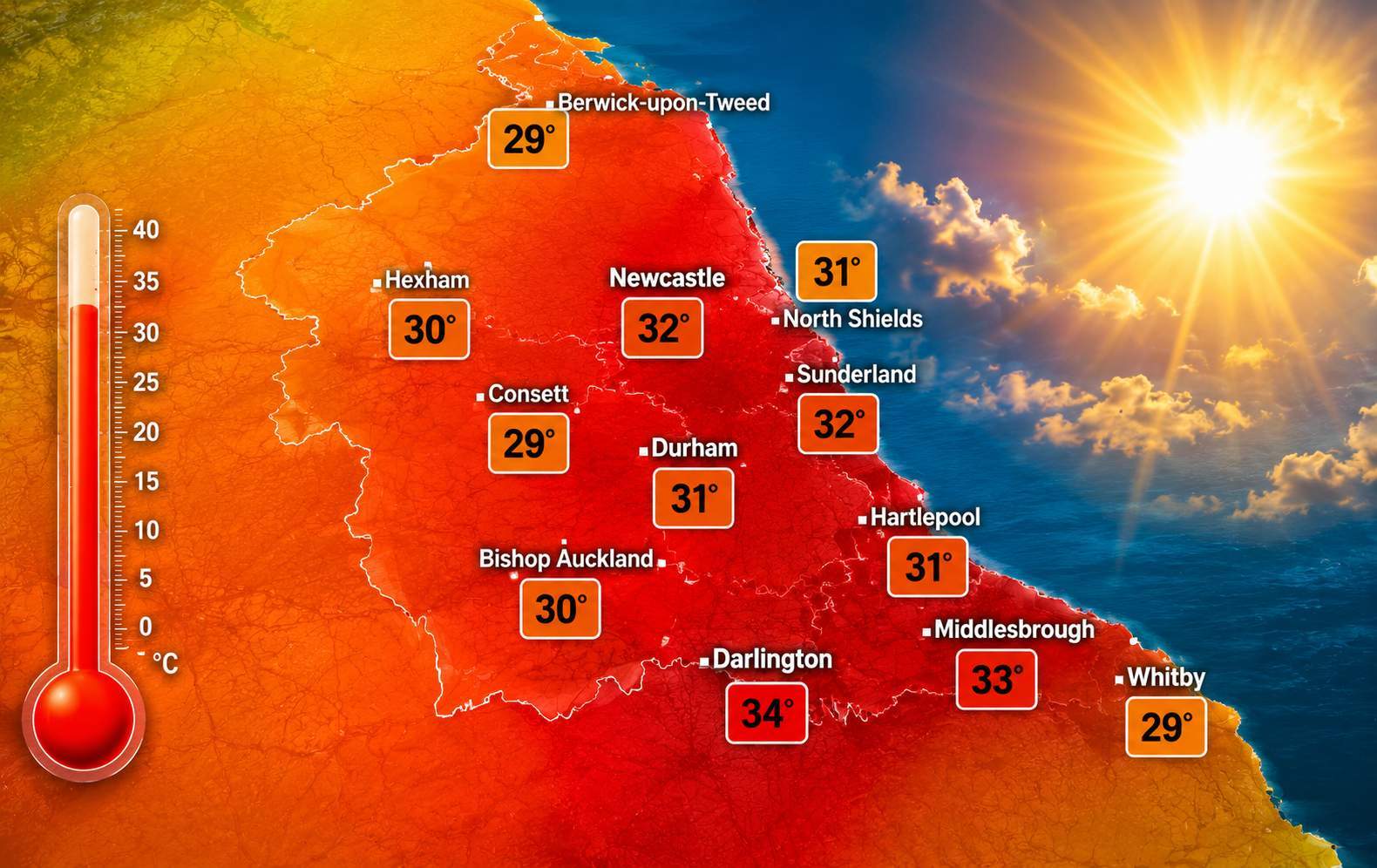
As temperatures rise across Newcastle and the wider North East, many workers are asking the same question - when is it legally too hot to stay at work?
The simple answer is that there is no fixed maximum workplace temperature in UK law. That means employees cannot usually leave work simply because a thermometer has passed a certain number. However, that does not mean employers can ignore extreme heat. Businesses still have a legal duty to keep staff safe, comfortable and protected from health risks during hot weather.
What UK Law Says About Heat At Work.
The Health and Safety Executive says indoor workplaces must be kept at a reasonable temperature, but there is no legal maximum limit. This is because workplaces vary widely, from offices and shops to kitchens, factories, warehouses and construction sites.
During a heatwave, employers are expected to assess the risk and take sensible steps. That could include improving ventilation, providing fans, allowing extra breaks, supplying drinking water, relaxing uniform rules, moving staff away from direct sunlight or changing working hours for outdoor teams.
For Newcastle workers in offices, retail, hospitality, delivery, care and construction, the key issue is not just the air temperature. Humidity, physical work, heavy uniforms, poor airflow and long shifts can all make heat more dangerous.
When You May Be Able To Leave Work.
Workers should not simply walk out because it feels hot. In most cases, the first step should be to report the problem to a manager, health and safety representative or union rep.
However, employment law does give workers some protection if they reasonably believe they are in serious and imminent danger. This could apply if someone is showing signs of heat stress, faintness, confusion, severe dehydration or if an employer refuses to act despite obvious risk.
In those situations, leaving a dangerous area or refusing to return while the danger continues may be protected. But each case depends on the facts, so workers should keep records, raise concerns clearly and seek advice if they are unsure.
Why Heatwaves Matter In Newcastle.
Newcastle is not usually associated with the most extreme UK heat, but the North East is still vulnerable when temperatures climb. The Met Office heatwave threshold for northern England is around 25C for three consecutive days, lower than parts of southern England because local climate patterns differ.
That means a 25C to 28C spell in Newcastle can still count as a heatwave and may feel uncomfortable in older buildings, busy kitchens, small shops, buses, warehouses and homes used for remote working.
Heat is also a public health issue. Official data has linked thousands of deaths in England and Wales to the hottest days over recent decades, with older people and those with existing health conditions at greatest risk. While most working-age adults will not face the same level of danger, heat stress can still cause headaches, dizziness, cramps, exhaustion and reduced concentration.
What Employers Should Be Doing.
Employers in the North East should plan before temperatures peak, not after staff begin feeling unwell. For office-based teams, this may mean checking ventilation, reviewing dress codes and allowing flexible hours or home working where practical.
For outdoor workers, including builders, road workers, delivery drivers and event staff, stronger controls may be needed. These can include shaded rest areas, earlier starts, more frequent breaks, sun protection, cool drinking water and rotating heavy tasks away from the hottest part of the day.
Businesses should also pay extra attention to pregnant workers, disabled workers, older staff, people with health conditions and anyone wearing personal protective equipment.
What Workers Should Watch For.
Heat stress can build quickly. Warning signs include heavy sweating, tiredness, nausea, dizziness, confusion, muscle cramps and feeling unusually weak. Anyone experiencing these symptoms should stop, cool down, drink water and report it immediately.
For Newcastle employees working through hot spells, the safest approach is to raise concerns early and ask what measures are in place. Employers do not have to send everyone home as soon as it gets hot, but they do have to take the risk seriously.
The Bottom Line For North East Workers.
There is no automatic legal right to leave work at 25C, 30C or any other set temperature. But if heat creates a genuine health and safety risk, employers must act.
As heatwaves become more common, Newcastle workplaces may need to treat hot weather planning as seriously as winter disruption. Staff should not be expected to struggle through unsafe conditions, and employers who prepare properly are more likely to keep people safe, productive and well.
Have you ever worked through uncomfortable heat in Newcastle or the North East? Share your experience below and tell us what employers should do differently.
Join the conversation.
Do you think the UK should introduce a legal maximum workplace temperature?
Business News
Newcastle Workers Warned Over UK Heatwave Rules
Advertisement



Comments (0)
You must be logged in to post comments.
Don't have an account? Register here
No comments yet. Be the first to share your thoughts!