
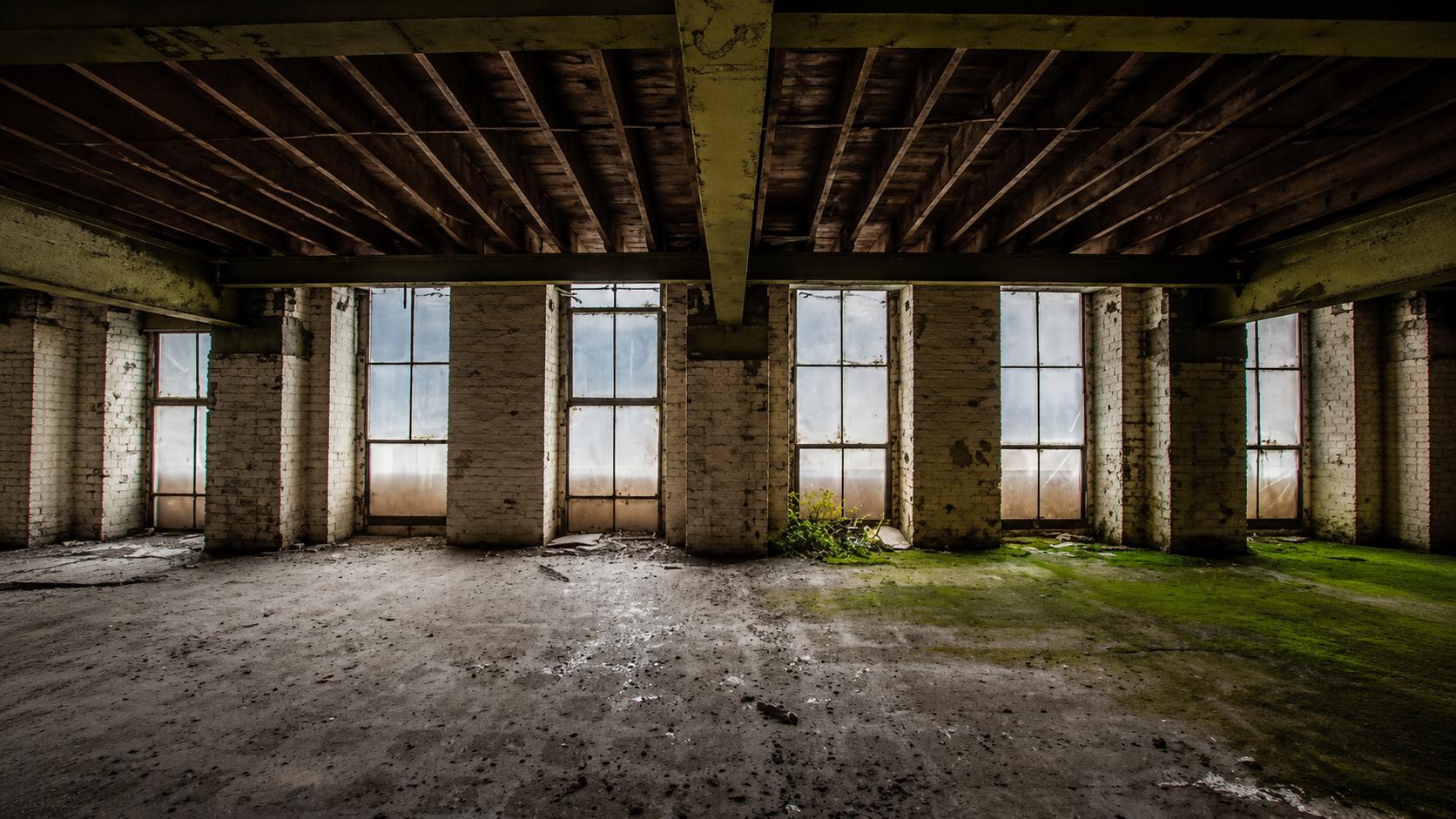
Every regular walk through Newcastle passes at least one of them. Boarded windows behind fine stonework. A roof with a visible dip. Buddleia growing out of a parapet, which is the surest sign of all that nobody has been up there in years.
These buildings are not simply empty. Many of them are formally recognised as being in trouble, on registers kept precisely so that they do not quietly fall down while everyone assumes somebody else is dealing with it.
What a heritage at risk register actually is.
Historic England maintains a national Heritage at Risk Register covering listed buildings, scheduled monuments, conservation areas, registered parks and other designated sites judged to be at risk from neglect, decay or unsuitable development.
Entries are assessed on condition and on occupancy, because a sound building with no use is still vulnerable. A structure can be watertight today and derelict within a decade if nobody is paying to keep it that way.
Alongside the national register, local authorities including Newcastle keep their own local lists covering buildings of local significance that do not meet the threshold for national listing but matter enormously to the character of a street.
Conservation areas can be at risk too, which surprises people. An area can slide through the accumulation of small losses: replacement windows, lost railings, satellite dishes, unsympathetic shopfronts, none of them fatal alone.
Why buildings end up stuck.
The usual reason is simple arithmetic. The cost of repairing a large listed building to a usable standard exceeds what the finished building would be worth.
That gap is called the conservation deficit, and it is why perfectly desirable buildings in good locations can sit empty for years. No commercial owner will voluntarily spend two pounds to create one pound of value.
Other buildings get stuck for reasons of ownership. Absent owners, unclear title, companies that have been dissolved, or disputes between multiple parties can freeze a site as effectively as any structural problem.
And some are simply awkward. Deep floor plates, listed interiors that cannot be subdivided, no parking, no service access, or a floor layout that suits nothing anybody currently wants to do.
The council has more powers than people realise.
Local authorities are not limited to writing letters. Under listed building legislation, a council can serve an urgent works notice requiring an owner to carry out immediate work to keep a building weathertight and secure, and can recover the cost.
A repairs notice goes further, setting out the works needed for proper preservation, and can be a precursor to compulsory purchase if the owner does not comply.
Section 215 notices under planning law allow action where land or buildings are harming the amenity of an area, which covers the boarded-up eyesore that is not itself listed.
These powers are used sparingly, because each one costs money to pursue and carries legal risk. A council that is already stretched thinks carefully before starting a fight it may have to fund to the end.
Money exists, but it is competitive.
Repair grants are available from Historic England, the National Lottery Heritage Fund and various trusts, and the region has secured significant sums over the years.
Building preservation trusts play an important role, taking on hopeless cases, doing the repairs and then selling or letting the finished building, recycling the proceeds into the next rescue.
The most reliable rescues, though, come from finding a use. A building with a tenant pays for its own maintenance. A building without one depends indefinitely on somebody else's generosity.
Newcastle has done this well and badly.
The city has real successes. Ouseburn is full of industrial buildings that would have been demolished in most places and are now workshops, venues and studios. The Grainger Town programme turned around a substantial area of the historic centre that was genuinely failing.
There have also been losses, and a category of near-miss where a building was saved at the last possible moment after years of decline that need not have happened.
The pattern is consistent: the earlier the intervention, the cheaper it is. A roof repair costs a fraction of a rebuild, and every winter a building spends open to the weather multiplies the eventual bill.
What residents can actually do.
Report it. Councils rely heavily on the public noticing that a building has been opened up, that lead has gone from a roof or that water is visibly getting in.
Local civic and amenity societies carry weight in planning matters and are usually short of members rather than short of enthusiasm.
Anyone can propose a building for the local list, and buildings can be nominated for national listing through Historic England where the case is strong enough.
Share your thoughts.
Which empty Newcastle building would you most like to see brought back into use?
Local News
Newcastle's Buildings at Risk: The Landmarks Waiting for Rescue
Advertisement




Comments (0)
You must be logged in to post comments.
Don't have an account? Register here
No comments yet. Be the first to share your thoughts!