
Few things sum up the frustration of rail travel quite like a cancelled train, and passengers in the North East have had more than their share. Recent data suggests the region has been among the worst affected in the country, and while the reasons are varied, the result for commuters is the same: uncertainty about whether the train they need will actually run.
A Region at the Back of the Queue.
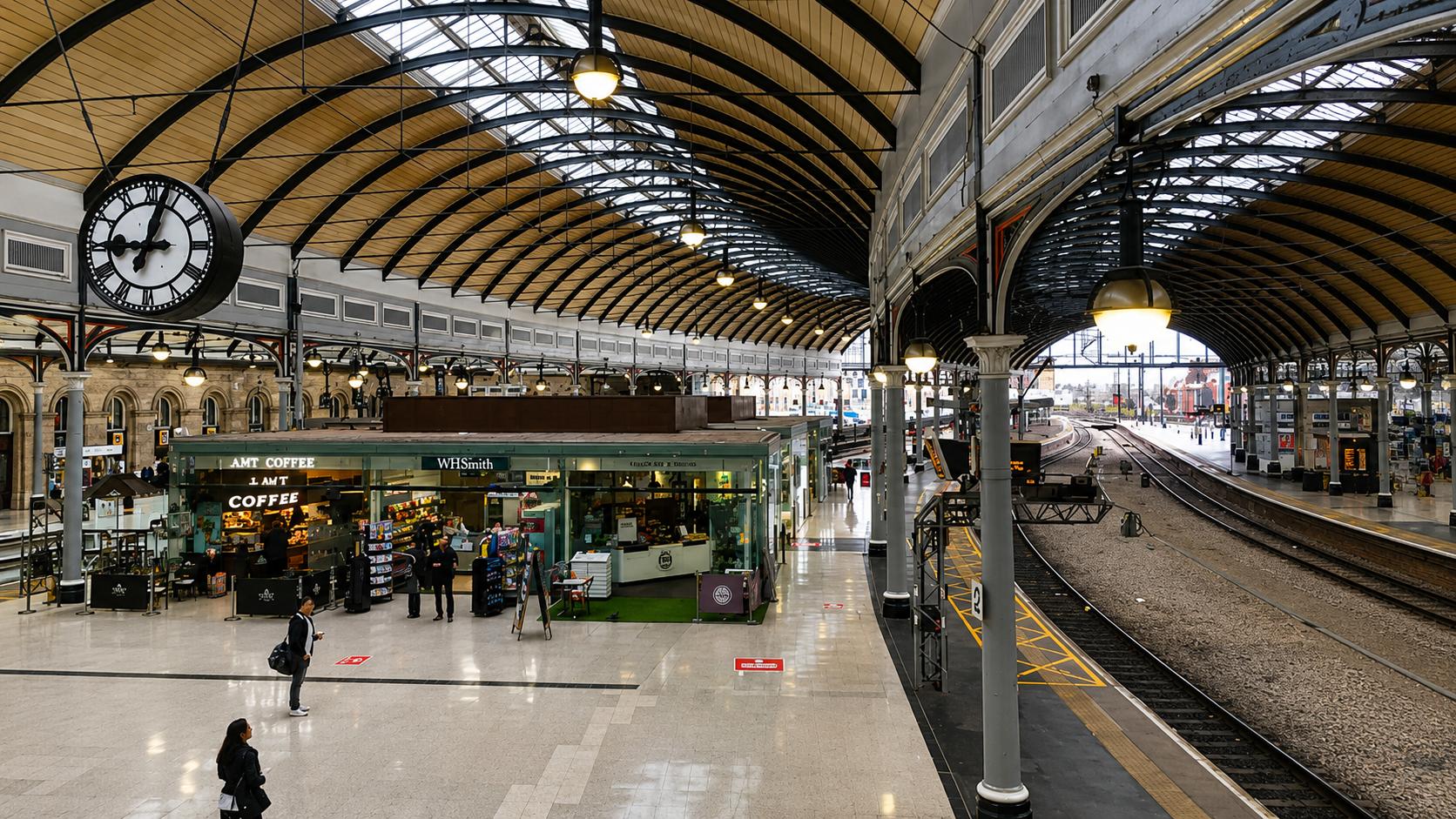
Rail performance data for the year to mid-August 2025 shows the North East suffered Britain's worst regional train cancellation rate, with around 4.5 per cent of scheduled stops cancelled compared with an England average of about 3.5 per cent. Hartlepool was the worst-hit station in the region, with roughly 5.9 per cent of stops cancelled, followed closely by the Metrocentre in Gateshead and Sunderland at around 5.8 per cent. Newcastle Central, the region's busiest station, fared better at about 3.5 per cent, in line with the national average but still meaning a meaningful share of services did not run as planned.
The National Context.
The North East's problems sit within a wider picture of unreliability. Official figures show that around 3.2 per cent of trains across Great Britain were classified as cancelled in the first quarter of 2026, a figure that counts full cancellations as one and part cancellations as half. Cancellations of this kind run into the millions of stops a year nationally, and the North East's position above the England average underlines that the region has been disproportionately affected rather than simply sharing in a universal problem.
Why Trains Get Cancelled.
The causes of cancellations are rarely down to a single villain. Operators serving the region, including Northern and others, point to a mix of factors: staff shortages and training backlogs, ageing infrastructure and rolling stock, signalling and points failures, and the knock-on effects of disruption elsewhere on busy shared lines. Weather plays its part too, with storms periodically forcing services to be suspended, particularly on exposed routes north of Newcastle. Industrial action has also hit services at various points in recent years. Each of these can turn a planned timetable into a patchwork of part-cancelled and revised journeys.
The Upgrade Paradox.
Some disruption is, paradoxically, the price of improvement. Major engineering programmes such as the multi-billion-pound TransPennine Route Upgrade and other Network Rail schemes require lines to be closed or services revised, often for extended periods, with rail replacement buses standing in for trains. Northern's own travel advice regularly lists stretches of line affected by planned works. While these projects promise more reliable journeys in the long run, in the short term they add to the cancellations and alterations that passengers experience, and they can be hard to distinguish, from a platform, from the unplanned failures that blight the network.
Knowing Your Rights.
Passengers caught up in cancellations are not without recourse. Most operators run delay compensation schemes, often branded Delay Repay, which allow travellers to claim back a proportion of their fare depending on how long they are delayed, and tickets are typically valid on alternative services or refundable when a train is cancelled. Passengers are advised to keep ticket details and to check journey-planning tools and operator updates before travelling, particularly at times of planned engineering work or severe weather. None of this removes the inconvenience, but it does mean that a cancelled train need not always mean money simply lost.
The Road Ahead.
For the North East, the challenge is to bring reliability up to, and ideally above, the national average, rather than languishing below it. That depends on long-term investment in infrastructure and rolling stock, better staffing and resilience, and the eventual payoff from the disruptive upgrade works now under way. Devolution and a stronger regional voice on transport may help focus attention on the routes that let passengers down most often. Until then, the sensible advice for North East rail users remains the same: check before you travel, know your rights to compensation, and build in a margin for the train that does not come.
The Human Cost of Unreliability.
Behind the percentages and performance tables lies a more human story about what unreliable trains do to people's lives.
A cancellation is rarely just a single missed journey: it can mean arriving late for work or losing pay, missing a hospital appointment or a connection, being stranded at an unfamiliar station, or simply enduring the stress of not knowing whether a planned journey will be possible. For people who depend on the train to reach jobs, education or family, repeated unreliability can shape major decisions, pushing some back towards the car, with all the cost and congestion that implies, and deterring others from taking opportunities that would mean a difficult commute.
Businesses feel it too, in staff arriving late and in the reluctance of some to rely on rail for important journeys. This is why reliability matters as much as headline investment in new trains and lines: a gleaming fleet is of little comfort if services are frequently cancelled, and passengers judge the railway above all on whether it turns up.
The North East's position below the national average on cancellations is therefore not merely a statistical embarrassment but a real drag on the region's economy and on the daily lives of its residents. Improving it will require sustained attention to the unglamorous business of staffing, maintenance and resilience, as well as patience through the disruptive upgrade works that are meant, eventually, to deliver the more dependable railway that passengers have every right to expect.
Reliability, in the end, is the measure by which the travelling public will judge whether the region's heavy investment in new trains and reopened lines has truly been worthwhile. Equally, passengers tend to remember a service by its worst days rather than its average, so even occasional clusters of cancellations during bad weather or engineering work can shape perceptions of the railway for months afterwards, which is one reason consistency matters so much to the travelling public.
Over to you.
Data suggests the North East has suffered some of Britain's worst train cancellation rates.
How often do cancellations disrupt your journeys across the North East?
Travel News
The Train Now Cancelled: Why North East Rail Lets Passengers Down
Data suggests the North East has had some of Britain's worst train cancellation rates. We look at the figures, the causes and passengers' rights.
Advertisement



Comments (0)
You must be logged in to post comments.
Don't have an account? Register here
No comments yet. Be the first to share your thoughts!