
The North East has waited a long time for the transport upgrades it has been promised, and while some have finally arrived, others remain mired in the delays that have come to characterise major infrastructure in the region. From reopened railways to road dualling that has been debated for a generation, the picture in 2026 is one of real progress alongside familiar frustration.
The Northumberland Line.
One of the region's biggest recent wins has also been one of its most delayed. The Northumberland Line, restoring passenger trains between Ashington and Newcastle for the first time in around six decades, finally reopened to passengers in December 2024, at a cost of around 236 million pounds. The line did not open all at once, however. Only two stations were ready at first, with others following in stages, and the opening of Bedlington and Northumberland Park was pushed back to 2026. The presence of former mine workings beneath the route, requiring ground stabilisation, was identified as one of the biggest engineering challenges, and the project slipped repeatedly from its original 2023 target.
The A1 in Northumberland.
If the Northumberland Line shows delays eventually overcome, the dualling of the A1 north of Morpeth shows how long these things can take. Plans to dual a roughly thirteen-mile stretch between Morpeth and Ellingham have been discussed for many years, and a decision on the scheme was put back four times in recent years, with funding later linked to money reallocated from the cancelled northern leg of the HS2 rail project. Campaigners have greeted successive promises with weary scepticism, with some saying they will not believe it until diggers are on site. For communities in north Northumberland, who point to the distance to the nearest major hospital, the upgrade is treated as a matter of safety as much as convenience.
The Metro's New Fleet.
Among the clearest success stories is the renewal of the Tyne and Wear Metro fleet. The original Metrocars, in service since the system opened in 1980, are being replaced with 46 new Stadler-built Class 555 trains in a programme costing 362 million pounds. The first new train entered passenger service in December 2024, and by late February 2026 all 46 trains had been delivered, with the entire timetable expected to be operated by the new fleet by the summer of 2026. The new trains, shaped by a public consultation that drew more than 23,000 responses, bring air conditioning, charging points, open-plan layouts and sliding access steps designed to improve accessibility.
The Leamside Question.
Other ambitions remain unresolved. The reopening of the disused Leamside line, which would restore rail services to communities such as Washington, has featured in regional transport plans for years, appearing among the projects in a 6.8 billion pound regional plan listing hundreds of road, rail, bus, walking and cycling schemes. Yet its future has repeatedly been described as uncertain, dependent on funding decisions and on the priorities of the region's transport leadership. It stands as a reminder that, for every scheme delivered, others remain stuck at the stage of aspiration.
A Question of Funding.
Underlying many of these stories is the long-running argument about how transport money is shared across the country. Regional leaders have long complained that the North East has historically received far less transport funding per head than London, and arguing not for special treatment but for a level playing field. The creation of a North East mayor, with Kim McGuinness elected in 2024, has given the region a stronger single voice on transport, and the devolution of more powers and budgets is intended to speed decision-making. Whether that translates into fewer delays on the projects still in the pipeline remains to be seen.
A Pattern of Patience.
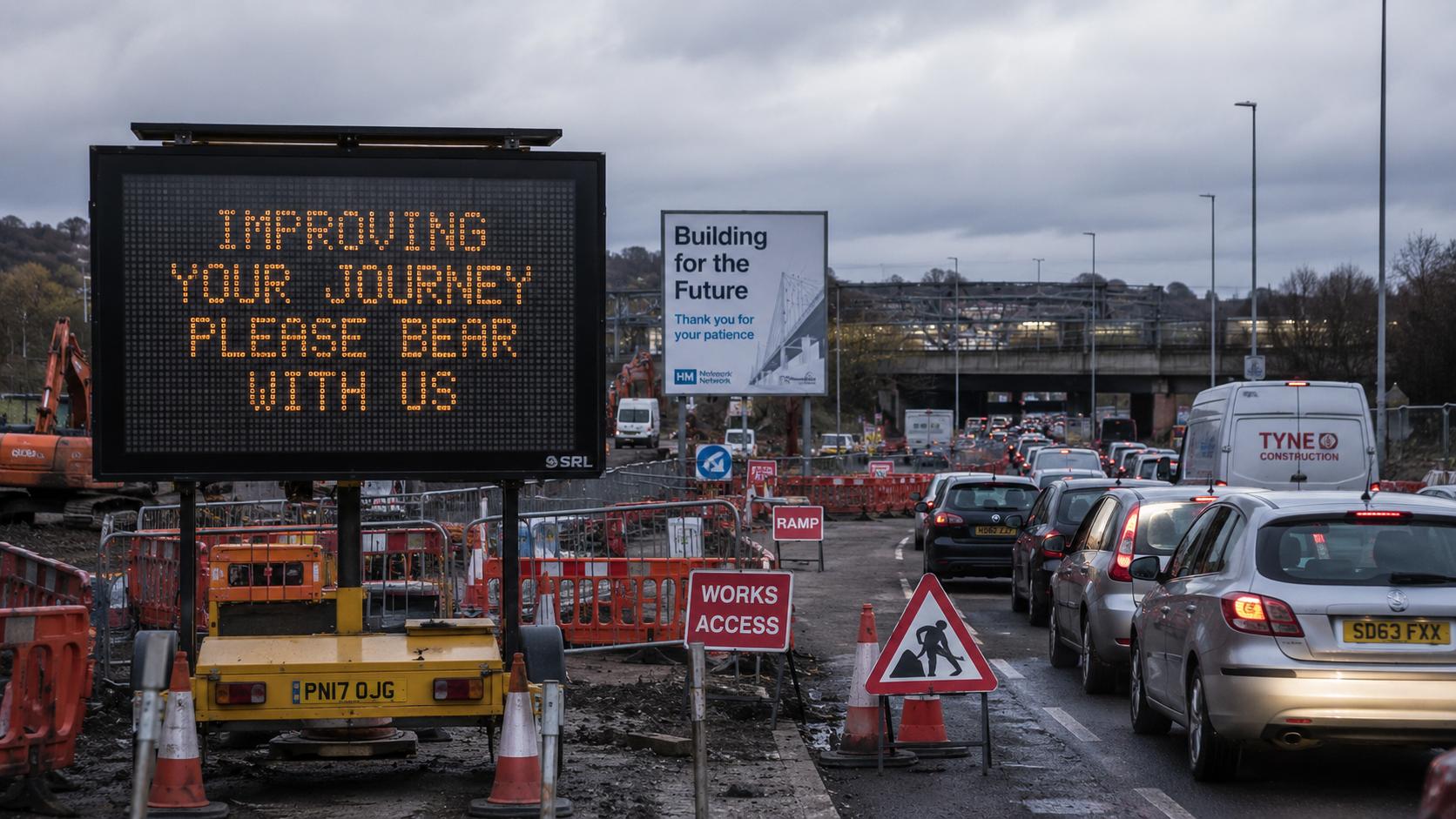
Taken together, the region's major transport projects tell a story of progress hard won and patience sorely tested. The Northumberland Line and the new Metro fleet show that big schemes can be delivered, even if later than promised, while the A1 and Leamside show how long the region can be kept waiting. For residents and businesses, the practical question is less about grand totals and more about journeys: whether the train will turn up, whether the road will be safe, and whether the next promised upgrade will arrive in years rather than decades. The coming period, with more devolved control and several schemes at critical stages, will test whether the North East can finally shake off its reputation for jam tomorrow.
Why Big Projects Slip.
The repeated delays that dog major transport schemes in the North East are not unique to the region, and understanding why they happen helps to separate genuine failure from the ordinary friction of large infrastructure.
Schemes of this scale must clear a long series of hurdles before construction can even begin, including planning consent, environmental assessment, land acquisition, funding approval and complex engineering design, and a hold-up at any one stage can push back the whole timeline.
Ground conditions, such as the former mine workings beneath the Northumberland Line, can spring expensive surprises, while funding for road and rail projects has often depended on competitive national programmes and spending reviews, leaving regional schemes waiting for decisions in distant departments.
The reliance on central government for much of this money has been a particular frustration for the North East, which has long argued that it receives less transport investment per head than other parts of the country. The hope attached to devolution and the creation of a regional mayor is that more decisions, and more money, can be settled locally, shortening the chain of approvals and giving the region a stronger hand.
Whether that hope is realised will be judged not on press releases but on whether the projects still in the pipeline arrive closer to their promised dates. For now, the lesson of recent years is that the region can deliver major schemes, but that patience, persistence and sustained funding are all required, and that announcements should be treated with caution until, as one campaigner put it, the diggers are on site.
Share your thoughts.
The region has delivered some long-awaited transport upgrades while others remain stuck in years of delay.
Which North East transport project would make the biggest difference to your daily journeys?
Travel News
Always Jam Tomorrow? The North East's Stop-Start Transport Projects
A look at the North East's major transport projects in 2026, from the reopened Northumberland Line and new Metro fleet to the long-delayed A1 dualling.
Advertisement



Comments (0)
You must be logged in to post comments.
Don't have an account? Register here
No comments yet. Be the first to share your thoughts!