
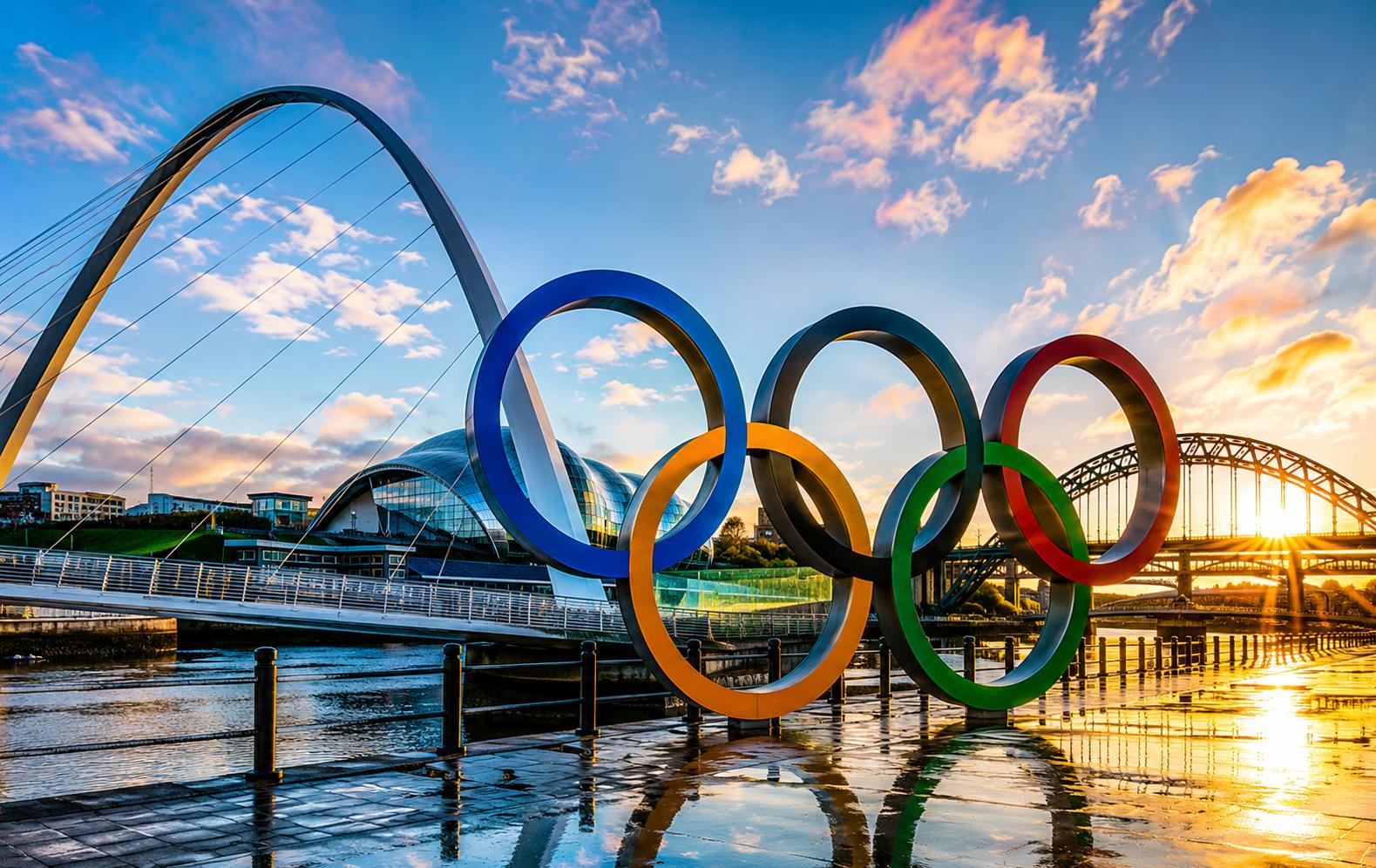
Plans to bring the Olympic and Paralympic Games to the North of England have moved a significant step closer after the Government confirmed support for a detailed review into a future bid.
UK Sport has now been tasked with examining the financial impact, economic opportunities and overall feasibility of hosting the Games across northern cities and regions. The review marks the strongest indication yet that ministers are seriously considering a large-scale Olympic project outside London for the first time in modern history.
The proposal has sparked growing excitement across Newcastle upon Tyne and the wider North East, with regional leaders arguing the area already has many of the facilities, transport links and sporting traditions needed to host a successful international event.
Political leaders from across the North united earlier this year to call for any future UK Olympic bid to centre around northern England. Rather than relying on one host city, the idea would see events spread across multiple locations using existing stadiums, arenas and sporting infrastructure.
Supporters believe the approach could dramatically reduce costs while delivering investment and regeneration benefits to communities across the region.
Newcastle upon Tyne seen as key part of Olympic vision.
Newcastle upon Tyne is expected to play an important role in any future Olympic proposal thanks to its sporting reputation, passionate fanbase and established venues.
St James’ Park has already hosted major international football matches, including fixtures during the London 2012 Olympics and UEFA European Championship tournaments. The city has also welcomed large-scale sporting and entertainment events that have attracted visitors from across the UK and overseas.
Advocates for the bid say Newcastle’s combination of sporting culture, hospitality and transport connectivity makes it an ideal location for Olympic competition, fan events and tourism activity.
The North East’s coastline, urban centres and surrounding countryside are also being highlighted as unique selling points that could help distinguish a northern Olympic bid from previous Games.
Government figures believe a future Olympics could act as a catalyst for long-term regeneration, similar to the transformation seen in East London after the 2012 Games.
Ministers believe Olympics could transform northern economy.
Culture Secretary Lisa Nandy said the success of London 2012 demonstrated the power of the Olympic Games to inspire communities, attract global investment and create lasting economic benefits.
Speaking about the review, Ms Nandy said northern England had for too long been overlooked when discussions about hosting the Olympics took place.
She said the region had consistently produced elite athletes, hosted world-class sporting events and shown its ability to welcome international visitors on a huge scale.
Ms Nandy, who previously studied in Newcastle, described the latest announcement as the starting point for what could become a landmark opportunity for the North.
Chancellor Rachel Reeves also backed the plans, saying Britain should use its international sporting reputation to strengthen communities and support economic growth.
She said the Government wanted major sporting projects to help deliver regeneration, new jobs and investment across the Northern Growth Corridor.
Ministers believe Olympic-related development could improve transport systems, public spaces and housing while encouraging tourism and private investment throughout northern cities.
Previous Olympic bids faced major obstacles.
The North has attempted to secure the Olympic Games before, most notably when Manchester launched a bid for the 2000 Olympics before eventually losing out to Sydney.
There was also discussion about a joint Manchester and London proposal ahead of the 2012 Games. However, Olympic rules at the time strongly favoured single-city bids, particularly those involving capital cities.
In recent years, the International Olympic Committee has moved away from that traditional model.
Modern Olympic Games are increasingly spread across multiple locations and regions. The recent Winter Olympics in Milan and Cortina d’Ampezzo highlighted how events can successfully take place across cities separated by hundreds of miles.
At the same time, many countries have become reluctant to pursue Olympic bids because of the enormous costs often associated with hosting the Games.
Regional leaders argue a northern England model using existing infrastructure would offer a more sustainable and financially realistic alternative.
North East leaders promise lasting Olympic legacy.
North East Mayor Kim McGuinness has emerged as one of the strongest supporters of the proposal and believes the Games could deliver transformational change across the region.
She said the North already possesses the venues, sporting heritage and community spirit needed to stage an unforgettable Olympic and Paralympic Games.
Ms McGuinness described the vision as an opportunity to showcase the very best of Britain while creating a lasting legacy of prosperity, regeneration and unity.
Supporters also believe the project could inspire greater participation in grassroots sport while encouraging volunteering and community engagement across towns and cities.
The review commissioned by the Government is expected to examine how a future bid could balance cost with long-term economic return.
Although no official Olympic bid has yet been submitted, the latest move represents a major milestone for campaigners hoping to bring the Games back to the UK during the 2040s.
For Newcastle upon Tyne, the prospect of becoming part of an Olympic host region could place the city firmly on the global stage and unlock investment opportunities for decades to come.
What do you think about the idea of Newcastle upon Tyne helping host a future Olympic Games? Could a Great North Olympics transform the North East economy and sporting culture for generations to come?
Sports News
Northern Olympics dream gains momentum with Government backing.
Advertisement



Comments (0)
You must be logged in to post comments.
Don't have an account? Register here
No comments yet. Be the first to share your thoughts!