
In the centuries before modern ideas of justice and punishment took hold, the treatment of criminals was harsh and very public. The old gaols of Newcastle and the region, and the public executions that drew great crowds, are a sobering reminder of how very different the administration of justice once was. The history of crime and punishment in the region is a grim but illuminating subject, revealing much about the values and the harsh realities of earlier times.
The Old Prisons.
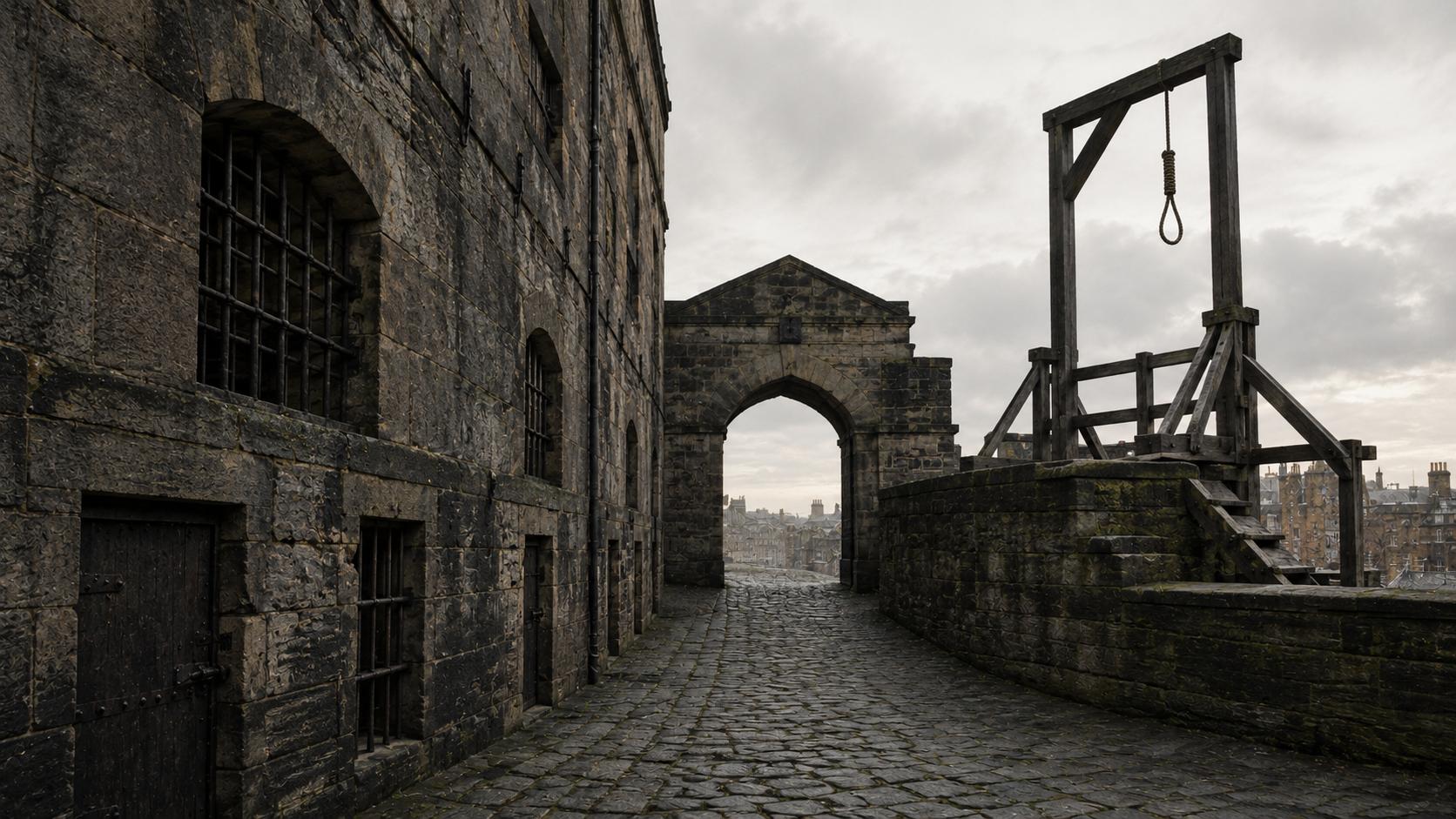
For much of its history, Newcastle confined its prisoners in gaols that were a far cry from the institutions of today. The town's prisoners were held in various places over the centuries, including parts of the old town walls and gates and other buildings pressed into service as gaols. Conditions in these old prisons were typically grim, with prisoners crowded together in unhealthy and squalid surroundings, often with little regard for their welfare. Imprisonment in earlier times was a harsh experience, and the old gaols were places of misery and hardship. They reflected an age in which the treatment of prisoners was severe and the conditions of confinement were often appalling.
A Harsh Justice.
The justice administered in earlier centuries was harsh by modern standards, with severe penalties imposed for a wide range of offences. Crimes that would today be treated relatively leniently could once carry the most serious punishments, and the law was unforgiving in its treatment of offenders. The severity of the criminal law reflected the values of an age that placed great emphasis on deterrence and that had few of the resources or ideas that inform modern approaches to justice. The result was a system of punishment that could be brutal, and that bore little resemblance to the more humane and proportionate justice that would develop in later times.
Punishment in Public.
One of the most striking features of justice in earlier times was the public nature of punishment. Many punishments were carried out in public, as a deliberate display intended to deter others and to demonstrate the power of the law. Offenders might be placed in the stocks or pillory, where they were exposed to public ridicule, or subjected to other public penalties, while the most serious punishments were also inflicted before crowds. This public dimension was central to the philosophy of punishment in earlier times, which held that the visible infliction of penalties served as a warning to the community and an affirmation of the authority of the law.
The Public Execution.
The most dramatic and sobering of these public punishments was the execution of those condemned to death. In earlier centuries, executions were carried out in public, often before great crowds who gathered to witness the grim spectacle. These occasions drew large numbers of people, and they were treated almost as public events, a fact that strikes the modern observer as deeply disturbing. The public execution was intended to serve as the ultimate deterrent, a vivid and terrible demonstration of the consequences of serious crime. The places of public execution became grimly notorious, and the memory of these events lingers in the history of the region.
The Crowds That Gathered.
The crowds that assembled to watch public executions are a remarkable and troubling feature of earlier times. Large numbers of people, drawn by a mixture of curiosity, moral instruction and grim entertainment, would gather to witness the fate of the condemned. To modern sensibilities, the spectacle of crowds gathering to watch an execution is profoundly disturbing, yet it reflected the very different attitudes of an age in which death and punishment were more openly displayed. The public execution was a part of the fabric of life in earlier times, and the crowds it drew tell us much about the values and the harshness of the period.
Towards a Gentler Age.
Over time, attitudes to crime and punishment gradually changed, and the harsh and public penalties of earlier times gave way to more humane approaches. Public executions and punishments were eventually ended, removed from public view as ideas about justice and human dignity evolved. The grim old gaols were replaced by prisons built and run according to new principles, and the severity of the criminal law was gradually softened. This long process of reform reflected changing values and a growing concern for humanity and proportion in the treatment of offenders, marking a profound shift away from the brutal justice of earlier centuries.
A Sobering History.
The old gaols of Newcastle and the public punishments of earlier times are a sobering reminder of how harsh and how very different the administration of justice once was. The grim prisons, the severe penalties and the public executions that drew great crowds reveal a world far removed from modern ideas of justice and human dignity. To study this history is to understand the long journey towards a more humane approach to crime and punishment, and to appreciate how much attitudes have changed. It is a grim chapter, but an illuminating one, that throws light on the values and the realities of the region's past.
The Philosophy of Punishment.
The harsh and public punishments of earlier times reflected a particular philosophy of punishment, very different from that which prevails today. The justice of the past placed great emphasis on deterrence, on the idea that severe and visible penalties would discourage others from committing crimes, and on retribution, the notion that wrongdoers deserved to suffer for their offences.
The public nature of punishment was central to this philosophy, for the visible infliction of penalties was thought to serve as a powerful warning and to affirm the authority of the law. There was little of the modern concern for the reform and rehabilitation of offenders, or for the proportion between the offence and the punishment, and the severity of the penalties reflected a belief in the value of harsh deterrence.
Over time, this philosophy gave way to different ideas, as thinkers and reformers came to question the effectiveness and the humanity of harsh and public punishment. New approaches emphasised the reform of offenders, the proportion between crime and punishment, and the dignity of the individual, leading to the gradual softening of the criminal law and the ending of public and brutal penalties.
The change in the philosophy of punishment reflected a profound shift in values, towards a more humane and constructive approach to crime and justice. To understand the harsh punishments of the past is to appreciate the philosophy that underlay them, and to recognise the significance of the changes that led to the more humane justice of later times.
The history of punishment is, in large part, the history of changing ideas about its purpose and its proper limits.
We want to hear from you.
The old gaols and public punishments of earlier times reveal how harsh the administration of justice once was.
What do you think the harsh justice of the past tells us about how attitudes have changed?
Crime News
Gaols and the Gallows: Crime and Punishment in Old Newcastle
A sobering look at crime and punishment in old Newcastle, from the grim gaols to the public executions and harsh penalties of earlier centuries.
Advertisement





Comments (0)
You must be logged in to post comments.
Don't have an account? Register here
No comments yet. Be the first to share your thoughts!