
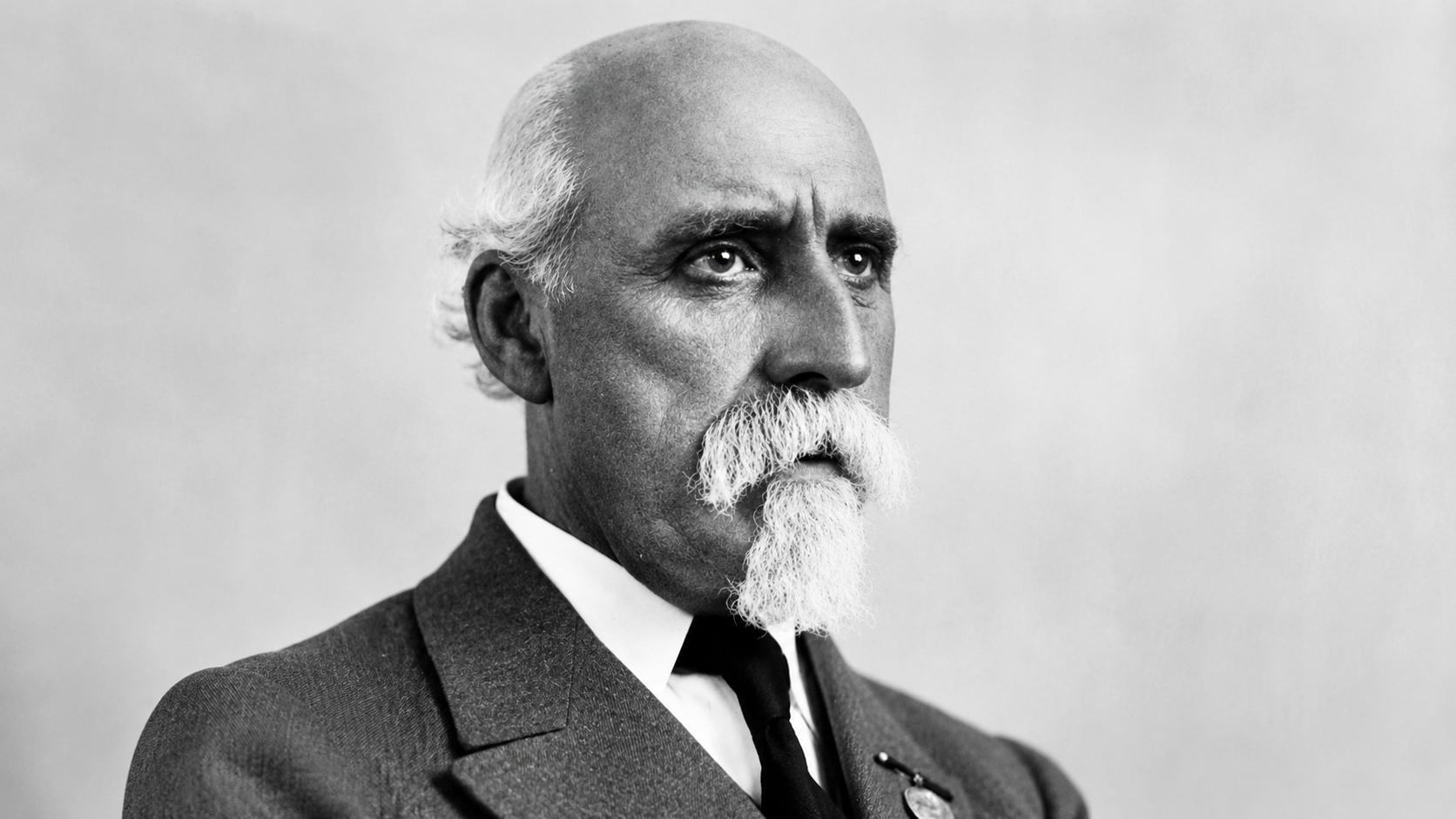
Peter Lee was born in July 1864 at Trimdon Grange, County Durham, into a poor but close-knit mining family. Like thousands of other boys across the Durham coalfield, he began working in a colliery at just ten years old, and by the time he turned twenty-one he had already worked at fifteen different pits, enduring the brutal, dangerous conditions typical of Victorian coal mining.
Remarkably, Lee could not read at all until the age of twenty, when he made the determined decision to return to basic education, teaching himself to read and write from scratch. His mother's habit of reading aloud to the family as a child had instilled in him a genuine love of books despite his own illiteracy, and this belated education would go on to shape the entire remainder of his extraordinary life.
In 1886 Lee travelled to the United States, working in the coal mines of Ohio, Pennsylvania and Kentucky for two years to further improve himself before returning to England in 1888. He settled at Wingate pit, where he was elected as a delegate to the Miners' Conference, marking the beginning of his gradual rise through the ranks of Durham's powerful mining trade union movement.
Lee's political career began locally in 1903 when he was elected to Wheatley Hill Parish Council, taking on responsibility for basic sanitation, water purity and road building in one of County Durham's typically poor colliery villages. He also became chairman of the local Co-operative Society and, in 1907, was elected to Easington Rural District Council, steadily building the civic reputation that would soon carry him much further.
By 1909, while still working as a miner, Lee was elected to Durham County Council representing the Thornley ward. A decade later, in 1919, he was elected chairman of the authority, at exactly the moment Durham County Council became the very first Labour-controlled county council anywhere in Britain, a genuinely historic achievement that placed Lee at the forefront of the emerging Labour movement in local government nationally.
Alongside his council role, Lee continued rising through the Durham Miners' Association, becoming one of its full-time agents before being elected General Secretary in 1930. In 1933 he was elected President of the Miners' Federation of Great Britain, the national body representing more than a hundred thousand miners, making him simultaneously one of the most powerful trade union and local government figures in the entire country.
Lee stood down as a county councillor in 1934, leaving behind what colleagues widely described as an enviable record of reduced child mortality and significant improvements to health, housing and social welfare provision across County Durham. He died in 1935, having spent more than three decades transforming local government and industrial relations across a region that had shaped his entire difficult early life.
Lee's civic responsibilities in Wheatley Hill extended well beyond parish council duties too, and he simultaneously served as checkweighman at the colliery, a genuinely trusted union-appointed role responsible for verifying miners were correctly paid for coal actually produced, alongside his chairmanship of the local Co-operative Society and the wider Durham County Water Board, reflecting his growing standing across several overlapping areas of local public life at once.
As one of seven full-time Durham Miners' Association agents, Lee's responsibilities included liaising directly between the union's Durham headquarters and individual colliery lodges scattered across the county, demanding work that continued for years before his eventual promotion to the union's most senior national position, and which gave him an unusually detailed, ground-level understanding of conditions across the entire Durham coalfield.
Lee's legacy was permanently cemented in 1948 when the new town of Peterlee, designated under the New Towns Act to rehouse mining families from overcrowded colliery villages, was named directly in his honour.
Though he died more than a decade before the town bearing his name was actually built, Peterlee stands today as a lasting tribute to a man once described as a "political colossus" of County Durham's twentieth-century Labour movement.
Lee's early years working in fifteen different pits by the age of twenty-one gave him first-hand knowledge of conditions across virtually the entire Durham coalfield before he ever entered formal politics. That grounding gave his later leadership of Durham County Council a genuinely rare degree of practical, lived authority among the miners he represented.
Share your comments below.
Did you know Peterlee was named after a real person?
Political News
Peter Lee: From Pit Boy at Ten to Political Powerhouse
Peter Lee began working underground at the age of ten and could not read until he was twenty, yet he went on to lead the first Labour-run county council in British history.
Advertisement


Comments (0)
You must be logged in to post comments.
Don't have an account? Register here
No comments yet. Be the first to share your thoughts!