
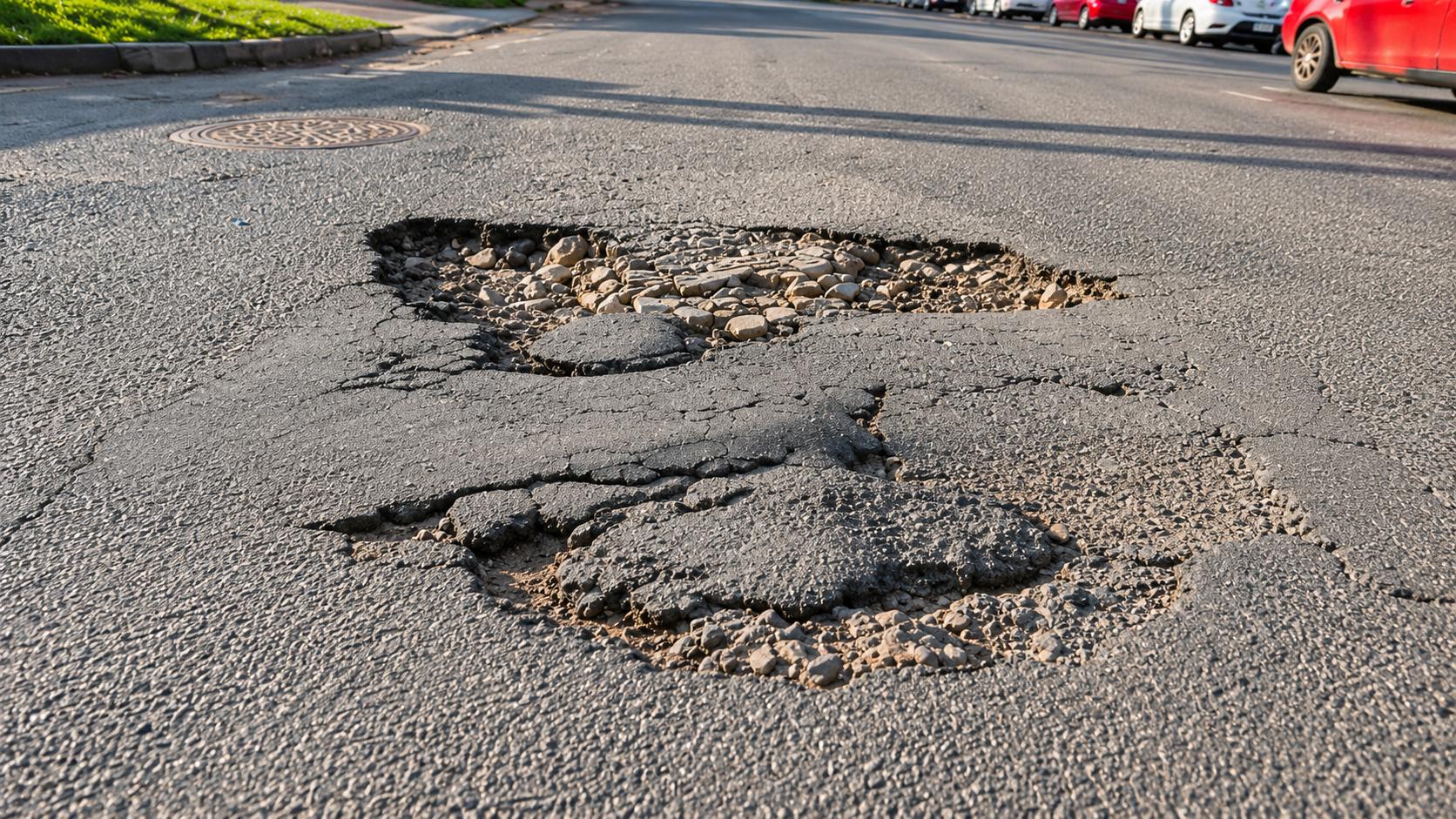
Few things unite drivers, cyclists and bus passengers in frustration quite like the state of the roads. Potholes and crumbling road surfaces have become a daily blight, damaging vehicles, endangering cyclists and prompting widespread complaints, and behind them lies a vast and growing backlog of repairs that has been decades in the making.
A National Disgrace.
The condition of local roads has been bluntly described as a national disgrace. The cost of clearing the backlog of repairs needed to bring local roads in England and Wales up to a reasonable standard has reached record levels, running to well over eighteen billion pounds, and would take more than a decade to clear at current rates.
This is the result of decades of underinvestment, in which roads have been patched rather than properly maintained, and the problem has worsened as worsening weather takes its toll. The backlog has grown despite repeated funding announcements.
Roads Running Out of Life.
The scale of deterioration is alarming. More than half of the local road network is reported to have less than fifteen years of structural life remaining, and a significant proportion has less than five years left before it reaches the end of its usable life.
Only around half of local roads are reported to be in good structural condition. On current trends, local roads are resurfaced, on average, only once every ninety years or so, far less often than they need to be to keep them in good repair.
Patching Over the Problem.
Councils fill enormous numbers of potholes, with around two million filled in a single year, yet this has done little to halt the overall decline. The problem is that filling potholes is often only a temporary fix, treating the symptom rather than the underlying deterioration of the road.
The short-term nature of much road funding has encouraged this patch-and-mend approach, which fails to deliver lasting improvement. Highway engineers themselves point out that years of spending have produced no real uplift in the condition of the network.
The Cost to Drivers.
For drivers, the consequences are expensive and frustrating. Potholes can damage tyres, wheels and suspension, leaving drivers with repair bills they must often pay themselves, and breakdown services attend huge numbers of pothole-related callouts each year.
Millions of drivers suffer pothole damage annually, at a collective cost running into many hundreds of millions of pounds. The poor state of the roads is, in effect, a hidden tax on motorists, who pay for the consequences of underinvestment.
A Danger to Cyclists.
The dangers of poor road surfaces fall especially heavily on cyclists and motorcyclists, for whom a pothole can be not just an inconvenience but a serious hazard. Research suggests that road surface conditions contribute to a higher proportion of serious injuries for riders than for drivers.
As efforts are made to encourage cycling for the sake of health and the environment, the poor state of the roads presents a real obstacle and risk. Safe, well-maintained roads are important for all road users, but particularly for those on two wheels.
The Funding Question.
There has been recognition of the problem, with increased funding announced for local road maintenance, including a notable uplift and a commitment to longer-term funding intended to allow councils to plan ahead. This has been cautiously welcomed as a step in the right direction.
But it has also been widely acknowledged that the extra funding, while helpful, falls far short of what is needed to clear the backlog any time soon. Reversing decades of underinvestment will require sustained, long-term funding rather than one-off announcements.
The Region's Roads.
For the North East, as elsewhere, the state of local roads is a daily concern for residents and a significant pressure on councils already stretched financially. Maintaining the road network is a core council responsibility, yet the funding to do so properly has not kept pace with the need.
Well-maintained roads matter for the region's economy as well as for the daily lives of its people, enabling the movement of people and goods on which everything depends. The crumbling state of the roads is therefore a problem that affects everyone.
Repairing the Damage.
The pothole plague and the crumbling state of local roads reflect decades of underinvestment that have left a vast backlog of repairs and a network in worrying decline. While recent funding increases offer some hope, the scale of the problem means that lasting improvement will require sustained, long-term investment.
For the drivers, cyclists and communities who depend on them, properly maintained roads are not a luxury but a necessity. Repairing the damage done by years of neglect, and keeping the roads in good repair thereafter, is a challenge that will take time, money and commitment to put right.
The Cost of Short-Termism.
The sorry state of the nation's local roads is, in many ways, a case study in the costs of short-term thinking, a cautionary tale of what happens when essential maintenance is neglected in favour of short-term savings. For years, funding for road maintenance has been inadequate and unpredictable, allocated in short-term bursts that have encouraged a reactive, patch-and-mend approach rather than the planned, preventive maintenance that keeps roads in good repair.
The result is a false economy, in which the failure to invest properly in maintaining roads has allowed them to deteriorate to the point where far more expensive repairs are now needed, a backlog that has grown to record levels and will take many years and vast sums to clear. Filling potholes as they appear, rather than maintaining road surfaces before they fail, treats the symptoms while the underlying condition worsens, and costs far more in the long run than timely maintenance would have done.
This pattern of short-termism is not unique to roads but reflects a wider tendency to cut back on maintenance and prevention when budgets are tight, storing up far greater costs for the future. The lesson is clear: investing properly in maintaining essential infrastructure, rather than allowing it to decay and then paying dearly to repair it, is both more effective and ultimately cheaper.
This is why the commitment to longer-term funding for road maintenance, allowing councils to plan ahead and maintain roads properly rather than lurching from one short-term allocation to the next, is so important, even if the sums involved still fall short of what is needed. Breaking the cycle of short-termism, and investing in the steady, planned maintenance that keeps roads in good repair, is the only way to reverse the decline and to avoid repeating the same costly mistakes in future.
The crumbling state of the roads is a reminder that neglecting maintenance is no saving at all, but a deferred and magnified cost that eventually has to be paid.
Join the conversation.
The backlog of local road repairs has hit a record of over £18 billion and would take more than a decade to clear.
How bad are the roads where you live, and have potholes cost you?
Local News
Pothole Plague: The Crumbling State of Our Local Roads
The backlog of local road repairs has hit a record £18bn and would take over a decade to clear. We look at the pothole plague and the state of our roads.
Advertisement




Comments (0)
You must be logged in to post comments.
Don't have an account? Register here
No comments yet. Be the first to share your thoughts!