
Prague escaped the wartime destruction that flattened much of central Europe, and the result is a historic centre of remarkable completeness.
Gothic, Baroque and Art Nouveau buildings sit alongside one another across an area small enough to cross on foot, and prices remain noticeably lower than in Western European capitals.
Here is how to approach a couple of days there.
Getting there from Newcastle.
Prague has been served from Newcastle Airport in recent years, with flying time around two hours and ten minutes. Operators and frequencies change, so check what is currently available.
Václav Havel Airport lies west of the city. The Airport Express bus runs to the main railway station in around thirty-five minutes, and public buses connect to metro stations for less.
Use official taxi ranks or a booked service rather than accepting offers inside the terminal.
Where it is and how it works.
Prague sits in Bohemia, in the western half of the Czech Republic, on the River Vltava.
The centre divides into distinct districts. Staré Město is the old town, Nové Město the confusingly named New Town dating from the fourteenth century, Malá Strana the lesser town below the castle, and Hradčany the castle district itself.
Charles Bridge links the two banks and is the natural pivot of any visit. Josefov, the former Jewish quarter, sits within the old town.
The castle is the largest of its kind.
Prague Castle is described as the largest ancient castle complex in the world, and it functions as a district rather than a single building.
Within it, St Vitus Cathedral is the highlight, along with the Old Royal Palace and the Golden Lane of small historic houses.
Tickets cover different circuits depending on what you want to see. Going early avoids both crowds and the worst of the coach parties, and the walk up through Malá Strana is pleasant in itself.
The Old Town Square is the centrepiece.
The square holds the Astronomical Clock, dating from the early fifteenth century and among the oldest working examples anywhere.
On the hour, the apostles process past the windows. It is brief, and the crowd is always larger than the spectacle, but it is worth seeing once.
The Týn Church and the Old Town Hall tower, which has a lift, both give good views. Climbing the tower is one of the better value things to do in the city.
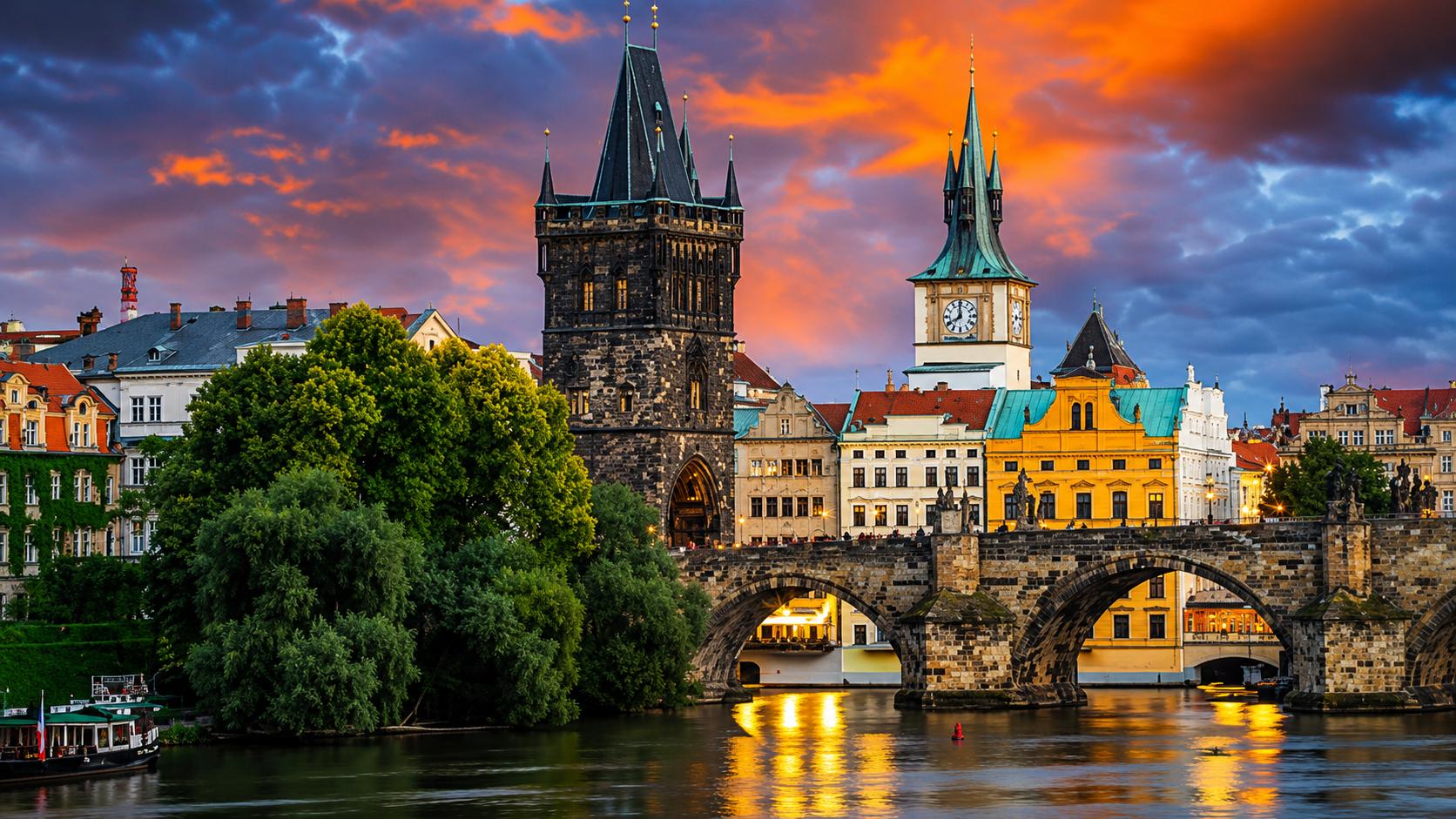
Charles Bridge is best early.
The bridge is lined with baroque statues and crosses the Vltava between the old town and Malá Strana.
By mid-morning it is extremely crowded. Walking it at dawn or after dark is a completely different experience and one of the highlights of any visit.
River cruises operate from both banks and provide a good hour off your feet, with the castle looking particularly striking from the water.
It works better with children than expected.
Petřín Hill, reached by funicular, has a mirror maze, a lookout tower resembling a miniature Eiffel Tower and extensive parkland.
The National Technical Museum is genuinely excellent, with halls of aircraft, cars and locomotives, and it is far less well known to visitors than it deserves.
Prague Zoo, north of the centre, consistently ranks among the best in Europe. The Lego Museum, the Toy Museum in the castle grounds and pedal boat hire on the river all fill an afternoon.
The Jewish quarter needs context.
Josefov contains several synagogues and the Old Jewish Cemetery, where headstones are stacked closely together across many layers.
The Pinkas Synagogue carries the names of Czech Jewish victims of the Holocaust inscribed on its walls, and the accompanying exhibition includes children's drawings from Terezín.
It is profoundly affecting, and worth preparing older children for. A combined ticket covers most of the sites.
Practical points.
The Czech Republic uses the koruna, not the euro. This catches out a great many visitors, and prices quoted in euros are usually poor value.
Avoid currency exchange booths in the tourist centre, which have historically offered very poor rates and confusing terms. Withdraw from a bank ATM and always decline the offer to be charged in pounds.
Taxi overcharging has been a persistent problem. Use a booked service or an app rather than hailing on the street near tourist sites.
Beer is famously cheap and famously good, and Czech pilsner is a national point of pride.
When to go.
Spring and autumn are ideal, with mild weather and manageable crowds.
Summer is busy and can be hot. Winter is cold, often below freezing, but the Christmas markets in the Old Town Square are among the best in Europe.
Prices for accommodation rise sharply around Christmas and New Year, so book early if that is the plan.
Share your thoughts.
Is Prague still good value, or have the prices caught up with the rest of Europe?
Travel News
Prague from Newcastle: A City Break Guide
Prague survived the twentieth century largely intact, leaving one of the most complete historic centres in Europe at prices well below Western capitals.
Advertisement

Comments (0)
You must be logged in to post comments.
Don't have an account? Register here
No comments yet. Be the first to share your thoughts!