
Rome is not a city you can improvise your way around successfully. The major sites operate timed entry, sell out days ahead and generate queues that can swallow half a day.
Plan properly and it is one of the great short breaks. Turn up hoping for the best and you will spend a weekend standing in lines.
Here is what to book, what to skip and how to manage it with children.
Getting there from Newcastle.
Rome has been served from Newcastle Airport in recent years, with flying time around two hours and fifty minutes. Services vary by season and operator, so check current schedules before planning.
Fiumicino is the main airport, connected to Roma Termini by the Leonardo Express train in around thirty-two minutes. Ciampino, used by some low-cost carriers, is served by coach transfers.
Termini is the main rail hub and a metro interchange, though it is not the most pleasant area to stay in.
Where it is and how it works.
Rome sits inland in central Italy, on the River Tiber. The historic centre is on the east bank, with the Vatican and Trastevere on the west.
The centre is walkable but the distances add up quickly, and the ground is uneven. Cobbles, known locally as sampietrini, are hard going in unsuitable shoes and difficult with a pushchair.
The metro has limited coverage precisely because digging turns up archaeology, so buses and walking do most of the work.
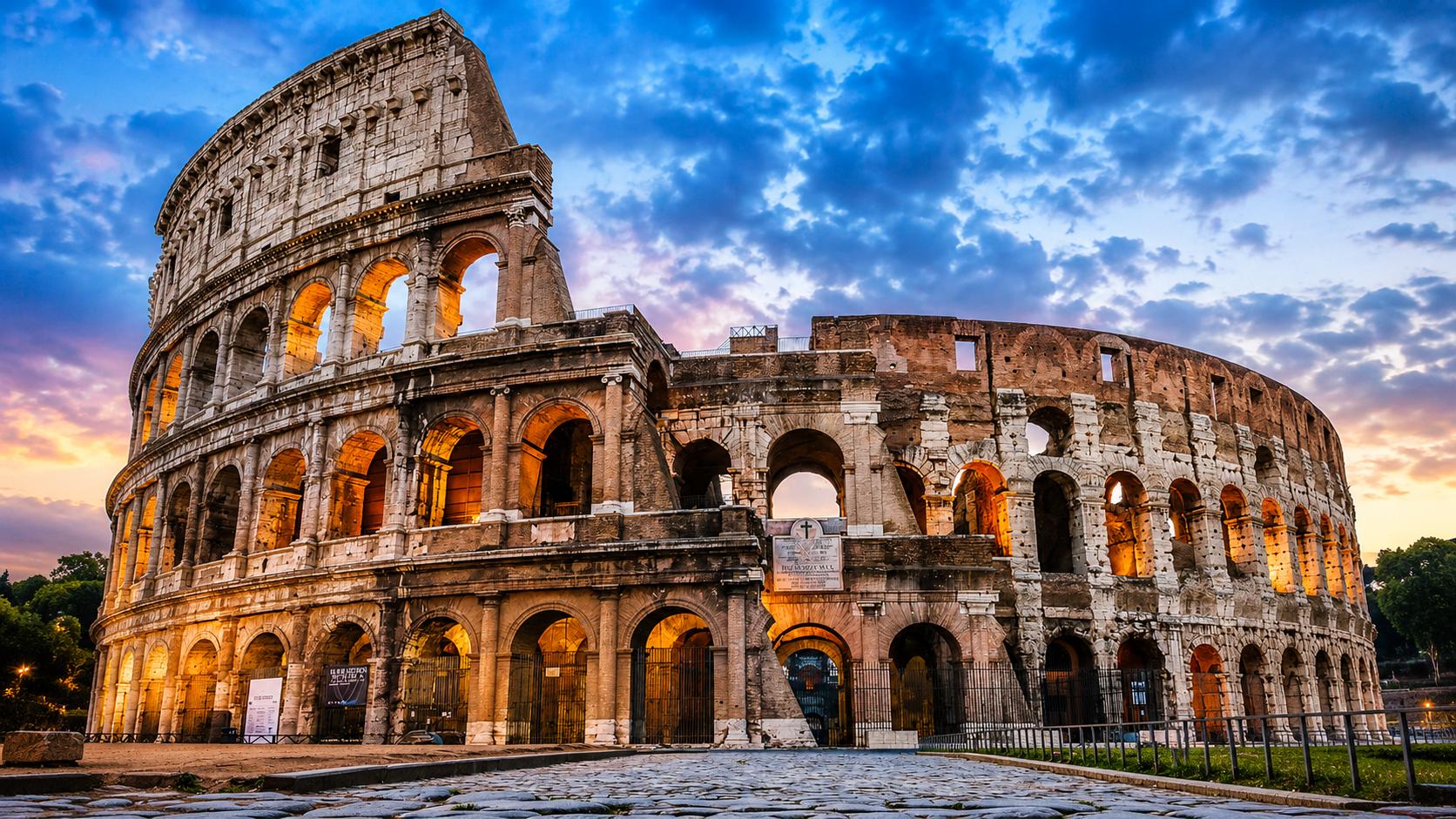
The Colosseum needs booking.
Tickets for the Colosseum are combined with the Roman Forum and Palatine Hill and are timed. They are released online in advance and sell out, particularly in peak season.
Arena floor and underground access are separate, more limited tickets and are worth having if you can get them.
The Forum is enormous and considerably more rewarding with a guide or a good audio guide, since without context it can look like a field of broken columns.
The Vatican requires its own plan.
The Vatican Museums culminate in the Sistine Chapel, and the route through is long, crowded and one-directional. Book a timed entry online.
St Peter's Basilica is free to enter but has airport-style security with substantial queues. The dome climb is a separate ticket and involves a lot of steps.
A dress code is enforced at both: shoulders and knees covered for everyone, including in hot weather. Visitors are turned away daily for ignoring this, so plan clothing accordingly.
Free and cheap sights are everywhere.
The Pantheon is the best-preserved building of ancient Rome and now charges a modest entry fee, introduced in recent years. It remains extraordinary value.
The Trevi Fountain, Spanish Steps and Piazza Navona cost nothing. Note that sitting on the Spanish Steps is prohibited and fines are issued.
Trastevere, across the river, is the best area for an evening wander, with narrow lanes and a good concentration of restaurants.
With children it needs pacing.
Rome is demanding for young children: hot, hard underfoot and heavy on ruins that require imagination.
Explora, the children's museum near Piazzale Flaminio, is aimed at younger visitors and is a useful break. Villa Borghese has gardens, a boating lake, bike hire and a zoo.
The Capuchin Crypt, decorated with the bones of friars, and the Bocca della Verità, where legend says a liar's hand will be bitten off, both appeal strongly to older children.
Gelato is the reliable currency of cooperation. Look for shops storing it in covered metal tins rather than piled in bright peaks, which usually indicates better quality.
Heat is a genuine issue.
Roman summers are hot, frequently well above thirty degrees, and the city holds heat in its stone.
Plan outdoor sites for early morning and late afternoon, and use the middle of the day for museums or a long lunch. Hats and water are essential.
The nasoni, cast-iron street fountains found across the city, run continuously with clean drinking water. Refilling a bottle is free and normal.
Practical points.
Italy uses the euro, and cards are widely accepted, though small businesses may prefer cash.
Restaurants near major sights are usually poor value. Walking a few streets away improves both price and quality substantially. A coperto or cover charge per person is normal and legitimate.
Beware of people offering to place a bracelet on your wrist or take your photo near major sights, both of which generally end in a demand for money.
When to go.
April, May, September and October offer the best balance of weather and crowds.
August is hot and many Roman businesses close for holidays, though the major sites remain open.
Winter is cool, quiet and the best time to see the Colosseum without a crowd, and prices drop noticeably.
Share your thoughts.
What is the one Rome sight you would tell a first-timer not to miss?
Travel News
Rome from Newcastle: A City Break Guide
Rome rewards planning more than almost any other European city, because the queues at the major sites can consume an entire day.
Advertisement

Comments (0)
You must be logged in to post comments.
Don't have an account? Register here
No comments yet. Be the first to share your thoughts!