
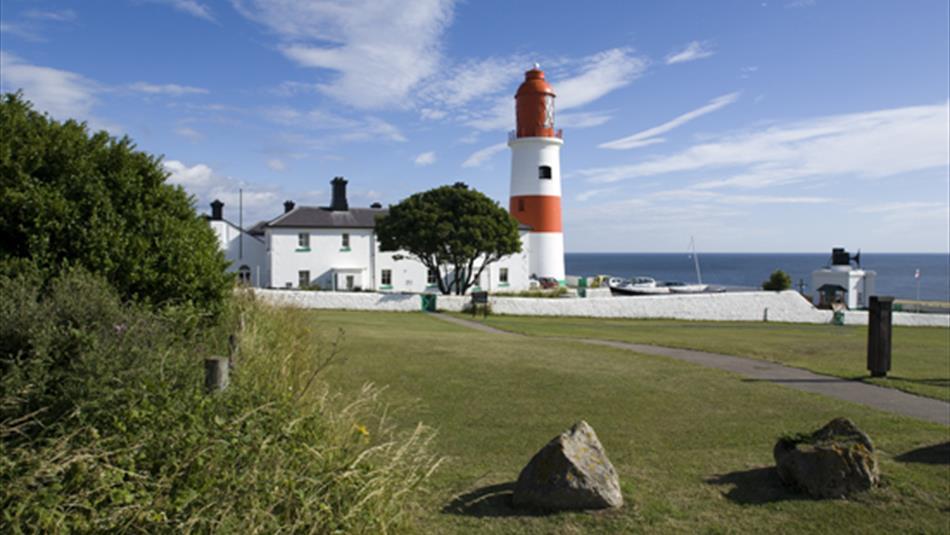
Standing proud on the cliffs of the South Tyneside coast, the red-and-white tower of Souter Lighthouse is a much-loved landmark and a place of pilgrimage for walkers and families. Yet it is far more than a pretty sight, for when it first shone out across the North Sea in 1871 it was the most advanced lighthouse in the world, a genuine pioneer of technology built right here in the North East. Souter holds a remarkable place in the history of both engineering and the sea.
A Perilous Coast.
The stretch of coast between the Tyne and the Wear was once among the most dangerous in the entire country. Hidden reefs and rocks, particularly the treacherous Whitburn Steel, lay in wait for passing ships, and poor visibility frequently led to disaster. The toll of shipwrecks along this coastline was appalling, with vessels running aground and lives and cargoes lost with grim regularity. In an age before satellite navigation and modern aids, sailors making their way between the busy ports of the Tyne and the Wear depended on reliable lights to guide them safely past these hazards, and the need for a powerful new lighthouse was pressing.
A Technological Marvel.
The answer was Souter Lighthouse, built by Trinity House and designed by the engineer James Douglass. What made it extraordinary was its source of light. Souter was the first lighthouse in the world to be specifically designed and built to be powered by alternating electric current, using a brilliant carbon arc lamp driven by generators. At a time when most lighthouses still relied on oil lamps, this was a bold and pioneering use of the new technology of electricity, and it produced a light of remarkable power. When it was first lit in 1871, Souter was described as one of the most powerful lights in the world.
The Power of Electricity.
The use of electricity at Souter was a striking demonstration of the possibilities of the new technology, and it placed the North East at the forefront of innovation. Generating electricity reliably to power the arc lamp in a remote coastal location was a considerable challenge for the engineers of the day, and the success of the installation showed that electric power could be harnessed for practical, life-saving purposes. The light shone out across the sea in a powerful beam, warning ships away from the deadly rocks and helping countless vessels to navigate the dangerous waters safely.
More Than a Light.
A lighthouse was a self-contained community, and Souter was built with the buildings needed to support the keepers and their families who tended the light. The engine house, the keepers' cottages and the workshops formed a small settlement on the clifftop, and the keepers carried out the vital and unceasing work of keeping the light burning through every night and every storm. Theirs was a life of dedication and isolation, bound to the rhythm of the light, and the preserved buildings today give visitors a vivid sense of what that life was like in the great age of the lighthouse.
A Long Service.
Souter Lighthouse served faithfully for well over a century, its light guiding ships along the coast through generations of changing technology. In time, however, the development of modern navigation aids such as satellite positioning made traditional lighthouses less essential, and Souter was eventually decommissioned in 1988 after 117 years of service. Rather than being lost, the lighthouse was preserved, and it passed into the care of the National Trust, which opened it to the public so that its remarkable story could be told to new generations of visitors.
A Place to Visit.
Today Souter Lighthouse is one of the most popular attractions on the North East coast, set amid miles of grassy clifftops, dramatic bays and spectacular sea views. Visitors can climb the tower, explore the keepers' rooms and learn about the pioneering technology that made the lighthouse so important. The surrounding coastline is a haven for wildlife and a glorious place for a walk in any season. The lighthouse has found a new life as a heritage attraction, sharing its history with all who come to admire it.
A North East First.
Souter Lighthouse stands as a proud symbol of North East innovation. That the first lighthouse in the world built to use electric power should rise on the cliffs of South Tyneside is a fitting reflection of a region that has so often been at the cutting edge of technology. From its life-saving purpose to its pioneering use of electricity, Souter embodies the ingenuity and ambition of the age that created it. It remains a beloved landmark and a lasting reminder of the North East's place in the story of human progress.
A Beacon Through the Generations.
For more than a century, the keepers of Souter Lighthouse maintained an unbroken watch, ensuring that the light never failed when ships needed it most.
The life of a lighthouse keeper was one of dedication and routine, of tending the machinery, trimming and maintaining the light, and keeping a constant vigil through the darkest and stormiest nights. It was demanding and often lonely work, carried out far from the comforts of town life, yet it was vital, for the lives of sailors depended upon the faithful performance of these duties.
The keepers and their families formed a small community on the clifftop, their lives governed by the needs of the light and the rhythms of the sea. Today, the preserved keepers' accommodation and engine rooms allow visitors to glimpse that vanished world and to appreciate the human dedication that lay behind the technological marvel.
The story of Souter is therefore not only about the pioneering use of electricity but about the people who kept the light burning, generation after generation. Their quiet service, largely unsung, saved countless lives and embodied a spirit of duty and care that gives the lighthouse its enduring human meaning. To visit Souter today is to honour both the engineers who built it and the keepers who tended it.
Over to you.
Souter was the first lighthouse in the world built to be powered by electricity.
Have you ever visited Souter Lighthouse and climbed its historic tower?
Tech News
Souter Lighthouse: The World's First Electric Lighthouse
How Souter Lighthouse on the South Tyneside coast, opened in 1871, became the first lighthouse in the world purpose-built to be powered by electricity.
Advertisement





Comments (0)
You must be logged in to post comments.
Don't have an account? Register here
No comments yet. Be the first to share your thoughts!