
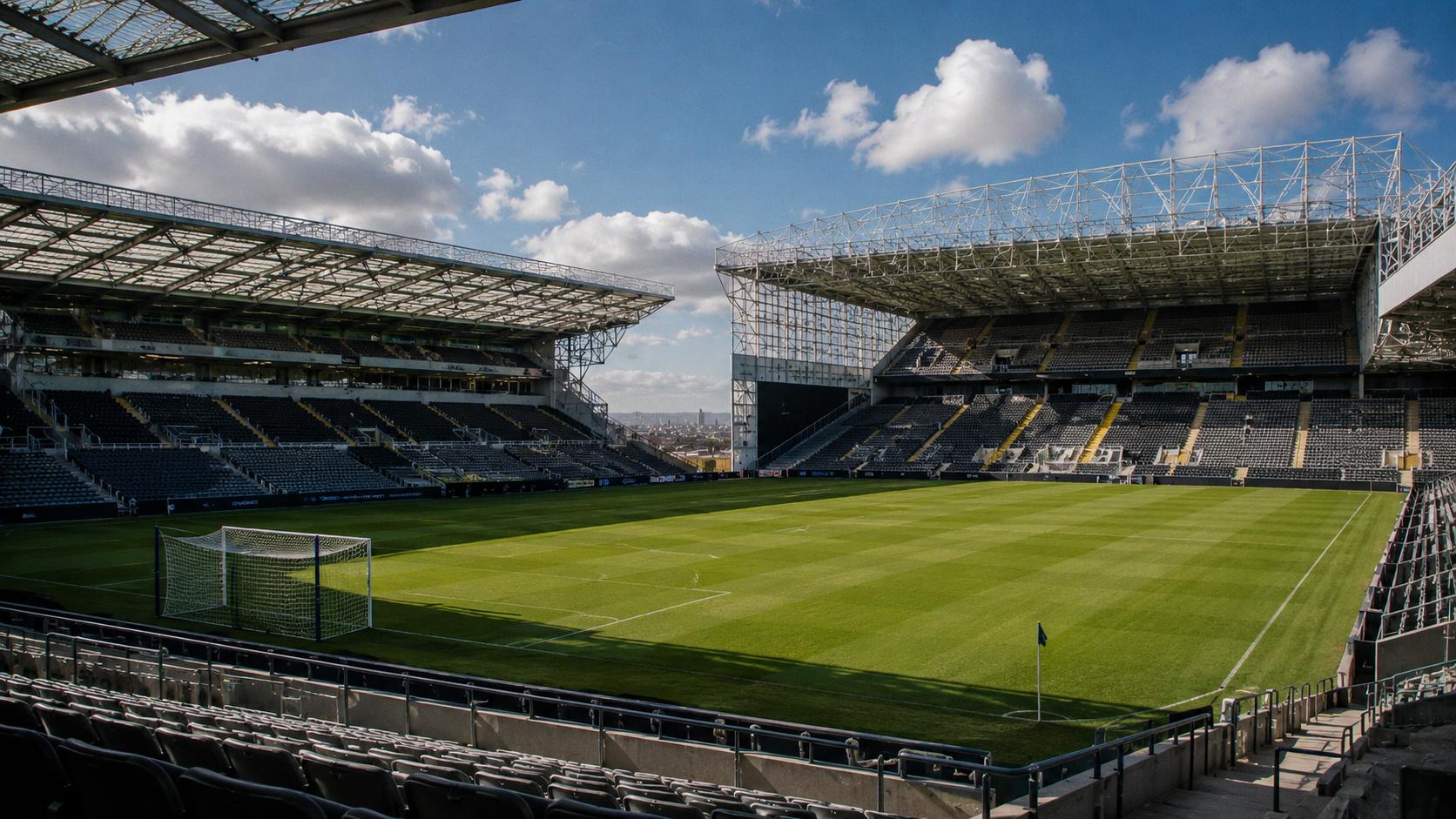
Few football grounds in England command a skyline quite like St James' Park. Sitting on raised ground close to the heart of Newcastle city centre, the stadium looms over shops, streets and railway lines below, visible from miles away and instantly recognisable to anyone who has ever approached the city by road or rail.
Newcastle United have called the site home since 1892, making it one of the longest continuously used stadiums in English football. Over more than a century, the ground has been rebuilt, expanded and modernised numerous times, evolving from a modest enclosure into one of the largest club stadiums in the country, now holding well over fifty thousand supporters on matchdays.
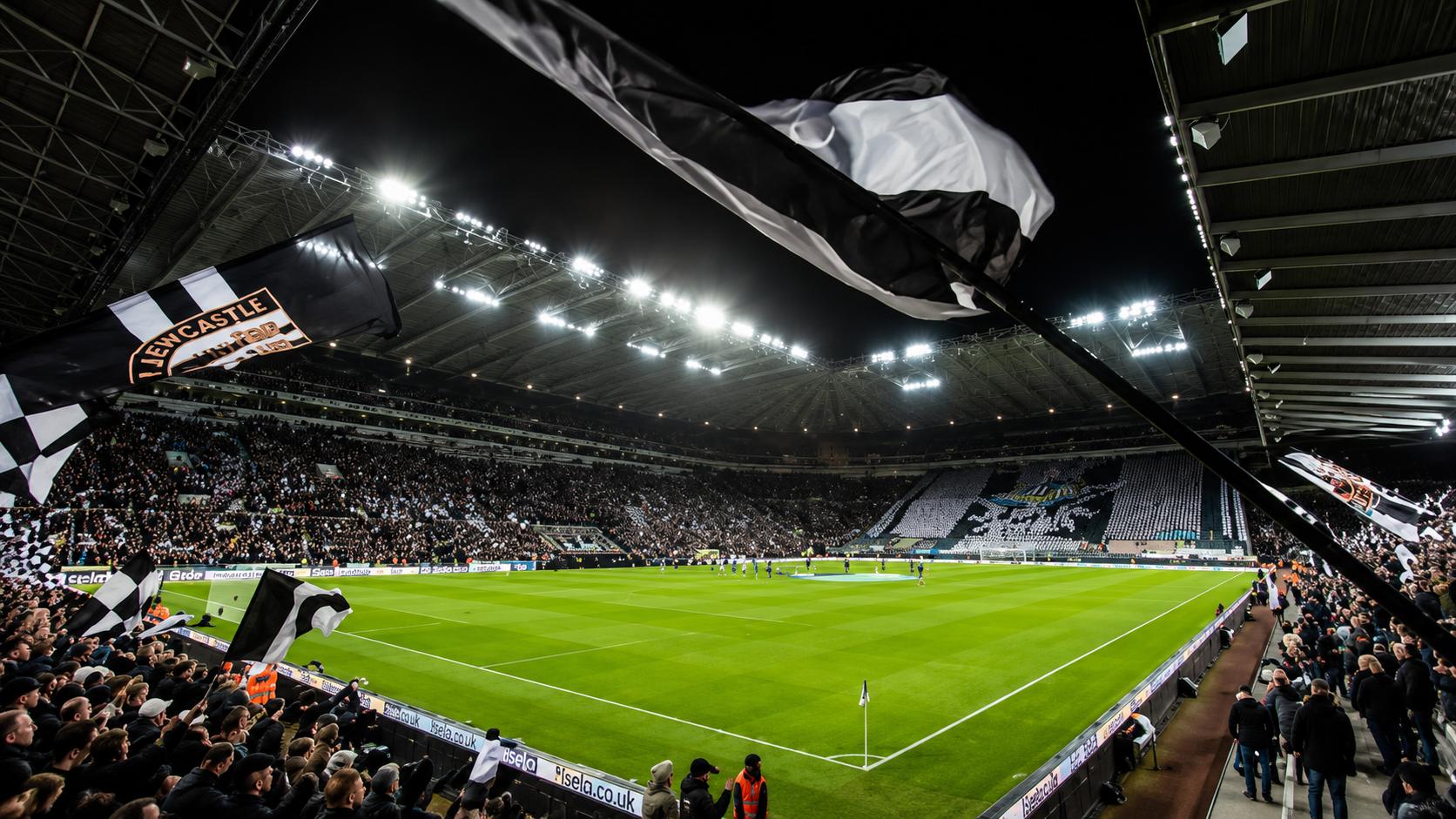
That scale brings a genuinely distinctive matchday atmosphere. Because the stands rise so steeply and closely around the pitch, noise from the crowd tends to build and echo in a way that smaller or more open grounds simply cannot replicate, giving away teams a famously hostile reception and giving home supporters a stadium that feels louder than its capacity alone would suggest.
The ground's central, elevated position within the city also makes it unusually integrated into everyday Newcastle life, unlike stadiums built on the outskirts of many other English cities. Locals and visitors pass beneath its stands simply going about their day, and on matchdays the surrounding streets, pubs and shops transform almost entirely around the rhythm of kick-off.
Redevelopment has been a recurring theme throughout the stadium's history, with successive expansions reflecting the club's changing fortunes and ambitions. Each phase of building work has left its own mark on the ground's distinctive, slightly asymmetric skyline, a visual reminder of just how many different eras of the club's history are layered into the same site.
For supporters, St James' Park carries a significance that goes well beyond its physical scale. Generations of the same families have stood, and later sat, in roughly the same spots to watch Newcastle play, turning the stadium into a genuine thread of continuity between decades of very different football, players and managers.
Away supporters visiting the ground for the first time frequently comment on just how unusual its city-centre setting feels compared to more modern stadiums built on retail parks or industrial estates well outside the urban core, a design quirk that dates back to an era when football grounds were built close to the working communities they were originally intended to serve.
The stadium's exterior has also become something of an unofficial landmark for the wider city, appearing in countless photographs, postcards and establishing shots of Newcastle used in television and film, ensuring its distinctive silhouette functions as a recognisable symbol of the city itself for people who may have no particular interest in football at all.
Floodlights and covered stands, relatively novel additions when first installed at grounds across the country, transformed the matchday experience at St James' Park considerably compared with the more exposed, open terraces of the club's earliest decades, part of a long series of incremental changes that gradually turned the ground into the modern stadium it is today.
Whatever the next chapter of Newcastle United's story holds, St James' Park looks set to remain exactly what it has been for well over a hundred years: the unmistakable heart of football on Tyneside, visible from almost anywhere in the city.
Have your say.
What's your favourite memory of St James' Park?
Sports News
St James' Park: The Story Behind Newcastle's Iconic Stadium
Perched above the city centre and visible from almost every angle of Newcastle, St James' Park has been the emotional home of Geordie football for well over a century.
Advertisement



Comments (0)
You must be logged in to post comments.
Don't have an account? Register here
No comments yet. Be the first to share your thoughts!