
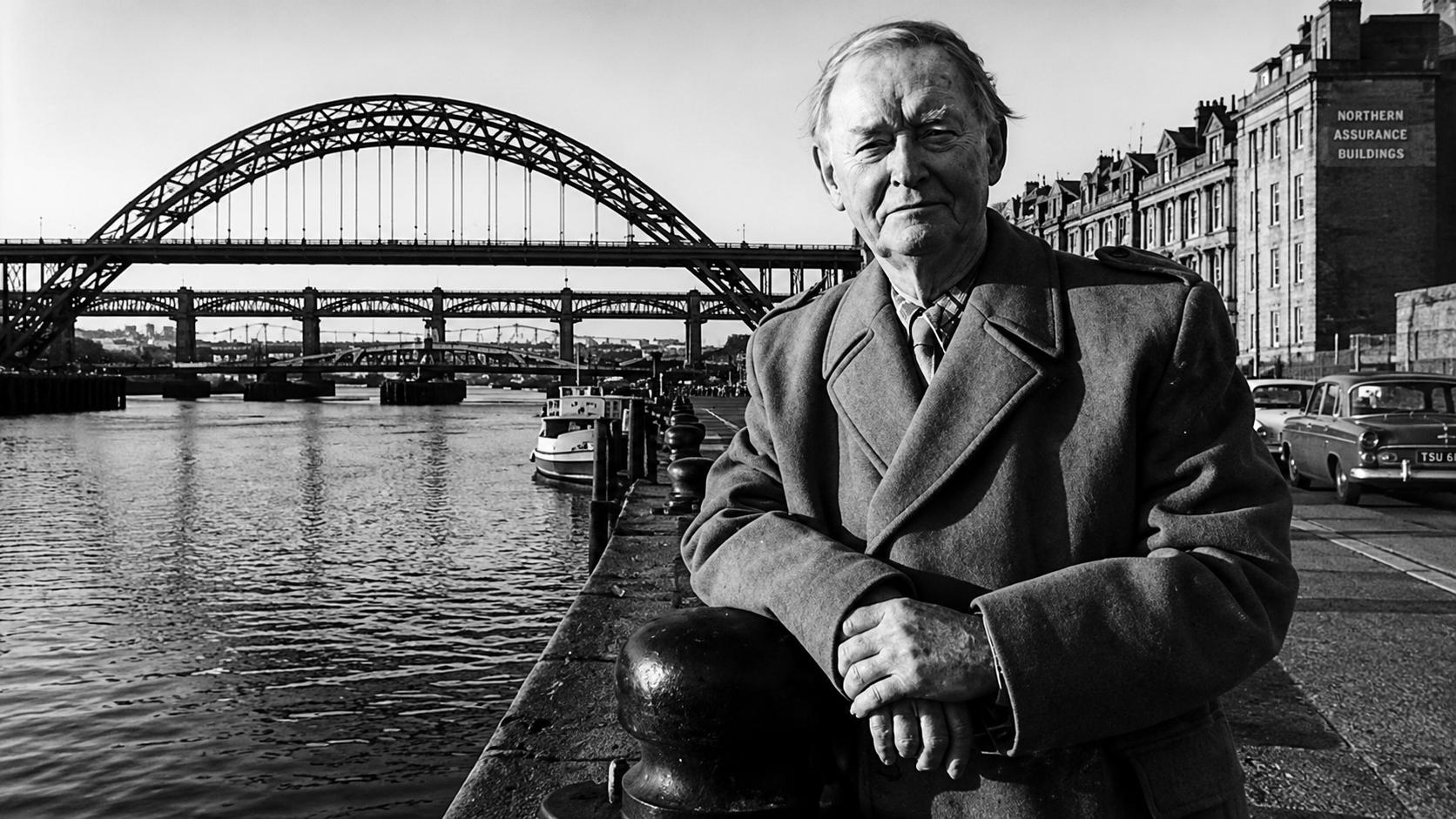
Thomas Daniel Smith was born in 1915 in Wallsend, the son of a coal miner, and left school early to train as a painter and decorator in a local shipyard. Few who knew him then could have predicted he would go on to become one of the most powerful, and eventually notorious, local politicians in twentieth-century Britain. By the time he resigned as leader of Newcastle City Council in 1965, Smith had earned the nickname "Mr Newcastle" for the sheer scale of his ambition.
Smith led Newcastle City Council from 1960 to 1965, during which he pursued a sweeping vision to remake the city as, in his own words, the "Brasilia of the North". Working closely with chief planning officer Wilfred Burns, he oversaw the demolition of large sections of Newcastle's Victorian centre to make way for new roads, tower blocks and shopping developments, clearing the way for what became Eldon Square and helping secure the city's university expansion.
Supporters credited Smith with genuinely transforming Newcastle, clearing slum housing and dragging the city into the modern era at a time when much of the North East felt left behind. Critics argued he did lasting damage to the city's architectural heritage, demolishing historic streets designed by John Dobson and Richard Grainger in favour of concrete redevelopment that has divided opinion ever since. Newcastle Civic Centre itself, opened in 1968, was built during this same era of ambitious civic transformation.
Smith's political influence extended well beyond Newcastle. In 1965 he became chairman of the newly created Northern Economic Planning Council, a role that made him arguably the most powerful unelected figure in North East public life, championing regional economic development at a national level and cementing his reputation as a genuine political visionary.
His downfall began with links to architect John Poulson, whose firm secured major contracts across the country through a web of bribery. Smith worked as a paid consultant for Poulson, using his network of contacts in town halls nationwide to help steer lucrative redevelopment contracts his way. In 1970 Smith was tried, and acquitted, over a separate corruption case involving Wandsworth Council in London, though he was forced to resign his remaining public offices.
Poulson's company collapsed into bankruptcy in 1972, and the bankruptcy hearings exposed the full extent of his bribery network, implicating councillors, civil servants and politicians across the country. Smith was arrested again in October 1973. At his 1974 trial at Leeds Crown Court, he pleaded guilty to eleven counts of corruption and conspiracy, admitting he had received around £156,000 from Poulson over roughly seven years, mostly channelled through his own public relations company.
Smith was sentenced to six years in prison, of which he ultimately served just over three. The case became one of the most notorious in British local government history, prompting national reforms to standards of conduct in public life. Smith later gave evidence to the Royal Commission on Standards of Conduct in Public Life while still in prison, reflecting publicly on the culture that had allowed such corruption to flourish.
Smith's rise to power had itself been genuinely remarkable, having built his early reputation as a political agitator on Tyneside before entering local politics properly. Historians have since described him as "the first American-style city boss in Britain", noting that his personal painting and decorating firm received more than half of all Newcastle council housing maintenance contracts during his years of greatest influence, an early sign of the blurred lines between business and politics that would eventually define his downfall.
His influence was so significant during the mid-1960s that the Conservative government reportedly sent the peer Lord Hailsham up to Newcastle specifically to try to counter Smith's growing regional political dominance, illustrating just how seriously his rise was being taken at a national level, well beyond the boundaries of Newcastle city politics alone, during the years immediately preceding his dramatic fall from grace.
After his release, Smith lived a far quieter life, at one stage residing in a tower block flat in Newcastle's Spital Tongues area and remaining involved with local tenant groups. He died in 1993, aged 78, leaving behind a legacy that remains genuinely contested. Newcastle's skyline still bears the physical marks of his vision, for better and worse, and his name remains shorthand across the North East for the fine line between ambition and corruption in local government.
Share your thoughts.
Do you think Newcastle should judge T. Dan Smith kindly?
Crime News
T. Dan Smith: The Newcastle Boss Who Fell From Grace
T. Dan Smith transformed Newcastle into a modern city as council leader in the 1960s, then went to prison for corruption. His story remains one of the most dramatic in North East political history.
Advertisement



Comments (0)
You must be logged in to post comments.
Don't have an account? Register here
No comments yet. Be the first to share your thoughts!