
Farmers across Newcastle and the wider North East are facing growing fears over rising rural crime after new figures revealed the region has seen one of the sharpest increases in agricultural theft anywhere in England.
According to new data released by insurance firm NFU Mutual, the North East experienced a significant rise in the theft of farm vehicles and equipment during 2025, with the total financial cost of rural crime in the region climbing to £7.6 million.
The figures paint a troubling picture for farming communities already under pressure from rising costs, unpredictable weather, and ongoing economic uncertainty. While some parts of the country have reported falling crime rates in rural areas, many farmers across Northumberland, County Durham, and areas surrounding Newcastle say thefts are becoming more organised and increasingly difficult to prevent.
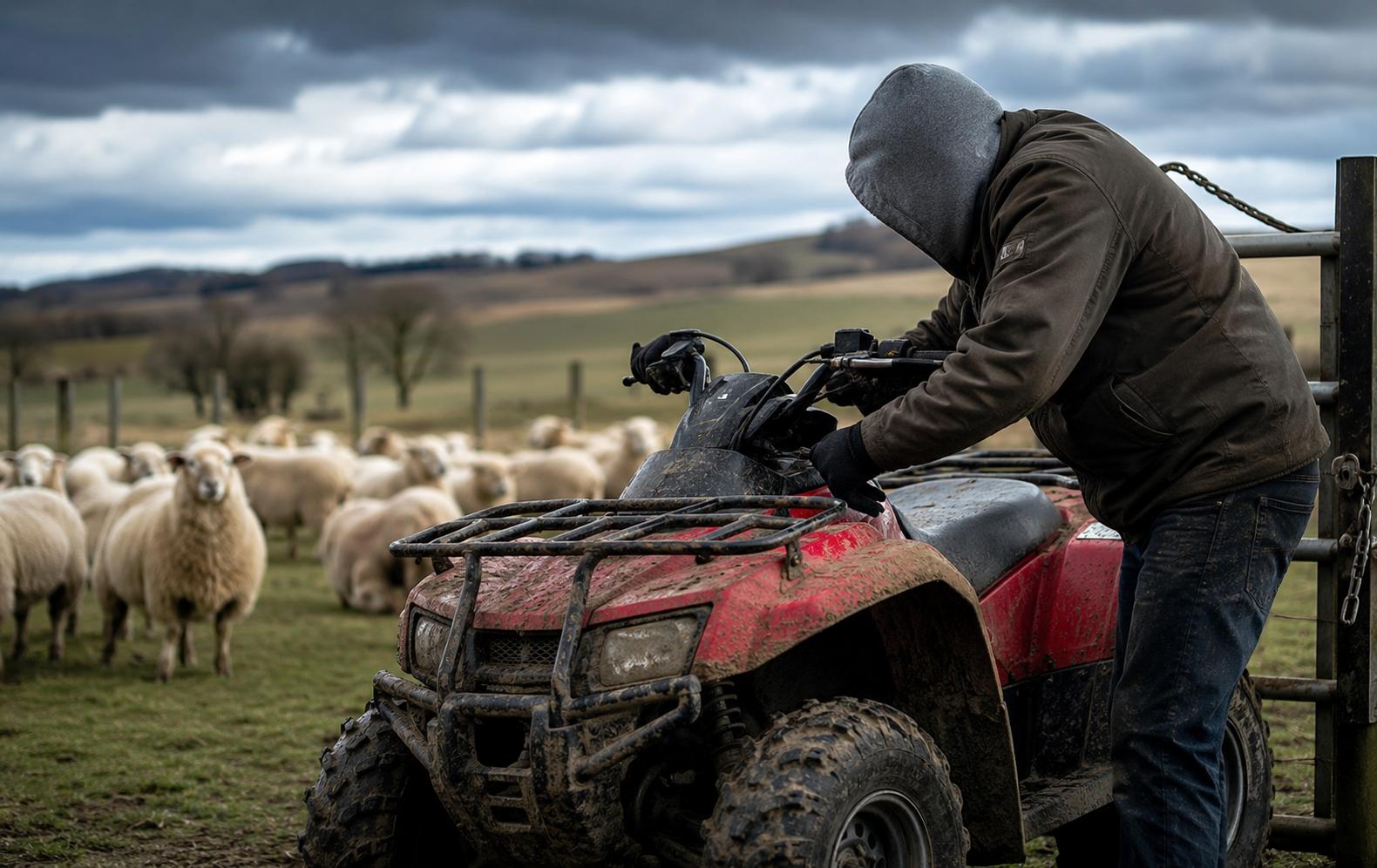
The report also found thefts involving agricultural vehicles such as quad bikes, excavators, and dumpers rose by 19% in the North East compared with the previous year.
For many farmers, however, the financial losses tell only part of the story.
Farmers Say Rural Crime Is Causing Major Disruption.
Agricultural leaders across the North East say the emotional and operational impact of rural theft can be devastating for businesses already operating on tight margins.
William Maughan, North East chair of the National Farmers Union and a farmer near Darlington, said replacing stolen machinery often takes months and can seriously disrupt day-to-day operations.
Modern farms depend heavily on specialist vehicles and equipment to carry out essential work efficiently. When machinery disappears, farmers can face delays during critical periods such as lambing, harvesting, or transporting livestock.
Many rural businesses are also located in isolated areas where security can be more difficult to maintain compared with urban locations.
Farmers throughout the Newcastle region have increasingly invested in CCTV systems, vehicle trackers, gates, and security lighting in an attempt to deter organised criminal groups.
Despite these efforts, many believe offenders are becoming more sophisticated and targeted in their approach.
Industry experts say stolen machinery is often transported quickly across regions or even exported overseas before authorities can recover it.
Livestock Theft Continues To Alarm Farming Communities.
Alongside vehicle thefts, livestock crime remains one of the biggest concerns affecting rural communities across northern England.
Although overall rural crime figures fell nationally by 6% last year, livestock thefts continue rising in several regions, including Cumbria where incidents reportedly increased by 30%.
For farmers, losing animals represents far more than financial damage.
Many farming families spend years building and maintaining flocks, often developing strong emotional attachments to the animals they care for daily.
The impact of theft can therefore feel deeply personal as well as economically damaging.
Farmers say the nature of livestock theft suggests offenders often possess detailed knowledge of farming operations and animal handling.
Unlike opportunistic crimes, stealing large numbers of sheep or cattle requires planning, transport, and an understanding of rural landscapes.
This has led to growing concern that organised criminal networks may increasingly be targeting isolated farms across the North of England.
Cumbria Farmer Speaks Out About Sheep Losses.
One farmer speaking about the issue is Cumbria livestock farmer Greg Penellum, who says repeated sheep thefts are threatening the future of his family business.
Penellum, who has farmed near Millom for more than three decades, first became suspicious several years ago after dozens of young sheep suddenly disappeared from his land.
At first, he believed the missing animals may have strayed or become separated from the flock. However, as the losses continued increasing each year, he concluded theft was the most likely explanation.
Over the past 12 months alone, he estimates around 120 sheep have gone missing.
Speaking about the emotional impact, Penellum described feeling hurt and frustrated by the situation.
He said the scale and precision involved suggested the offenders likely understood farming and livestock handling extremely well.
For smaller farms already managing rising feed prices and operating costs, losses on this scale can quickly become financially unsustainable.
Farmers across Cumbria and the wider North East say incidents like these are creating growing anxiety within rural communities.
Newcastle And North East Farmers Call For Stronger Action.
Agricultural organisations are now calling for stronger rural policing and improved support for isolated farming communities.
Many farmers argue rural crime has historically received less attention than offences in towns and cities despite the serious financial consequences for agricultural businesses.
The National Farmers Union has repeatedly urged the government and police forces to invest more resources into specialist rural crime units capable of responding quickly to thefts in remote areas.
Several police forces across the North East have already increased patrols and introduced dedicated countryside crime teams in response to growing concerns.
However, many farmers believe organised criminals continue exploiting slow response times and limited surveillance in isolated locations.
Security experts are also encouraging farmers to use forensic marking technology, GPS tracking systems, and vehicle immobilisers to make stolen equipment harder to sell.
Community cooperation has become another important tool in tackling rural crime.
Farmers across Newcastle, Northumberland, and Cumbria increasingly rely on local WhatsApp groups and neighbourhood alert systems to report suspicious vehicles and activity quickly.
Rising Costs Add Pressure To Rural Businesses.
The rise in thefts comes during an already challenging period for many agricultural businesses across the UK.
Farmers are continuing to deal with inflation, fuel costs, labour shortages, and uncertainty surrounding future government support schemes.
Industry leaders warn that repeated thefts could discourage investment and place additional strain on family-run farms already struggling financially.
For some businesses, rising insurance premiums linked to increased rural crime are becoming another major concern.
There are also fears that younger generations may become less willing to continue working in agriculture if rural communities increasingly feel unsafe or unsupported.
In regions surrounding Newcastle where farming plays a vital role in local economies, the long-term impact of rising crime could extend beyond individual farms and affect wider rural communities.
Rural Crime Remains A Growing National Concern.
Although national figures suggest overall rural crime has fallen slightly, many industry experts believe the problem remains widespread and underreported.
Some incidents involving livestock theft or fuel siphoning may never officially reach police statistics because farmers often feel recovery chances are low.
The hidden financial impact may therefore be considerably larger than official estimates suggest.
Experts say rural crime is evolving as criminals become more organised and increasingly aware of weaknesses in isolated farming areas.
Technology may help improve prevention in future, but many farmers believe stronger sentencing and better police resources are also needed to deter offenders effectively.
For now, rural communities across Newcastle and the wider North East continue hoping authorities can slow what many describe as an increasingly worrying trend.
Do you think police and government are doing enough to protect farmers and rural businesses from theft and organised crime?
Crime News
The Disturbing Rise In Rural Crime Affecting North East Farms
Advertisement




Comments (0)
You must be logged in to post comments.
Don't have an account? Register here
No comments yet. Be the first to share your thoughts!