
Walk through Newcastle city centre, Gateshead, Sunderland or almost any North East town and one question keeps coming up.
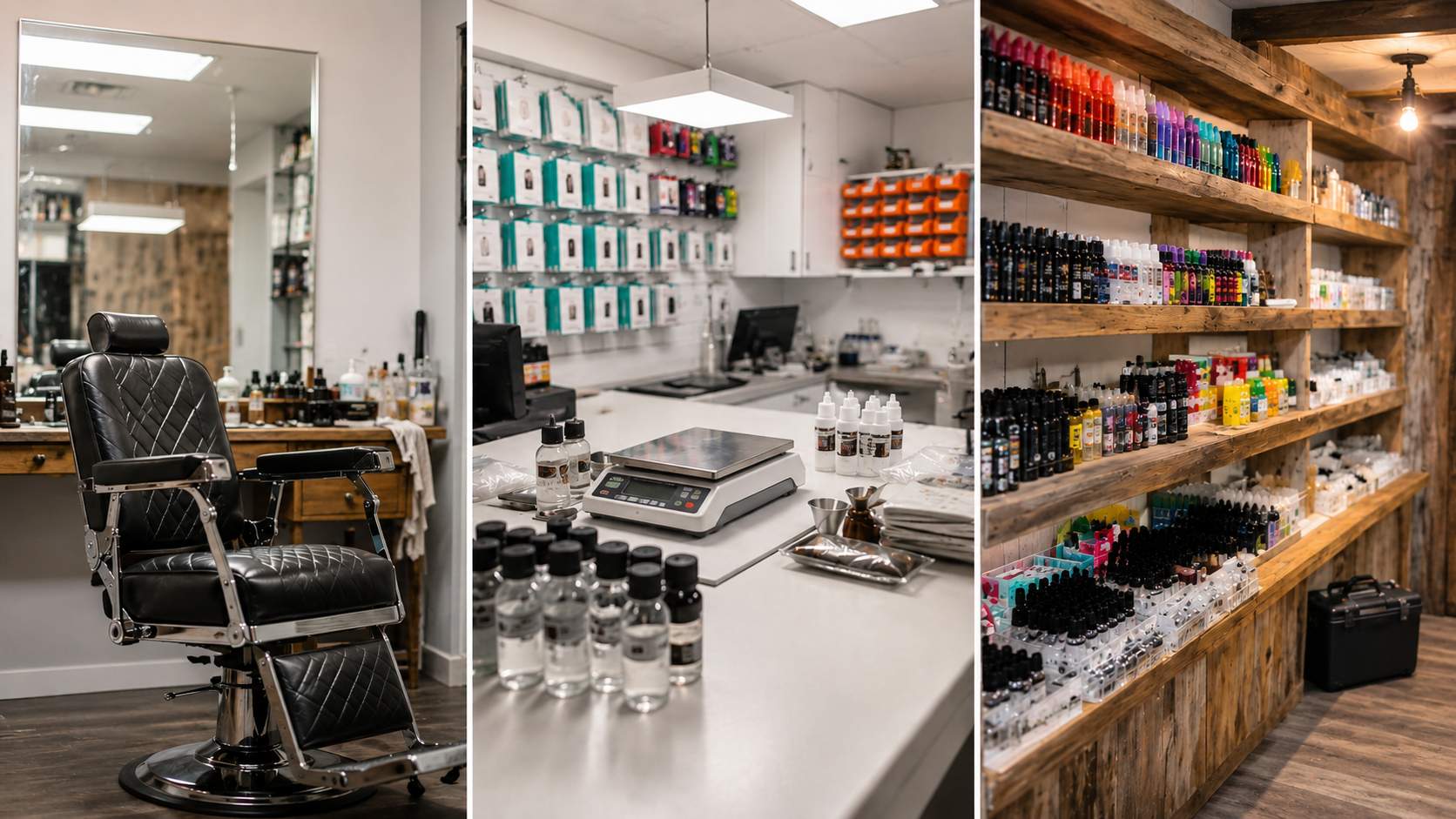
Why are there so many barber shops, vape stores and phone repair businesses opening?
It is a conversation happening on social media, in pubs and among shoppers who have watched traditional retailers disappear while new cash-intensive businesses seem to appear almost overnight.
For years, many people dismissed the speculation as conspiracy theories.
Now, Britain's top crime agency has confirmed that some of those suspicions were well-founded.
The National Crime Agency has publicly warned that organised crime groups are exploiting certain cash-intensive businesses to launder criminal money, evade tax, employ illegal workers and sell illicit goods. Importantly, investigators also stress that the vast majority of businesses in these sectors are legitimate and should not be viewed with suspicion simply because of the type of business they operate.
The biggest crackdown ever seen on Britain's high streets.
In 2025, the National Crime Agency launched Operation Machinize, the largest coordinated crackdown ever carried out against suspected criminality operating from Britain's high streets.
The first phase involved officers visiting 265 premises across England and Wales, including barber shops, vape stores, mini markets, nail bars and phone shops.
The results surprised even experienced investigators.
Police made 35 arrests, froze more than £1 million in bank accounts, seized over £40,000 in cash, recovered around 8,000 illegal vapes, confiscated 200,000 illicit cigarettes and identified 97 potential victims of modern slavery. Ten businesses were shut down during the operation, with further closures following ongoing investigations.
Those figures alone illustrate why law enforcement agencies are now paying much closer attention to businesses that primarily operate using cash.
The second operation was even bigger.
Just months later, Operation Machinize expanded dramatically.
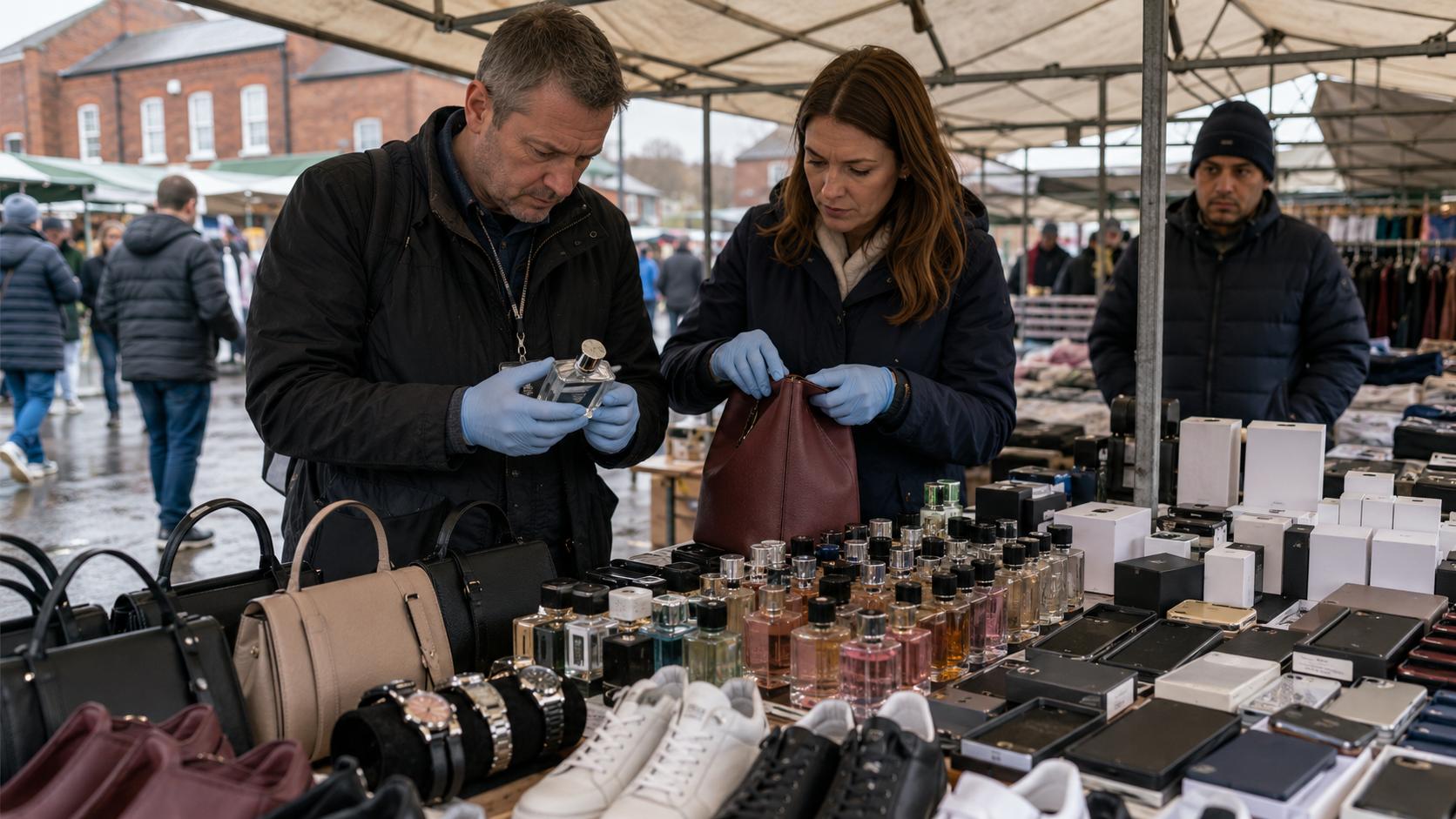
More than 2,700 businesses across the UK were visited or raided during the second phase, involving every police force in the country alongside HMRC, Trading Standards and Immigration Enforcement.
By the time the operation concluded, officers had made 924 arrests, seized more than £10.7 million in suspected criminal assets and destroyed approximately £2.7 million worth of illegal goods.
More than 450 companies were also referred for further investigation.
Investigators targeted barber shops, vape stores, phone repair businesses, takeaways, car washes, mini markets and American sweet shops where intelligence suggested organised criminal activity may be taking place.
Why do organised criminals use these businesses?
According to the National Crime Agency, the answer is relatively simple.
Cash-intensive businesses make it easier for criminals to mix legitimate income with illegally obtained money.
If a shop genuinely takes hundreds of pounds in cash each day, it can become easier for organised crime groups to disguise criminal proceeds among genuine transactions.
Officials also say some businesses have been linked to illegal working, modern slavery, immigration offences, counterfeit goods, illicit tobacco, illegal vapes and drug distribution.
Again, this does not mean that every barber shop, vape store or phone repair business is involved in criminality. The NCA's operations target businesses where intelligence indicates potential offending, not entire industries.
The numbers have raised eyebrows.
Residents across Britain have increasingly questioned how several barber shops can successfully operate on the same street despite apparently limited customer numbers.
In some investigations reported nationally, enforcement officers monitored customer numbers and compared them with declared business income where there were grounds for suspicion.
That does not automatically prove wrongdoing.
However, investigators say unusual financial patterns can help identify businesses that deserve closer examination.
What about Newcastle and the North East?
While there has not been a public announcement identifying Newcastle as a specific hotspot within Operation Machinize, the North East has seen regular enforcement activity involving illegal tobacco, counterfeit vapes, immigration offences and organised crime investigations.
The nationwide operation included intelligence from police forces across England, with officials making clear that organised criminal networks do not operate only in major cities such as London or Manchester.
For Newcastle residents who have questioned why similar businesses continue appearing across local shopping streets, the NCA's findings inevitably add another dimension to the debate.
Why barber shops?
Barbering itself remains a perfectly legitimate and thriving industry.
The vast majority of barbers work hard, pay taxes and provide valuable local services.
However, from a criminal perspective, barber shops have several characteristics that can make them attractive to organised crime.
Many accept cash.
Customer numbers vary throughout the day.
Services cannot easily be counted in the same way as retail stock.
Operating costs can also be relatively low compared with larger retail premises.
These characteristics explain why investigators say they sometimes become targets for criminal exploitation rather than suggesting the industry itself is inherently suspicious.
The same applies to vape and phone shops.
Phone repair businesses often handle cash payments while selling accessories and refurbished devices.
Vape stores frequently carry high-demand products that have also attracted counterfeit traders and illicit suppliers.
Investigators involved in Operation Machinize seized thousands of illegal vapes alongside large quantities of untaxed tobacco during the raids, demonstrating how legitimate retail sectors can be infiltrated by criminal suppliers.
Most retailers operate lawfully, but enforcement agencies say criminal groups deliberately target sectors where illicit products can be mixed with legitimate sales.
Britain's hidden cash economy.
The National Crime Agency estimates around £12 billion of criminal cash is generated in the UK every year, with organised crime groups constantly seeking ways to introduce that money into the legitimate financial system.
That explains why police describe cash-intensive businesses as an important battleground in the fight against organised crime.
Rather than focusing solely on drugs or fraud, investigators increasingly follow the money.
Where criminal profits are laundered successfully, organised crime becomes easier to sustain.
The debate is unlikely to disappear.
For many Newcastle residents, seeing another barber shop or vape store open prompts immediate questions.
For legitimate business owners, that growing public suspicion can also be frustrating.
Operation Machinize has shown that some businesses across Britain were indeed being used to hide organised criminality.
At the same time, law enforcement agencies continue to emphasise that thousands of honest entrepreneurs operate within exactly the same sectors every day.
Perhaps the real story is not why another barber shop has opened.
It is why organised crime increasingly sees Britain's high streets as valuable real estate, and why investigators believe tackling that hidden economy is now just as important as tackling crime on the streets themselves.
Share your thoughts.
Have you noticed more barber shops, vape stores or phone repair businesses opening locally?
Crime News
The High Street Mystery Police Are Investigating
Advertisement


Comments (0)
You must be logged in to post comments.
Don't have an account? Register here
No comments yet. Be the first to share your thoughts!