
Newcastle people are spoilt for scenery, which is probably why the Lake District gets overlooked here in a way it never would from Manchester or Leeds. With Northumberland on the doorstep and the coast half an hour away, there is no particular pressure to drive west.
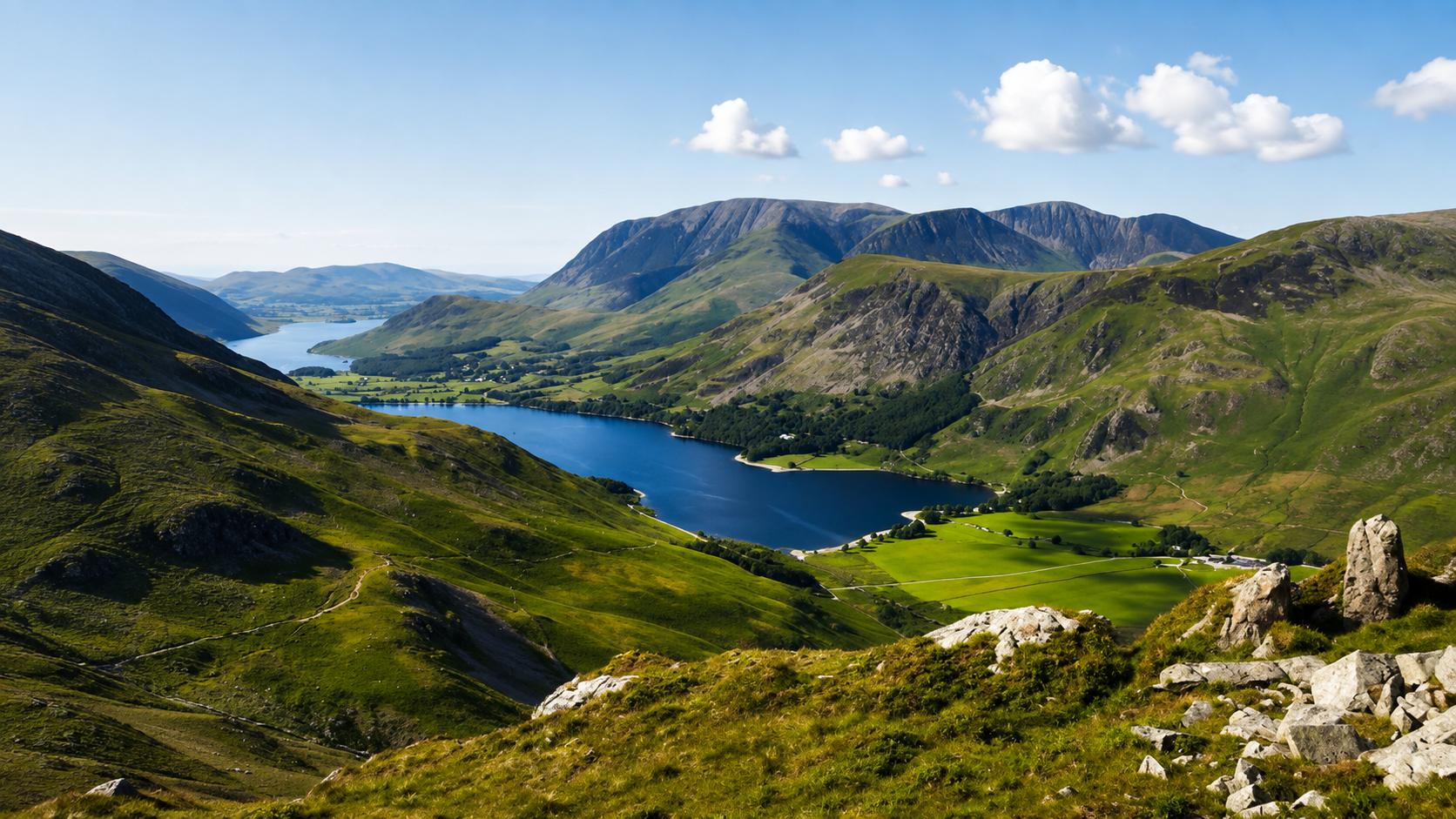
That is a shame, because the northern Lakes are considerably closer to Newcastle than most people assume, and they are a genuinely different landscape from anything the North East offers. Northumberland is broad, open and empty. The Lakes are vertical, crowded and dramatic, and the contrast is the whole point of going.
The route depends on where you are heading.
For the northern lakes, meaning Keswick, Derwentwater, Bassenthwaite, Buttermere and Borrowdale, the A69 west to Carlisle and then south on the M6 is the standard run. It is a straightforward drive with the A69 doing most of the work, and the northern lakes are the closest part of the national park to Tyneside by a comfortable margin.
An alternative for Penrith and Ullswater is to head over the A686 through Alston, which is one of the finest drives in England and adds time you will not resent. The stretch over Hartside is spectacular in clear weather and best avoided in bad, since it is high, exposed and closes in snow.
For the southern and western lakes, Windermere, Coniston, Wasdale and Eskdale, the journey is longer and the A66 from Scotch Corner is generally the better option. Wasdale in particular is a long way round from anywhere, which is precisely why it is quieter.
Doing it by train takes longer but works.
There is no railway into the heart of the Lake District from the north east, and getting there by public transport requires planning rather than spontaneity.
The most useful route runs Newcastle to Carlisle on the Tyne Valley Line, then south on the West Coast Main Line to Penrith, which puts you within a bus ride of Ullswater and Keswick. Penrith is the practical gateway station for the northern lakes.
For Windermere, the route is via Oxenholme and the branch line, which is longer from Newcastle but delivers you into the middle of a town rather than a car park.
Once there, the Stagecoach network covers the main valleys reasonably well in season, with services linking Penrith, Keswick, Ambleside, Windermere and the lakeside villages. Day and multi-day bus tickets exist and are worth buying for anyone spending a few days without a car.
Choosing a base matters more than anything else.
Keswick is the obvious choice from Newcastle. It is the closest substantial town, it sits on Derwentwater, it has an enormous concentration of accommodation, outdoor shops and places to eat, and it puts Borrowdale, Buttermere, Skiddaw and Blencathra within easy reach.
Ullswater, and the villages of Glenridding and Patterdale, offer a quieter alternative with one of the best lakes in the park and the steamers running its length. Helvellyn rises directly behind, including the Striding Edge route, which is a serious mountaineering proposition rather than a walk and should not be attempted casually.
Ambleside and Windermere are the busiest part of the park, well served and well provisioned, but a longer drive and considerably more crowded in season.
Penrith is outside the park but makes a practical base for anyone using trains, with good onward connections and lower prices.
Timing is everything, and most people get it wrong.
The Lake District receives millions of visitors a year concentrated into a small area with narrow roads, and the difference between a good day and a miserable one is frequently a matter of when you set off.
Arriving at a popular valley car park after mid-morning on a summer weekend means not parking at all. The honeypot locations, particularly Buttermere, Wasdale and the Langdales, fill early and the parking situation has become a genuine local issue, with verge parking causing problems for residents and emergency access.
Setting off from Newcastle early enough to be parked before nine transforms the experience. So does going midweek, and so does going out of season, when the park is emptier, the light is better for photography and accommodation is cheaper.
Late autumn and winter are underrated. The fells are at their most dramatic with snow on the tops, daylight is short but usable, and Keswick out of season is a different and better town.
What to do beyond walking.
The Lakes are strongly associated with fell walking, but a great deal is accessible to people who have no intention of climbing anything.
The lake launches on Derwentwater, Ullswater, Windermere and Coniston are among the best value experiences in the park, giving views that cannot be had from the road and allowing you to walk one way and sail back.
Honister Slate Mine offers underground tours and a via ferrata. The Lakes have an unusually good concentration of independent bookshops, galleries and food producers. Wordsworth's houses at Grasmere and Cockermouth, Beatrix Potter's Hill Top, and the Ruskin connections at Coniston provide substantial literary and cultural interest.
For families, the shore paths at Derwentwater and Ullswater are level, well surfaced and manageable with buggies for significant distances.
Take the weather seriously.
The Lake District is the wettest part of England and the mountains generate their own conditions. Conditions on a summit can differ completely from those in the valley, and every year the mountain rescue teams, which are volunteer organisations, are called out to people who set off in trainers on a bright morning.
Check a mountain-specific forecast rather than a general one, carry more layers than you think you need, take a map and compass and know how to use them, and be willing to turn back. Phone signal is unreliable across much of the park.
Share your thoughts.
Do you head west to the Lakes, or does Northumberland win every time?
Travel News
The Lake District From Newcastle: Routes, Bases and Timing
Advertisement

Comments (0)
You must be logged in to post comments.
Don't have an account? Register here
No comments yet. Be the first to share your thoughts!