
Thousands of people walk through Newcastle and South Shields every day without realising that some seemingly ordinary streets tell extraordinary stories of migration.
Behind restaurant signs, terraced buildings and roads transformed by redevelopment are traces of sailors who travelled from Yemen, Chinese families who created businesses in Newcastle and international campaigners who found allies on Tyneside.
Some communities disappeared as streets were demolished. Others grew until their neighbourhoods became landmarks in their own right.
These are some of the North East streets where that history remains hidden in plain sight.
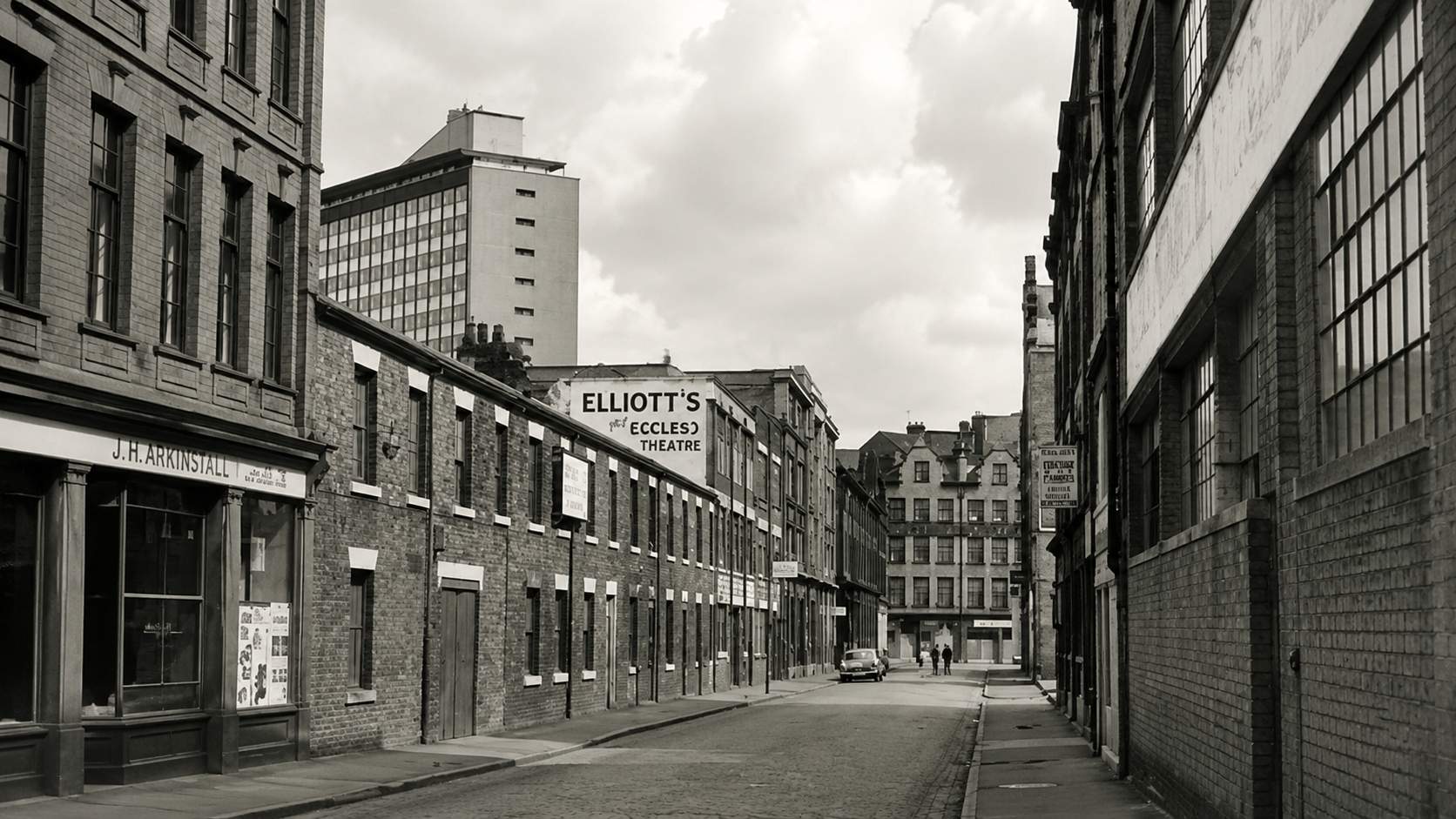
Stowell Street became the heart of Newcastle's Chinatown.
Today, Stowell Street is immediately recognisable as Newcastle's Chinatown, but its transformation is relatively recent.
The street itself dates to 1824. Chinese migration to the North East developed much later, with Chinese settlers establishing themselves in the region during the decades following the Second World War.
A major change came in 1978 when Wing Hong became the first Chinese business to relocate to Stowell Street.
The North East Chinese Association was established the following year and received premises at 25-27 Stowell Street for use as a community centre.
By the early 1980s, Stowell Street had become recognised as Newcastle's Chinatown.
Its most obvious landmark arrived considerably later. The Chinese Arch was constructed between October 2004 and January 2005 before officially opening in February 2005.
Standing 11 metres high and spanning nine metres, it created a dramatic entrance to a community whose North East roots stretched back decades.
Summerhill Grove has a link to Frederick Douglass.
A short distance from Newcastle city centre lies another remarkable chapter in international migration and Black history.
Frederick Douglass arrived in Britain in 1845 after escaping slavery in the United States and becoming one of the world's most influential abolitionists.
During his time in Newcastle he stayed near Summerhill Grove with Anna Richardson and her sister-in-law Ellen Richardson.
The Newcastle women became closely involved with Douglass and the abolitionist cause. They eventually helped raise £150 to legally purchase his freedom from the American who claimed ownership of him.
Douglass returned to America in 1847 as a legally free man.
It means an area many Newcastle residents now pass without a second thought played a small but extraordinary role in the life of one of the 19th century's most important civil rights figures.
Laygate became home to sailors from Yemen.
Travel east to South Shields and the migrant history becomes even older and more visible.
Yemeni and Arab merchant seamen began establishing themselves around Holborn and Laygate during the late 19th century.
Ali Said settled in South Shields in 1894 and later operated a boarding house for Arab sailors.
There were reportedly only around 20 to 30 Arab residents living around East Holborn in 1913.
Within a few years, that had changed dramatically.
By 1920 there were at least eight Arab boarding houses in South Shields, with historians estimating that between 300 and 600 Arab residents could be in the town at any one time.
The boarding houses provided accommodation, food, employment contacts and financial help to sailors arriving thousands of miles from home.
They helped create what became one of Britain's longest-established Yemeni and Muslim communities.
Brunswick Street preserves part of that story.
Much of old Holborn and Laygate disappeared during redevelopment, taking streets, houses and businesses with it.
One important survivor can still be found at 50-52 Brunswick Street.
The building became a Yemeni boarding house after Ahmed Ali Hussein opened it in 1945. It remained a meeting place where Yemeni men could eat, play cards and maintain community connections into the 2000s.
Its history also reveals the enormous contribution Yemeni sailors made to Britain.
Newcastle's Historic Environment Record states that an estimated 700 Yemeni sailors from South Shields lost their lives during the First World War.
The building was added to South Tyneside's local heritage list in 2023.
Newcastle's population continues to change.
Migration is not simply part of Newcastle's past.
The 2021 Census showed that 80.0% of Newcastle residents identified within the broad White ethnic category, down from 85.5% in 2011.
The Asian population increased from 9.7% to 11.4%, while the Black population rose from 1.8% to 3.3%.
Another 3.1% identified within the census's Other ethnic group category, including Arab identities, compared with 1.5% a decade earlier.
Newcastle is also considerably more ethnically diverse than the North East overall, where 93.0% of residents identified within the White category in 2021.
Those statistics represent thousands of individual stories that will eventually become another layer of North East history.
Stowell Street and Laygate demonstrate how quickly that can happen. The restaurant, shop or house people walk past today may eventually become evidence of how another generation arrived, worked and made the North East home.
Share your migrant stories below.
Which Newcastle or North East streets have a hidden history that more people should know about?
Newcastle History
The Migrant History Hidden on Newcastle's Streets
Advertisement


Comments (0)
You must be logged in to post comments.
Don't have an account? Register here
No comments yet. Be the first to share your thoughts!