
Mention the parmo to anyone from Teesside and you are likely to be met with a passionate gleam of recognition. This indulgent dish, a breaded cutlet smothered in creamy sauce and melted cheese, is the undisputed king of the Teesside takeaway and one of the North East's most distinctive food creations. Loved with genuine devotion in its home territory, the parmo is a true regional cult classic.
What Exactly Is a Parmo.
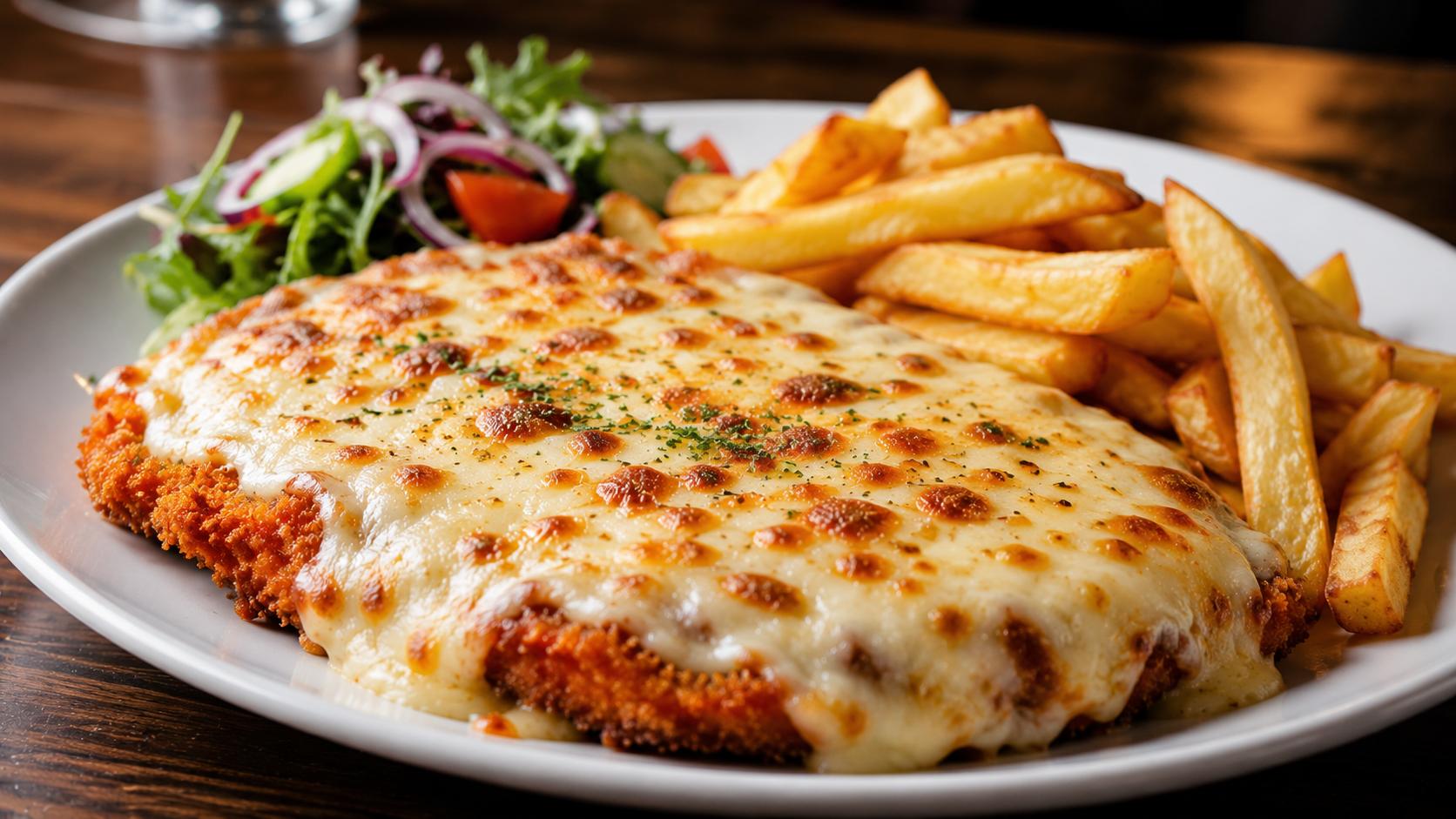
A parmo, sometimes called a Teesside parmesan, consists of a flattened cutlet of meat, traditionally pork but very commonly chicken, that is coated in breadcrumbs and deep-fried until crisp and golden. It is then topped with a generous layer of creamy white bechamel sauce and a thick blanket of cheese, usually cheddar, before being grilled until the cheese is bubbling and golden. The finished dish is typically served with chips and a token portion of salad or coleslaw, often accompanied by a pot of garlic sauce. It is rich, filling and unashamedly indulgent, the very definition of a satisfying treat.
The Story of Its Invention.
The parmo's origins lie firmly in Middlesbrough, the heart of Teesside, and the most widely told story credits its creation to a chef named Nicos Harris. According to the popular account, Harris was a Greek-American serving as a chef during the Second World War who was wounded and brought to Britain for treatment. He settled in Middlesbrough and, in 1958, opened a restaurant called The American Grill on Linthorpe Road, where he is said to have invented the parmo. The dish was inspired by the Italian-American tradition of chicken parmigiana, but adapted into something distinctly its own, and a Teesside legend was born.
A Name with Italian Roots.
The name parmo is, of course, a shortening that nods to the dish's parmigiana inspiration, much as people elsewhere might refer to a chicken parm. Interestingly, despite the name's connection to parmesan, the cheese on a traditional parmo is usually cheddar rather than parmesan, and the dish uses a bechamel sauce rather than the tomato sauce found in many versions of parmigiana. These differences are exactly what make the parmo its own creation rather than a simple copy of an Italian classic. Over the decades, as with any beloved dish, the parmo has evolved, with different establishments and home cooks adding their own touches.
A Teesside Institution.
For the people of Teesside, the parmo is far more than just a meal; it is a point of genuine local pride and identity. It is one of the first things many people associate with Middlesbrough, ranking alongside the town's famous Transporter Bridge and its football club in the local imagination. Takeaways and restaurants across Teesside compete to serve the best parmo, and the dish is a staple of nights out, late suppers and weekend treats. Having grown up with parmos, many Teessiders find the dish so ingrained in their lives that they are genuinely surprised to learn it is largely unknown elsewhere.
Endless Variations.
While the classic parmo of breaded meat, bechamel and cheese remains the standard, the dish has spawned a remarkable array of variations as different outlets put their own stamp on it. There are spicy versions loaded with chilli and other toppings, others piled with garlic butter and mushrooms, and many more besides, catering to every taste and appetite. Some come in sizes that test even the heartiest of eaters. This spirit of creativity and friendly competition has helped keep the parmo fresh and exciting, ensuring its continued popularity across the generations and beyond its Teesside heartland.
Spreading Beyond Teesside.
In recent years, the parmo has begun to spread its wings, becoming better known across the wider North East and beyond. It has even appeared in supermarkets and featured in national surveys of the country's favourite takeaways, a sign that this once strictly local dish is winning new fans. Yet no matter how far it travels, the parmo remains inseparable from Teesside in spirit, a proud symbol of the area that created it. For many, the only truly authentic parmo is one enjoyed in its Middlesbrough homeland.
The parmo is a wonderful example of how a region can take an influence from elsewhere and transform it into something entirely its own, beloved and unique. Indulgent, generous and bursting with local character, it is a cult classic that Teesside guards with real affection, and a delicious reason to explore the food of the North East.
A Dish Worth Defending.
Few foods inspire the kind of fierce local loyalty that the parmo commands on Teesside. For many people from the area, it is a point of identity worth defending, and debates about what makes the perfect parmo, the right meat, the ideal cheese, the proper accompaniments, can be conducted with real passion. Competitions to crown the best parmo in the region have become popular events, with takeaways and restaurants vying for the title and bragging rights. This spirit of friendly rivalry has helped keep standards high and the dish firmly in the spotlight. There is also a protective instinct among Teessiders when it comes to the parmo's origins and authenticity, a determination to ensure that this homegrown creation gets the recognition it deserves. As the dish has spread beyond its heartland, that local pride has only grown stronger. The parmo may have started life in a single Middlesbrough restaurant, but it has become a genuine symbol of Teesside, a dish that the area has taken thoroughly to its heart and is happy to champion to anyone who will listen.
Get involved.
Leave a comment with your own take and pass this story on to someone who would enjoy it, especially if you have a strong opinion on the perfect parmo.
Can any food in the North East beat a classic chicken parmo and chips?
Food & Drink News
The Parmo: Teesside's Cult Classic
The story of the parmo, Teesside's beloved breaded cutlet topped with bechamel and cheese, invented in Middlesbrough in 1958.
Advertisement


Comments (0)
You must be logged in to post comments.
Don't have an account? Register here
No comments yet. Be the first to share your thoughts!