
John Poulson was an architect from Pontefract, West Yorkshire, who built a small practice into one of Europe's largest architectural firms by the 1960s, specialising in shopping centres and large-scale town redevelopment. Rather than winning contracts purely on merit, Poulson built his empire substantially on bribery, paying councillors, officials and consultants across the country to steer lucrative public contracts toward his firm.
Poulson's methods were systematic. He placed influential local figures, including council leaders and senior officials, on the payroll of his companies as paid consultants, then relied on them to use their positions to ensure his firm won contracts, often without any genuine competitive process. Investigators later found Poulson had provided hospitality, gifts and direct cash payments worth hundreds of thousands of pounds to more than five hundred recipients across Britain.
In the North East, Poulson's most significant contact was T. Dan Smith, the former leader of Newcastle City Council, who worked as a paid consultant for Poulson after stepping down from formal office in 1965. Smith used his extensive network of contacts in town halls across the country to help direct contracts toward Poulson, receiving an estimated £156,000 over roughly seven years, mostly funnelled through his own public relations company.
Smith was not the only North East figure implicated. Andrew Cunningham, who served as chairman of Durham County Council from 1963 to 1965 and held a string of other public roles across the region, was also convicted for his part in the affair. George Pottinger, a senior Scottish Office civil servant, was similarly jailed, demonstrating just how far Poulson's network of influence had spread beyond local government alone.
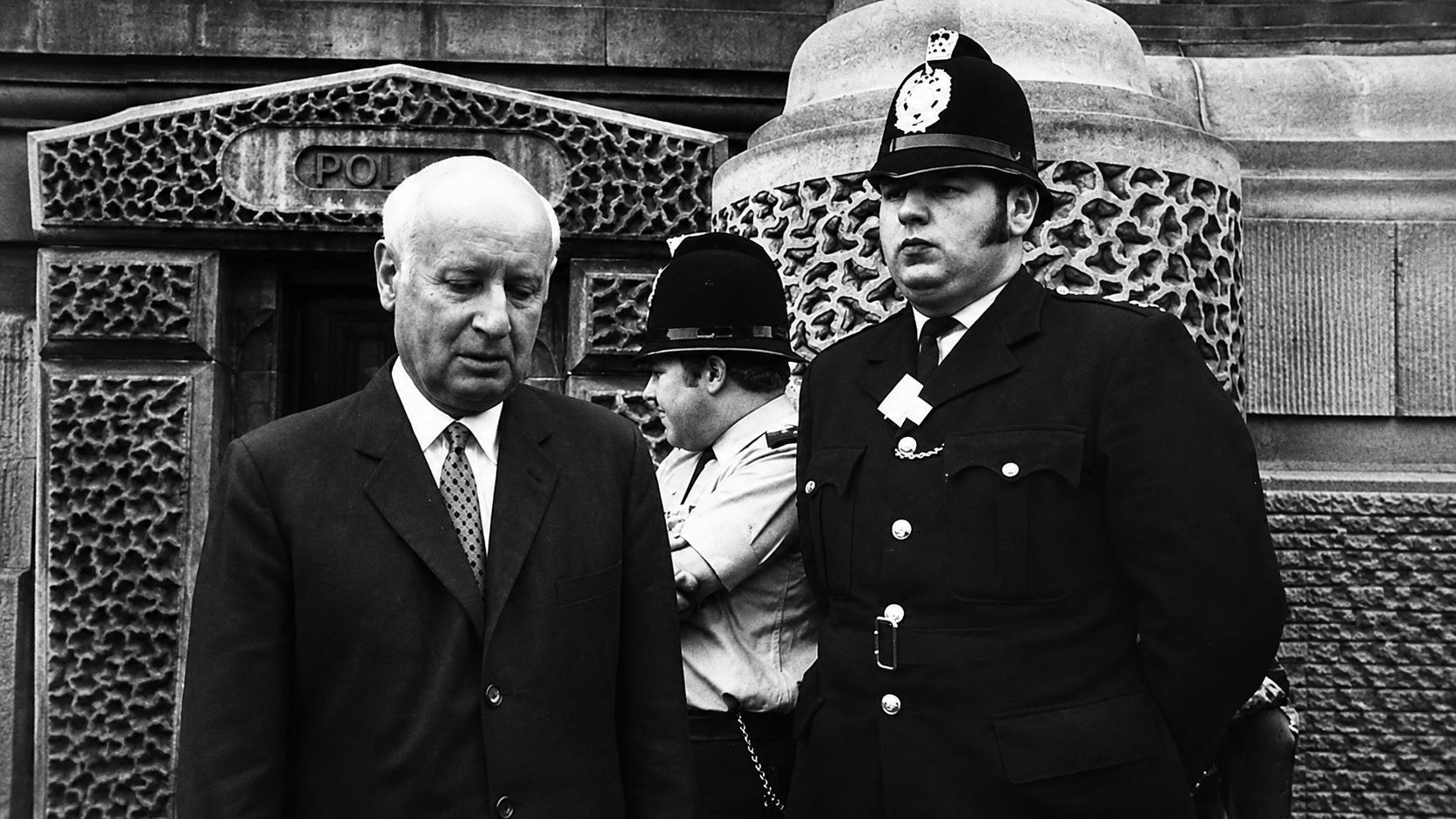
Poulson's downfall began with the collapse of his company into bankruptcy in 1972. The bankruptcy hearings, held in public, exposed the astonishing scale of his bribery network for the first time, prompting a lengthy Metropolitan Police investigation and a series of high-profile criminal trials. In 1974, at Leeds Crown Court, Poulson was found guilty of fraud and corruption and sentenced to seven years in prison, later reduced slightly on appeal.
The trial proceedings revealed extraordinary detail about how thoroughly corruption had embedded itself within parts of British local government during the 1960s. Because Poulson had spread his bribes across politicians of different parties, the scandal did not neatly benefit any single side politically, which some historians argue actually limited the scandal's immediate national political fallout compared with other corruption cases of the era.
The affair's impact on the North East was nonetheless profound and lasting. Public trust in Newcastle and Durham's local government was badly damaged for years afterward, and the case became a defining case study in the dangers of unchecked local political power. It directly influenced the Salmon Commission's work on standards of conduct in public life, shaping national rules on councillor conduct that remain influential today.
The scale of Poulson's ambition was genuinely extraordinary for a provincial architect. His firm grew to employ architects, planners, project managers and lawyers under one roof, specifically designed to offer local authorities a complete redevelopment package for major town centre schemes. Smith himself reportedly described Poulson as "the best architect Britain ever produced", a judgement that appears strikingly at odds with the corruption that ultimately consumed both men's careers entirely.
Notably, Poulson never actually designed any buildings within Newcastle itself, despite his close working relationship with Smith. Investigators instead found that Smith's value to Poulson lay specifically in his extensive network of contacts across town halls nationally, using his reputation and connections built during his own council leadership to open doors for Poulson's firm in other cities entirely, rather than directing contracts toward his own former council directly.
More than fifty years on, the Poulson Affair remains widely regarded as the most significant local government corruption scandal in twentieth-century British history. Its North East chapter, involving two of the region's most powerful local politicians, continues to be studied as a cautionary tale about the ease with which ambitious redevelopment and personal enrichment could once become dangerously entangled in British town halls. The case is still regularly cited today in academic studies of local government ethics as the clearest historical example of how unchecked patronage networks could once operate across British public life largely unnoticed.
Have your say.
Were you aware of the scale of the Poulson Affair?
Political News
The Poulson Affair: The Scandal That Brought Down Newcastle's Political Elite
The Poulson Affair became Britain's biggest local government corruption scandal of the twentieth century, implicating council leaders, MPs and civil servants across the North East and beyond.
Advertisement


Comments (0)
You must be logged in to post comments.
Don't have an account? Register here
No comments yet. Be the first to share your thoughts!