
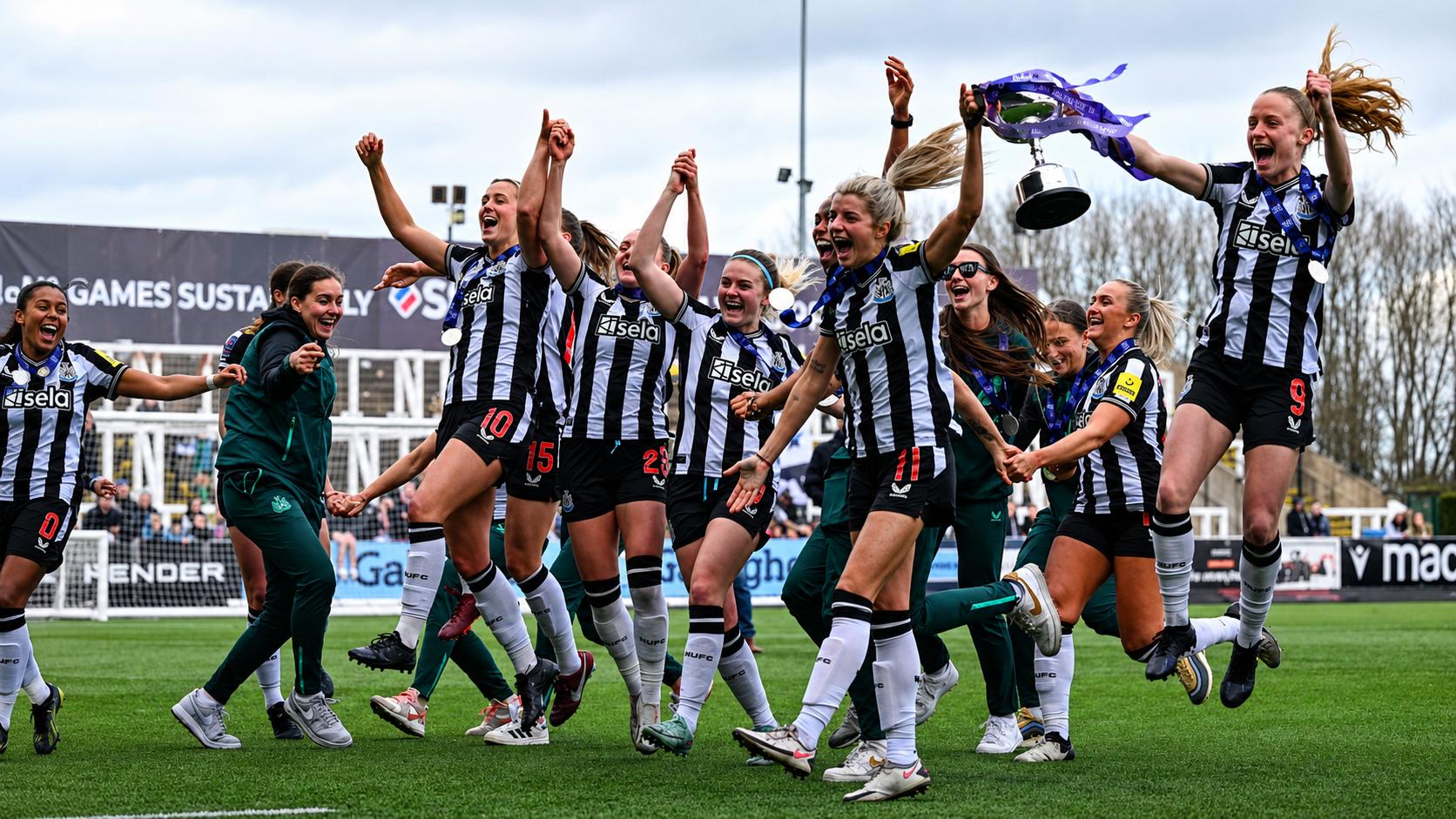
For much of its history, women's football in England existed in the shadow of the men's game, starved of investment, coverage and, in many cases, basic facilities. Newcastle United's women's team was no exception, competing for years with a fraction of the resources and attention given to their male counterparts, despite representing exactly the same club badge.
That picture has shifted considerably in recent years, driven by a broader surge in interest in women's football nationally, fuelled significantly by the England women's national team's high-profile tournament successes. Clubs across the country, Newcastle included, have responded by investing more seriously in facilities, coaching and player development than at almost any previous point in the women's game's history.
Attendances at Newcastle United Women matches have grown steadily as a result, with supporters increasingly treating fixtures as a genuine extension of matchday culture rather than a peripheral, lightly attended sideshow. Family-friendly ticket pricing and growing local media coverage have both played a part in widening the audience beyond the sport's traditionally smaller dedicated fanbase.
Player pathways have improved considerably too, with more structured routes now available for young girls across the North East to progress from grassroots football through to representing the club at a senior level, something that was far less common only a decade or so ago. Local schools and community clubs increasingly treat that pathway as a genuine, achievable ambition rather than a distant exception.
Off the pitch, the women's team has become an increasingly visible part of the wider club identity, with players making regular appearances at community events and taking part in outreach work designed to grow the game further among young supporters across Tyneside and beyond, work that has helped normalise women's football as simply another part of following Newcastle United.
Challenges remain, particularly around closing the resourcing gap that still exists between the men's and women's sides of the club, a gap mirrored across most of English football rather than being unique to Newcastle. Even so, the trajectory over recent years has been consistently upward rather than static.
Media coverage of the women's team has also expanded considerably, with local outlets increasingly treating fixtures with the same seriousness afforded to the men's game, giving players a level of profile and recognition within the region that would have been almost unimaginable for women's football only a generation earlier.
Sponsorship interest has followed a similar upward trajectory, with brands increasingly keen to associate themselves with a growing, positively perceived side of the sport, providing the club's women's team with additional resources that have helped fund improvements to coaching, travel and match-day facilities in recent seasons.
Comparisons with the men's side of the club are, inevitably, sometimes drawn by outside observers, though most within the women's game across the North East tend to see the team's growth as a story worth following entirely on its own terms, rather than one that needs to be measured directly against the men's side's own very different history and resources.
As investment and interest in the women's game continue to build nationally, Newcastle United Women look well placed to keep growing alongside it, carrying the same black and white badge to an audience that continues to expand year on year.
Join the conversation below.
Have you been to a Newcastle United Women match?
Sports News
The Rise of Newcastle United Women
Long overshadowed by the men's game, Newcastle United's women's team has steadily built momentum, riding a wider surge of interest in women's football across the country.
Advertisement





Comments (0)
You must be logged in to post comments.
Don't have an account? Register here
No comments yet. Be the first to share your thoughts!