
As cyber criminals become more sophisticated, security experts are urging people to stop relying on passwords alone. Two-step verification, also known as two-factor authentication or 2FA, is increasingly being seen as one of the simplest and most effective ways to protect online accounts.
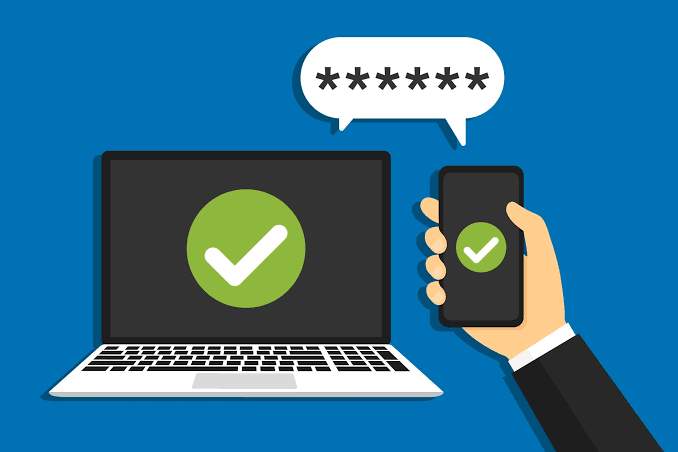
Whether it is banking, email, WhatsApp or social media, a stolen password can give criminals instant access to sensitive information. Two-step verification adds an extra layer of protection by requiring users to confirm their identity using a second method, such as a code sent to a trusted device, an authentication app or biometric verification.
For residents across Newcastle and the wider North East, where more services are now managed online than ever before, enabling this feature could make the difference between keeping an account secure and becoming the latest victim of cyber crime.
Passwords Alone Are No Longer Enough.
For years, passwords have been the first line of defence, but they are becoming increasingly vulnerable. Criminals regularly obtain login details through phishing emails, fake websites, malware and data breaches before attempting to access multiple accounts using the same credentials.
Many people still reuse passwords across different websites, making the problem even worse. If one account is compromised, attackers often try the same password elsewhere in the hope that it unlocks email accounts, banking apps or shopping services.
Adding two-step verification means that even if someone knows your password, they still need access to your second verification method before they can successfully sign in.
The Numbers Show Why It Matters.
Research from Microsoft found that enabling multi-factor authentication blocks more than 99.2 percent of account compromise attempts overall, with more than 99.99 percent of protected accounts remaining secure during the company's large-scale study.
Google has also previously reported that basic two-step verification methods can block 100 percent of automated bot attacks, 96 percent of bulk phishing attempts and around three-quarters of targeted attacks.
Despite those impressive figures, adoption still has room to improve. Industry research suggests that more than half of small business owners are not fully aware of multi-factor authentication, while many organisations still rely solely on usernames and passwords.
These statistics highlight why security professionals continue to recommend enabling two-step verification wherever it is available.
Newcastle Residents Face The Same Online Risks.
Although cyber crime often feels like a global issue, local residents are just as likely to be targeted.
People across Newcastle regularly use online banking, NHS services, council portals, shopping websites and messaging apps every day. Criminals do not need to know where someone lives to launch a phishing campaign, but local scams often appear more convincing when they reference familiar businesses, delivery companies or public services operating in the North East.
Northumbria Police and the National Cyber Security Centre frequently encourage the public to remain cautious of unexpected messages requesting passwords, banking details or verification codes. Criminals increasingly rely on social engineering rather than technical hacking, attempting to trick victims into providing access voluntarily.
Messaging Apps Are Becoming A Bigger Target.
The recent announcement that WhatsApp will introduce usernames instead of requiring users to share phone numbers is another reminder that online identity is changing.
While usernames improve privacy, they also reinforce the need for stronger account protection. If a criminal manages to take control of a messaging account, they may impersonate the owner, request money from family members or distribute fraudulent links to trusted contacts.
Enabling two-step verification on messaging platforms significantly reduces the chances of an account being hijacked, even if login details are exposed through a scam or previous data breach.
The Best Ways To Use Two-Step Verification.
Security experts generally recommend using an authentication app or passkey where available, as these methods provide stronger protection than SMS text messages alone.
Users should also keep recovery information up to date, avoid approving unexpected login requests and never share one-time verification codes with anyone, regardless of who claims to be asking.
It is equally important to use unique passwords for every account. Password managers can help generate and safely store complex passwords, reducing the temptation to reuse the same login details across multiple websites.
Building Better Digital Habits.
Cyber security does not always require expensive software or technical expertise. Often, the biggest improvements come from small changes that take only a few minutes to implement.
As more aspects of daily life move online, from banking and shopping to healthcare and communication, protecting digital identities has never been more important. Two-step verification is one of the easiest security features available, yet it remains one of the most effective.
For households across Newcastle and the North East, enabling it today could help prevent serious financial loss, identity theft and the stress that follows a compromised online account. In an age where cyber criminals constantly adapt their methods, taking this simple precaution is becoming less of an option and more of a necessity.
Share your tips.
Have you enabled two-step verification on your accounts yet?
Tech News
The Simple Security Step Everyone Should Enable
Advertisement




Comments (0)
You must be logged in to post comments.
Don't have an account? Register here
No comments yet. Be the first to share your thoughts!