
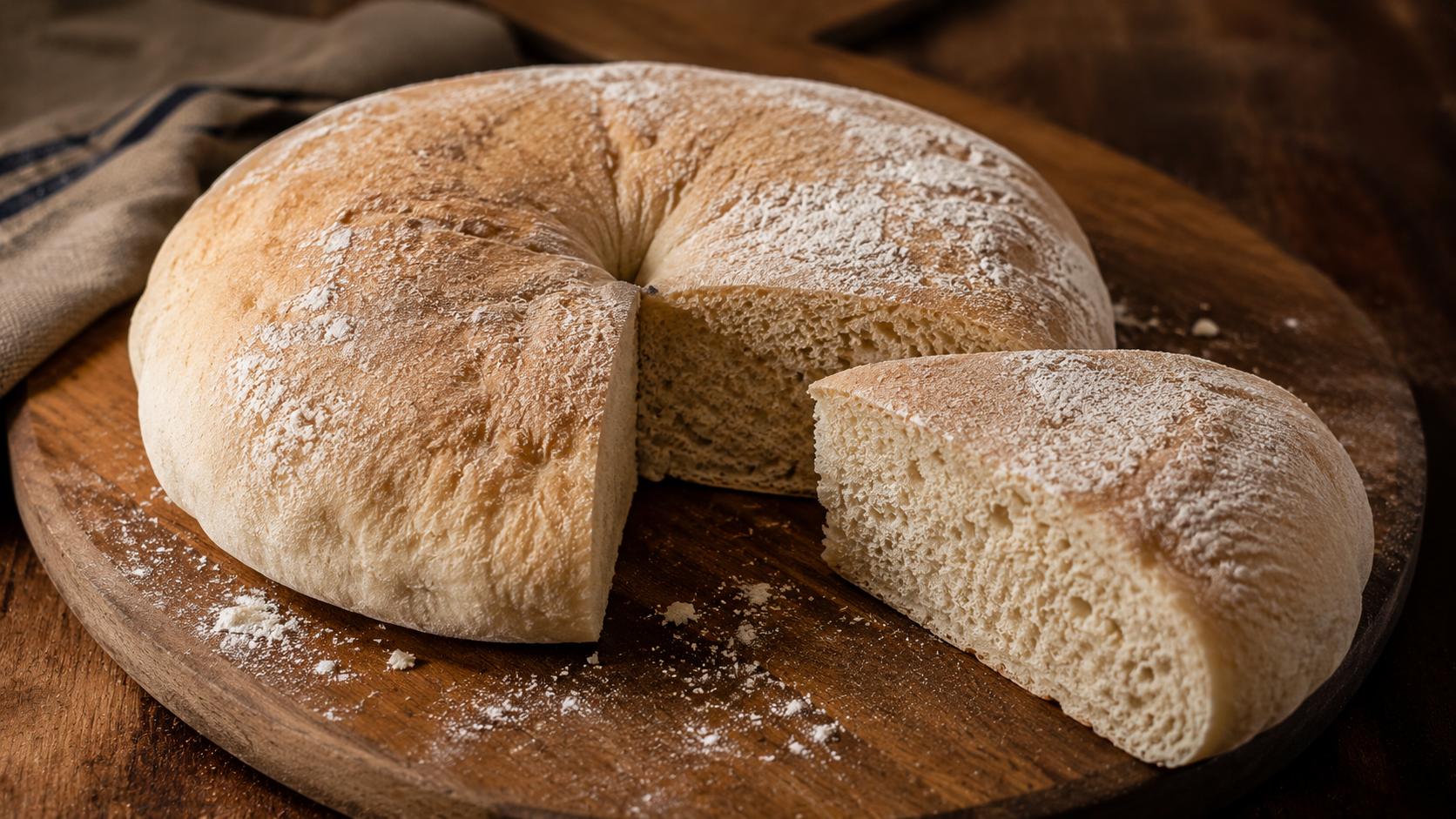
Ask anyone from the North East to name a food that says home, and there is a very good chance they will mention the stottie. This large, round, flat loaf with its soft, dense crumb and floury crust is one of the region's best-loved breads, a humble bakery staple that has fed Geordie families for generations. Plain to look at but deeply satisfying to eat, the stottie is a genuine piece of edible North East heritage.
What Exactly Is a Stottie.
A stottie cake, often shortened simply to a stottie or stotty, is a thick, flat, round loaf of bread, usually with a distinctive dimple pressed into the middle. It is much denser and chewier than an ordinary loaf, with a soft, almost doughy texture inside and a pale, lightly floured crust outside. Despite the word cake in its name, there is nothing sweet about it; this is a savoury bread through and through. A good stottie is satisfyingly heavy in the hand, and a single one is generous enough to feed a whole family or to be sliced and filled for several hearty sandwiches.
The Story Behind the Name.
The curious name is the subject of much local affection and a fair bit of debate. The most popular explanation links it to the old North East dialect word to stot, meaning to bounce. According to this tradition, a properly made stottie was so dense and springy that, if you dropped it, it would bounce back up, and a stottie that did not stot was not worth its salt. Whether or not anyone really bounced their bread to test it, the name has stuck, and it perfectly captures the solid, substantial character of the loaf. Like much of the North East's dialect, the word is a reminder of the region's distinctive linguistic heritage.
A Product of Thrift and Tradition.
The stottie has its roots in thrift and resourcefulness, qualities long prized in the hard-working communities of Tyneside and the surrounding coalfields. Traditionally, the dough was made from leftover bits of bread dough and baked on the floor or the bottom of the oven, using up the last of the heat after the main bake was finished. This made it an economical bake that wasted nothing, perfectly suited to households where every penny and every scrap counted. That practical, no-nonsense origin is part of why the stottie feels so authentically of the region, a food born of making the most of what you have.
How a Stottie Is Eaten.
For many people in the North East, the stottie reaches its full glory when split and filled to make an enormous sandwich. The classic filling is ham and pease pudding, a combination so beloved that the words almost run together in local speech, but a stottie will happily carry anything from bacon to cheese, savoury mince or a fried breakfast. The bread's sturdy, dense texture means it holds up to generous fillings without falling apart, making it the ideal vehicle for a proper, filling lunch. Toasted, buttered or simply torn apart and eaten warm, it is comfort food of the most straightforward and satisfying kind.
A Bakery Counter Favourite.
Walk into a traditional bakery anywhere across Tyneside, Northumberland or County Durham and you will very likely find stotties stacked on the counter, often still warm from the oven. They remain a fixture of the region's bakeries and supermarkets, and for many people buying a stottie is simply part of the weekly shop. There is something reassuring about their constant presence, a small but meaningful link to the food traditions of earlier generations. For Geordies who have moved away, a real stottie can be one of the things they miss most, and a parcel of them from home is a treat indeed.
More Than Just Bread.
The enduring popularity of the stottie says something about the North East itself. It is unpretentious, generous and built to satisfy, with no airs and graces but plenty of character, much like the region that created it. In an age of artisan sourdoughs and fashionable loaves, the stottie carries on quietly doing what it has always done, feeding people well and reminding them of home. It is a wonderful example of how the simplest foods can carry the deepest sense of identity and belonging.
The next time you find yourself in the North East, seeking out a freshly baked stottie, perhaps filled with ham and pease pudding, is one of the tastiest ways to connect with the everyday heritage of the region. It may be plain, but it is a small, delicious institution, and one that Geordies are rightly proud to call their own.
A Badge of Geordie Identity.
Beyond the bakery counter, the stottie has become a genuine badge of regional identity. It turns up wherever Geordies gather, from market stalls to football grounds, and it features in the everyday language and humour of the North East in a way few foods manage. For those who have moved away from the region, the stottie often takes on an almost symbolic importance, a tangible reminder of home that is surprisingly hard to find elsewhere in the country. Care parcels of stotties sent to far-flung relatives are not unheard of, and the simple act of biting into a fresh one can stir powerful memories of childhood and family. In recent years, as interest in regional British food has grown, the stottie has begun to attract attention from food writers and visitors keen to taste something authentic. Yet for all this wider recognition, it remains at heart a local, everyday bread, beloved precisely because it is unpretentious and familiar. That quiet, dependable presence is exactly what makes it such a cherished part of North East life.
Share your thoughts.
We would love to hear your memories and opinions, so leave a comment below, especially your favourite way to fill a fresh stottie.
What goes inside your perfect stottie cake sandwich?
Food & Drink News
The Stottie Cake: The North East's Beloved Bread
What a stottie cake is, where its name comes from and why this big, soft, flat round loaf is one of the North East's most beloved foods.
Advertisement

Comments (0)
You must be logged in to post comments.
Don't have an account? Register here
No comments yet. Be the first to share your thoughts!