
Twelve miles separate St James' Park from the Stadium of Light. In footballing terms, the distance is considerably greater.
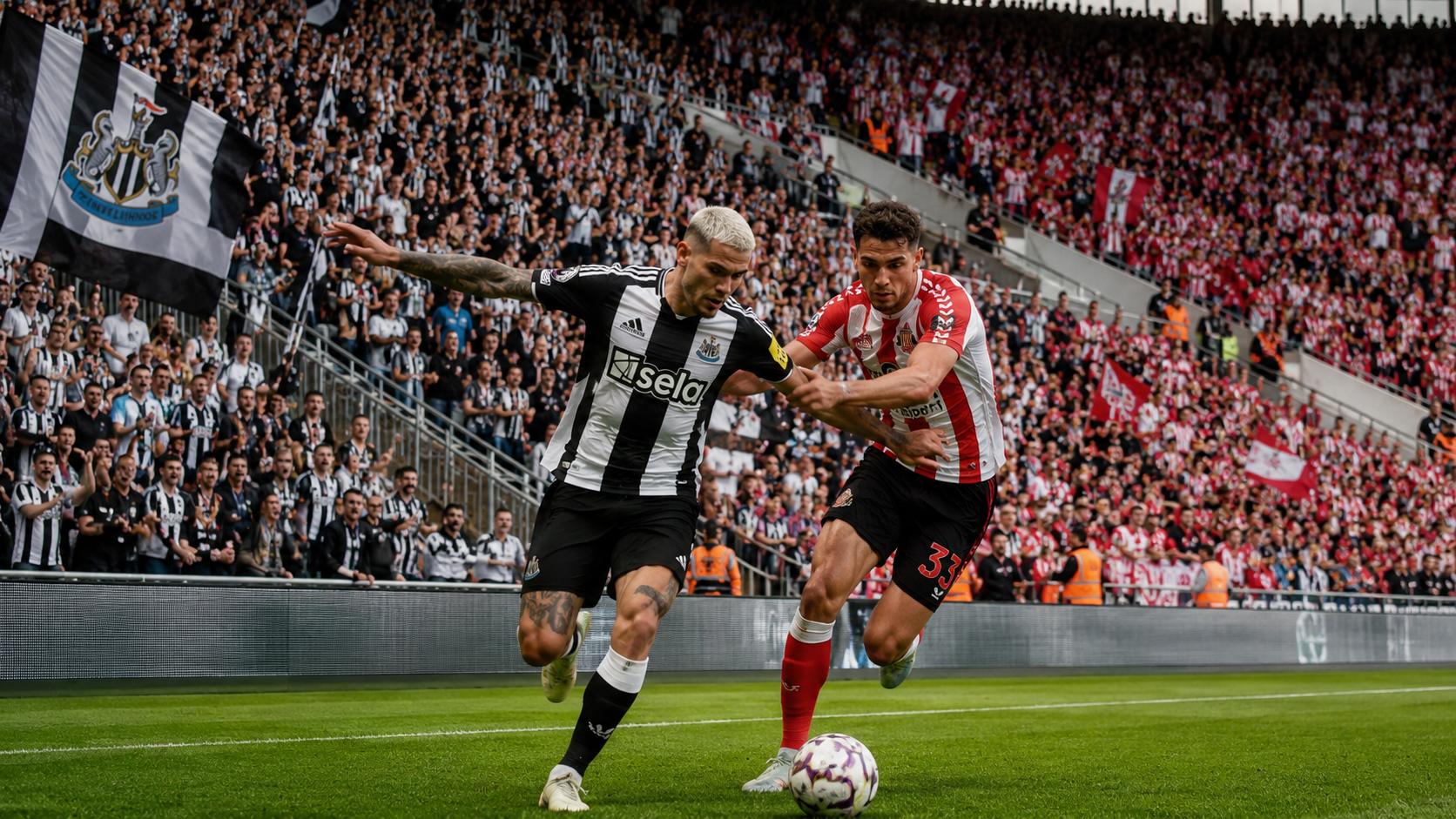
The Tyne-Wear derby is regularly described as one of the most intense fixtures in English football, and unusually it is a rivalry that extends well beyond the ninety minutes into workplaces, families and entire communities.
Here is where it came from and why it carries such weight.
The rivalry predates the football.
Competition between Tyneside and Wearside long predates either club. The two rivers supported separate shipbuilding, coal and glass industries, and they competed commercially for centuries.
Sunderland's historic resentment at Newcastle's status as the regional centre, and the political and economic advantages that came with it, gave the football rivalry a foundation that was already in place.
Sunderland AFC was founded in 1879, and Newcastle United emerged in 1892 from the merger of Newcastle East End and Newcastle West End. The clubs began meeting competitively before the end of the century.
The record scoreline still stings.
The most famous result in the fixture's history came in December 1908, when Sunderland won 9-1 at St James' Park.
Newcastle were the reigning champions and were leading the league. Sunderland scored eight times in the second half, and the result stood for over a century as one of the most extraordinary in top-flight history.
Newcastle went on to win the league that season, which is a footnote Tyneside supporters raise whenever the scoreline is mentioned, and Wearside supporters ignore entirely.
The 1990 play-off carries its own weight.
In May 1990, the clubs met in a Second Division play-off semi-final, with promotion at stake.
Sunderland won at St James' Park in the second leg, and the match was marred by a pitch invasion that forced a temporary halt. Sunderland lost the final but were promoted anyway following Swindon Town's punishment for financial irregularities.
For supporters of a certain age, that tie remains among the most significant meetings between the two clubs.
Sunderland's run in the 2010s.
Between 2013 and 2016, Sunderland won six consecutive derbies, a sequence that came during a period when the club was repeatedly fighting relegation.
That run remains a point of considerable pride on Wearside, particularly because several of those results were achieved by teams that struggled all season otherwise.
It illustrated something specific to this fixture: league position has never been a reliable guide to the outcome.
Separate divisions changed the rhythm.
For much of the period since 2016, the clubs have been in different divisions, and the derby disappeared from the calendar for extended stretches.
That absence was felt. Supporters on both sides who had grown up with two guaranteed meetings a season found the fixture reduced to occasional cup ties.
The rivalry did not diminish. If anything, the enforced separation gave it a nostalgic quality, and the anticipation whenever a meeting became possible again was considerable.
Policing it is a major operation.
Derby day is among the largest planned policing operations in the region. Northumbria Police coordinate with both clubs, transport operators and licensing authorities well in advance.
Away supporters are typically transported under escort, segregation inside the grounds is extensive, and kick-off times are chosen to reduce drinking time rather than to suit broadcasters.
Early kick-offs are standard for exactly this reason, and pubs along key routes frequently close or restrict entry.
Arrest figures and banning orders associated with the fixture have historically been higher than for most matches, and both clubs have worked to address the minority of behaviour that causes it.
The atmosphere is the draw.
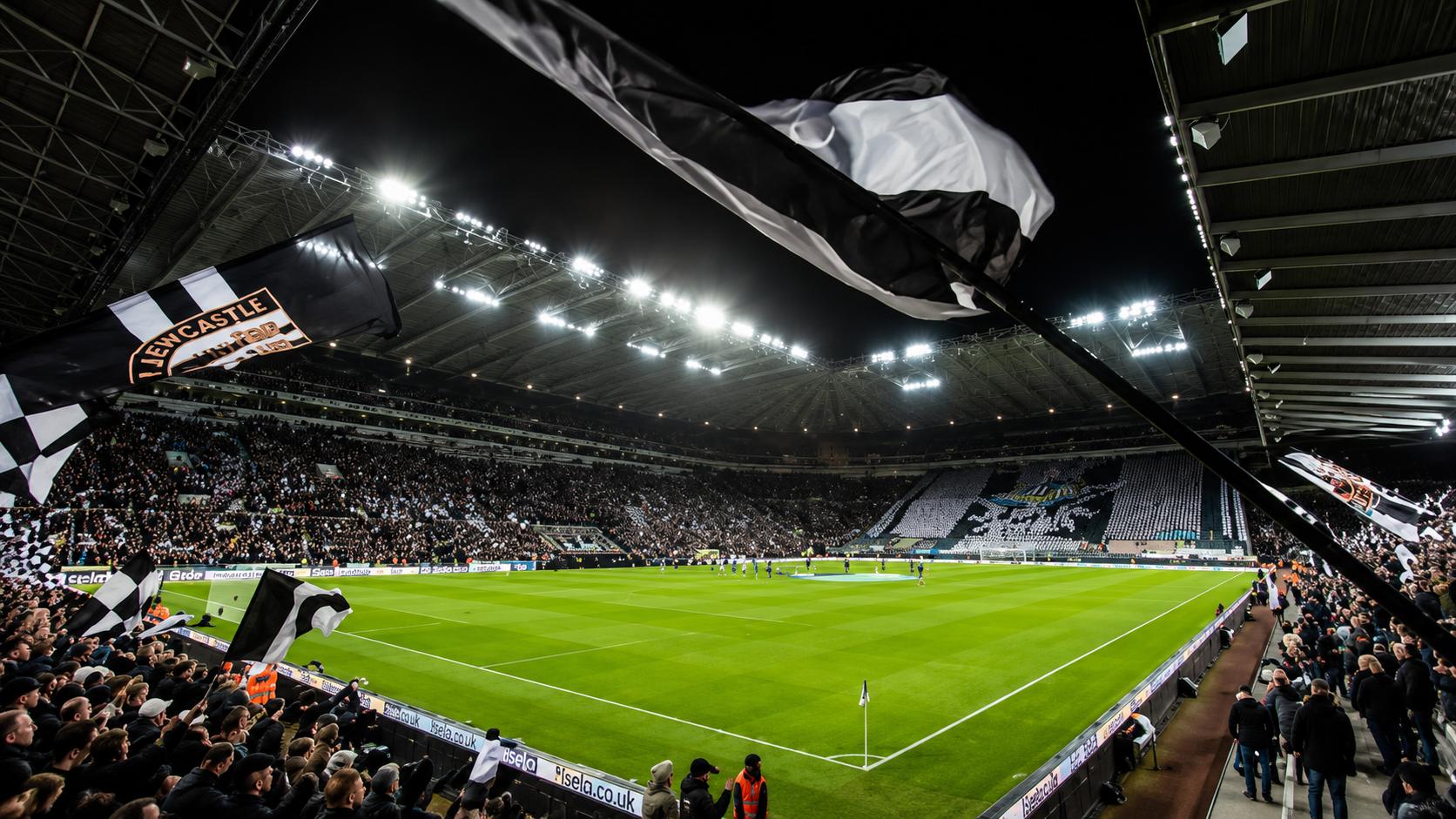
For all the organisation required, the fixture produces atmosphere that broadcasters and neutrals consistently rank among the best in English football.
Both grounds are large, both fanbases are drawn from communities where the club is central to local identity, and the noise generated is genuinely different from an ordinary league match.
Players who have experienced it almost universally describe it as unlike anything else in their careers, including those who have played in bigger fixtures elsewhere.
The women's game has its own derby now.
As women's football has grown across the region, the fixture has acquired a second dimension, with both clubs fielding teams that meet competitively.
Those matches have drawn increasing crowds, and several have been staged at the main stadiums rather than smaller training grounds, which has given a new generation of supporters their own derby-day experience.
The atmosphere is generally reported as intense but considerably less fraught, and both clubs have used the fixture to widen their support base.
It divides families, not just cities.
The geography means the two fanbases are thoroughly intermingled. Workplaces, schools and families across the region contain supporters of both.
That proximity is what gives the rivalry its particular character. This is not two distant cities meeting twice a year, it is neighbours who will see each other on Monday morning.
Most of it is conducted in good humour, and the region's shared identity in other contexts is genuine. On derby day, that identity is set aside entirely.
Share your thoughts.
What is your most memorable Tyne-Wear derby moment?
Sports News
The Tyne-Wear Derby: Football's Fiercest Local Rivalry
Separated by twelve miles and rather more than that in feeling, Newcastle and Sunderland contest one of the most intense fixtures in English football.
Advertisement




Comments (0)
You must be logged in to post comments.
Don't have an account? Register here
No comments yet. Be the first to share your thoughts!