
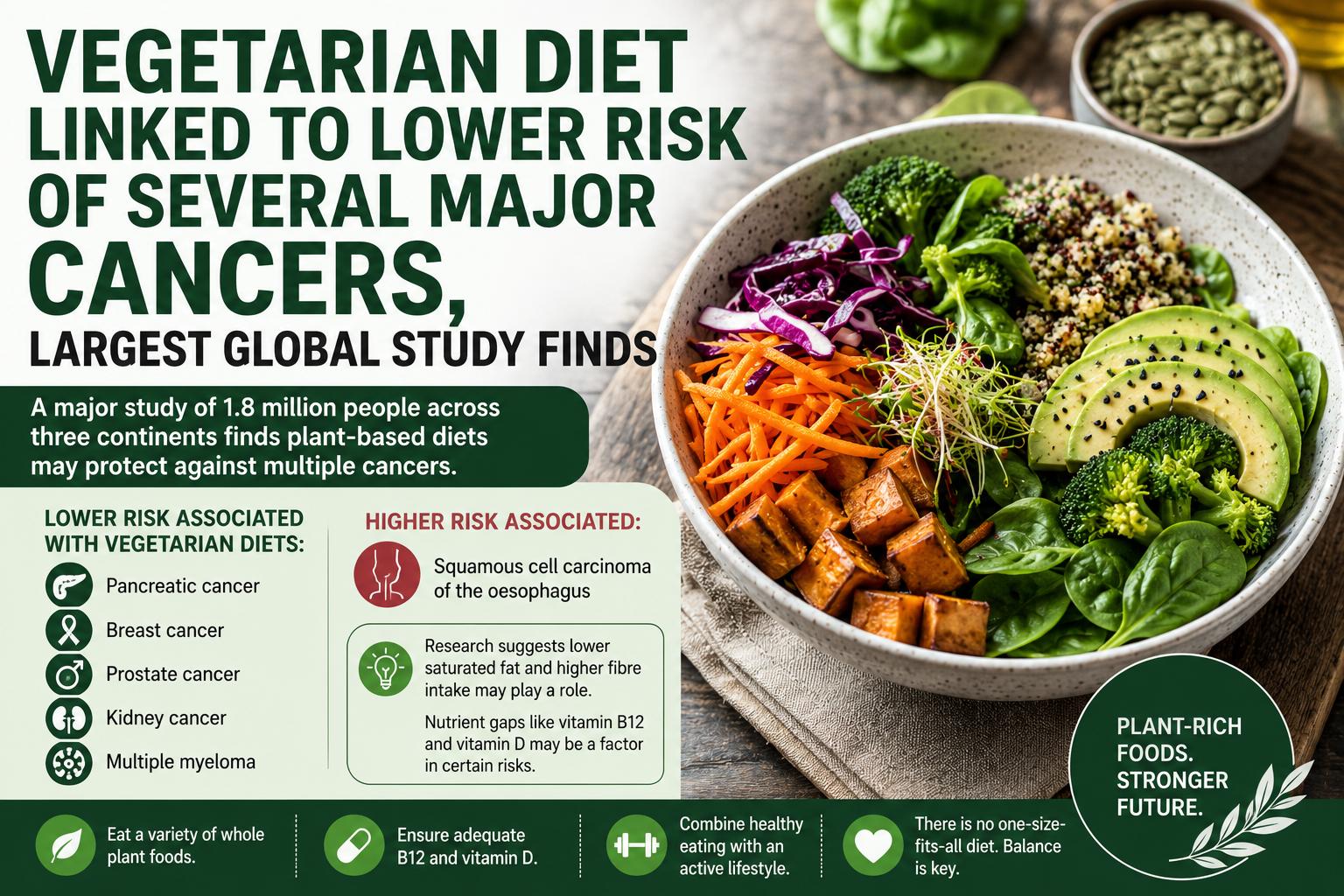
A major international study involving more than 1.8 million people has found that vegetarian diets may significantly reduce the risk of several major cancers — including pancreatic, breast, prostate and kidney cancer.
The research, described as the largest analysis of its kind to date, also found vegetarians had a lower risk of developing multiple myeloma, a type of blood cancer.
However, researchers also identified one notable concern: vegetarians appeared to have a higher risk of squamous cell carcinoma of the oesophagus compared with meat eaters.
One of the Largest Diet and Cancer Studies Ever Conducted
The findings come from the newly formed Cancer Risk in Vegetarians Consortium, which combined data from nine long-term studies carried out across Europe, North America and other regions.
Researchers analysed dietary and health information from more than 1.8 million adults with varying eating habits, making it one of the most comprehensive investigations ever conducted into the relationship between diet and cancer risk.
Most participants were based in the UK and the United States.
The study examined a wide range of cancers, including cancers affecting the digestive system, reproductive organs, urinary tract, lungs and blood.
Researchers excluded skin cancer and cervical cancer from the analysis because key non-dietary causes — such as UV exposure and human papillomavirus (HPV) — could not be consistently measured across all studies.
How Participants Were Categorised
Participants were divided into five dietary groups:
Meat eaters
Poultry eaters
Pescatarians (people who eat fish but not meat)
Vegetarians
Vegans
The overwhelming majority of participants — around 90.5% — were meat eaters.
Vegetarians accounted for 3.5% of the study population, while vegans represented just 0.5%.
Researchers followed participants over several years, with dietary reassessments taking place between four and 14 years after the original data collection.
Cancer diagnoses were identified through official cancer registry records using World Health Organization disease classifications.
Vegetarian Diet Associated With Lower Cancer Risk
The strongest findings from the study showed vegetarians had lower risks of several major cancers compared with meat eaters.
These included:
Pancreatic cancer
Breast cancer
Prostate cancer
Kidney cancer
Multiple myeloma
After additional sensitivity testing, the most consistent association remained a reduced risk of kidney cancer among vegetarians.
Researchers also found that pescatarians had lower risks of colorectal, breast and kidney cancers, while poultry eaters appeared to have a lower risk of prostate cancer.
Why Could Vegetarian Diets Reduce Cancer Risk?
Scientists say several lifestyle and nutritional factors may help explain the findings.
Previous research has shown that vegetarians often consume:
Less saturated fat
More dietary fibre
More fruits and vegetables
Fewer processed foods
Vegetarians also tend to have lower body mass indexes (BMI) and lower cholesterol levels compared with regular meat eaters.
These factors are already known to play an important role in long-term cancer risk and overall health.
Plant-based diets have also been linked in earlier studies to reduced inflammation and improved metabolic health, both of which may influence cancer development over time.
Researchers Also Warn of Potential Nutritional Gaps
Despite the positive findings, researchers stressed that vegetarian and vegan diets are not automatically healthier in every case.
The study noted that vegetarians and vegans generally consumed lower amounts of several important nutrients, including:
Protein
Vitamin B12
Vitamin D
Researchers suggested these nutritional differences may partly explain the increased risk of squamous cell carcinoma of the oesophagus seen among vegetarians in the study.
However, they also warned that dietary habits vary significantly between countries and individuals, meaning the findings should be interpreted carefully.
Not all vegetarian diets are nutritionally balanced, and not all meat-inclusive diets are unhealthy.
Experts Urge Caution Over Interpretation
While the findings add to growing evidence supporting plant-based eating patterns, researchers emphasised that the study does not prove vegetarian diets directly prevent cancer.
Instead, it highlights strong associations between dietary patterns and long-term health outcomes.
Lifestyle factors such as smoking, alcohol consumption, exercise levels and overall nutrition also play a major role in cancer risk.
Still, experts say the scale of the research makes it an important contribution to understanding how diet may influence disease prevention in the future.
Food & Drink News
Vegetarian Diet Linked to Lower Risk of Several Major Cancers, Largest Global Study Finds
Advertisement




Comments (0)
You must be logged in to post comments.
Don't have an account? Register here
No comments yet. Be the first to share your thoughts!