
Most of us give our recycling bin very little thought beyond dragging it to the kerb on the right morning. Yet what happens after the lorry pulls away is a surprisingly involved process, involving sorting lines, magnets, optical scanners and international commodity markets.
Understanding that journey matters more than it might first appear. The value of what Newcastle households put out depends almost entirely on how clean and correctly sorted it is when it leaves the house, and a single wrong item can cause problems far down the line.
Here is a plain-English guide to where your recycling actually goes, why contamination causes such headaches, and how to check what your own bin will and will not accept.
The collection is only the first step.
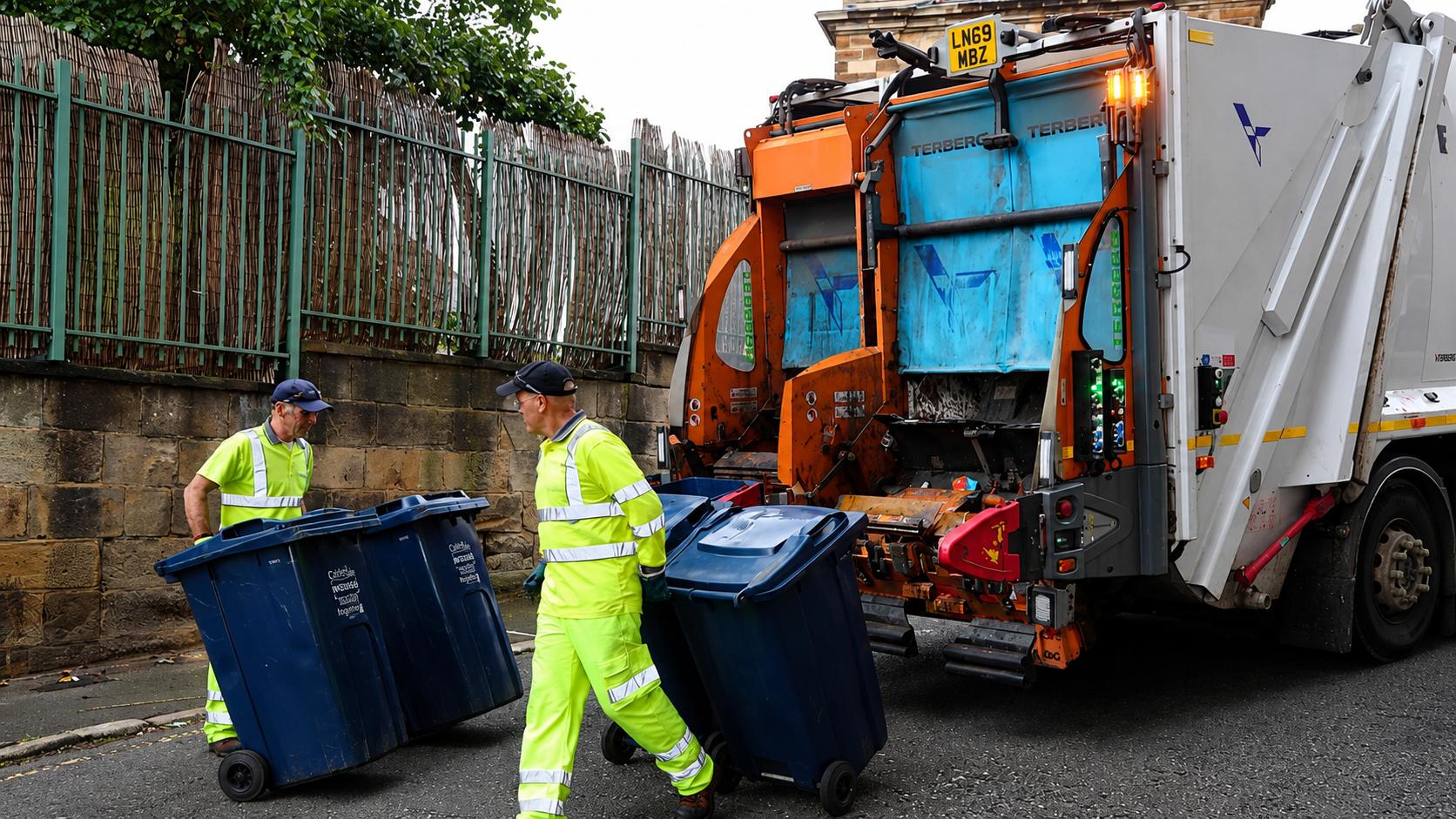
When a collection vehicle empties a street, the contents are not sorted at the roadside. Everything is compacted together and taken to a transfer station or directly to a processing facility.
That means the separation work happens later, at a materials recovery facility, usually shortened to MRF and pronounced "murf" in the industry. These are large industrial buildings where mixed recycling is tipped onto conveyor belts and pulled apart by a combination of machinery and human hands.
The scale is easy to underestimate. A facility serving a city the size of Newcastle handles many thousands of tonnes each year, running long shifts to keep pace with collections across the region.
Machines and people work side by side.
The sorting process uses a sequence of clever but fairly simple technologies. Rotating screens separate items by size and shape, so flat card behaves differently to a round bottle and ends up on a different belt.
Powerful magnets lift out steel cans, while a device called an eddy current separator uses a rapidly changing magnetic field to physically flick aluminium off the line. Optical scanners fire infrared light at passing material to identify different plastic polymers, then use bursts of compressed air to knock the right ones into the right bay.
Despite all that automation, human pickers remain essential. They remove the items machines struggle with and pull out anything that should never have been in the bin in the first place.
Contamination is the biggest single problem.
Ask anyone working in waste management what frustrates them most and the answer is almost always contamination. This is the industry term for material that does not belong in the recycling stream.
The worst offenders are food waste, liquids left in containers, textiles, nappies and general rubbish bagged up and dropped in the wrong bin. A greasy pizza box or a half-full drinks bottle can soak into surrounding paper and card, reducing the quality of an entire bale.
When contamination levels climb too high, whole loads can be rejected and sent for disposal instead. That is expensive, wasteful and entirely avoidable, which is why councils across the country put so much effort into getting the message across.
Plastic bags cause a specific headache.
One item deserves its own mention. Thin plastic film, including carrier bags and bin liners, is a genuine problem at sorting facilities.
The material wraps around rotating shafts and screens, forcing lines to stop while staff cut it free. Repeated stoppages reduce how much material a facility can process, and the film itself has very little value once removed.
Many supermarkets now offer collection points for soft plastics precisely because kerbside systems struggle with them. Bagging recycling before putting it in the bin is also unhelpful, since bagged material is often treated as contamination and pulled off the line unopened.
Sorted material becomes a commodity.
Once separated, each material is compressed into dense bales and sold on to reprocessors. Aluminium, steel, cardboard, paper and certain plastics all have established markets, and prices fluctuate like any other commodity.
Aluminium is particularly valuable, since recycling it uses a fraction of the energy needed to produce new metal from ore. Glass, where collected, is crushed into cullet and melted down or used in aggregate and construction.
The revenue from these sales offsets part of the cost of running collections. When market prices fall or contamination rises, that financial balance shifts, which is one reason recycling rules occasionally change.
Rules vary more than people expect.
A common source of confusion is that recycling rules are not national. What is accepted in one local authority area may be refused in the next, because different councils have different contracts, facilities and collection systems.
That is why advice found online, or a habit carried over from a previous address, is not always reliable. The only genuinely accurate source is your own council's published list.
Newcastle City Council maintains an A to Z of household items on its website showing exactly which bin each one belongs in, along with collection calendars by postcode. Checking it occasionally is worthwhile, as accepted materials do change over time.
Small habits make a measurable difference.
Rinsing containers, flattening cardboard, keeping items loose rather than bagged and leaving lids on plastic bottles all help. None of it takes long, and collectively it improves the quality of everything leaving the city.
Recycling is not a complete answer to waste on its own, and reducing what we buy and reusing what we have will always matter more. But for the material that does end up in the bin, getting it right genuinely counts.
Share your thoughts.
What is the one item you are never sure which bin it goes in?
Local News
What Actually Happens to Your Recycling in Newcastle
From the moment your bin is emptied to the point materials are sold on, here is what really happens to household recycling collected across Newcastle.
Advertisement




Comments (0)
You must be logged in to post comments.
Don't have an account? Register here
No comments yet. Be the first to share your thoughts!