
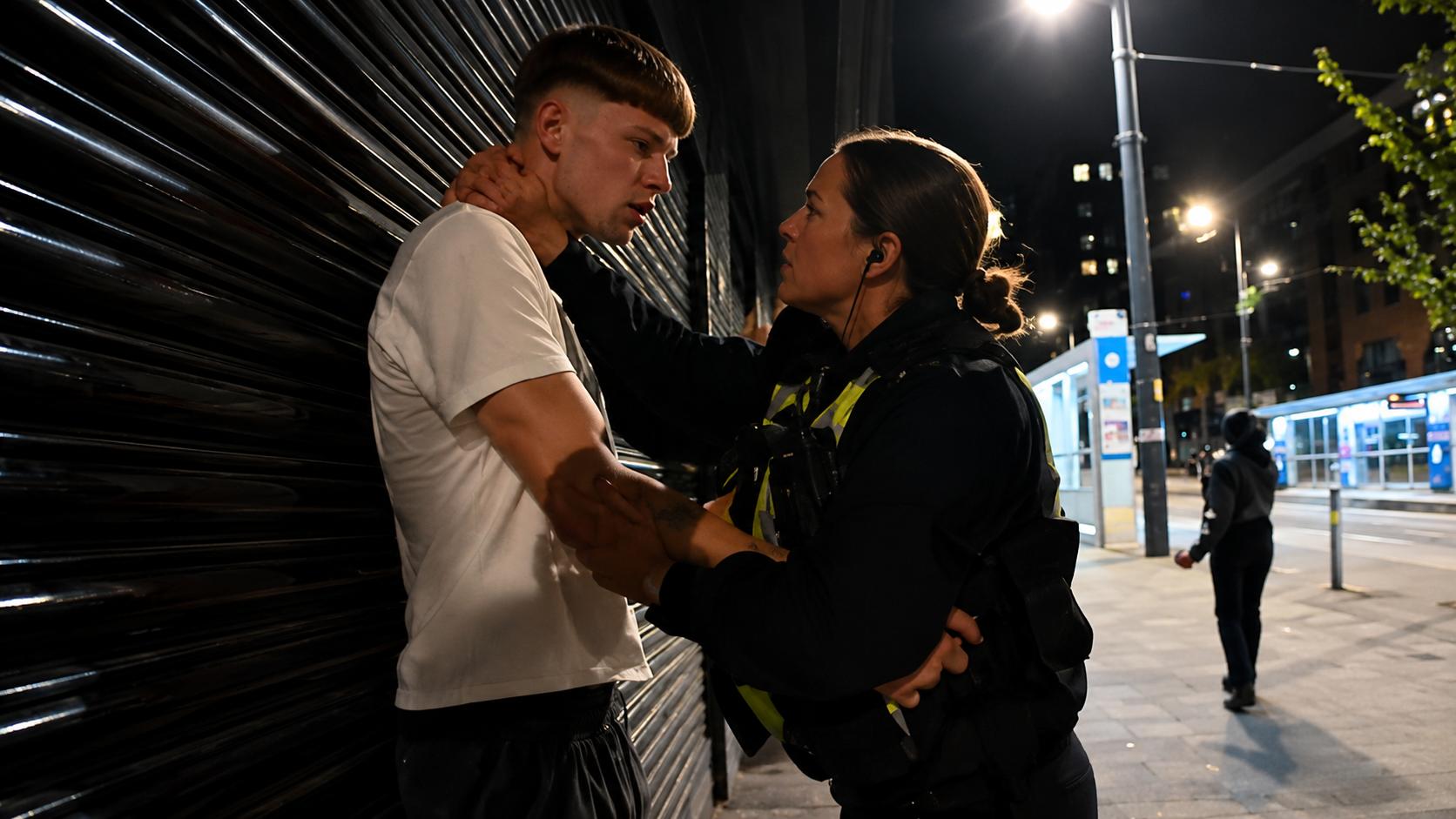
The phrase "two-tier policing" has become one of the most debated terms in British politics over the past two years. It is regularly used on television, across social media and in Parliament, yet many people remain unsure what it actually means.
Supporters of the phrase argue that police sometimes respond differently depending on who is involved, the type of protest taking place or the background of suspects and victims. Critics say the claim oversimplifies complex policing decisions and often relies on isolated high-profile incidents rather than wider evidence.
Regardless of where people stand, one thing is becoming increasingly clear. Public trust in policing has become one of the biggest issues facing forces across England and Wales, including here in the North East.
What is meant by two-tier policing.
There is no official policing policy in the UK called "two-tier policing."
Instead, it is a political term used to suggest that police apply the law differently depending on factors such as race, religion, political beliefs or the type of protest being held.
Those who believe it exists often point to examples where they feel demonstrations have received different policing responses or where sentencing and charging decisions appear inconsistent.
Police leaders have consistently rejected the suggestion that officers deliberately operate a two-tier system. Former senior officers have argued that operational decisions are based on intelligence, risk, available resources and public safety rather than political or demographic factors.
The debate has become increasingly heated because individual cases are often widely shared online before all the facts become available.
Why many people believe it exists.
Public perception rarely develops from statistics alone.
Instead, highly publicised incidents often shape opinion.
Social media has accelerated this process, allowing short video clips or individual arrests to reach millions of people within hours. Without full context, many viewers compare one incident against another and conclude that similar situations have received different treatment.
Some campaigners also argue that differences in police guidance around protests, hate crime and public order have created confusion about consistency.
At the same time, others argue that comparing separate incidents is rarely straightforward because officers assess factors such as crowd size, intelligence, available resources, previous violence and immediate risks before deciding how to respond.
This is one reason why the debate continues despite years of discussion.
Is there evidence for two-tier policing.
This depends largely on how the question is asked.
There is currently no conclusive evidence showing that every police force across England and Wales systematically applies different standards based on politics or ethnicity.
However, there are long-standing concerns about inconsistency within policing generally.
His Majesty's Inspectorate of Constabulary has repeatedly highlighted differences between forces in investigations, response times and victim service.
Campaigners from across the political spectrum argue that inconsistency itself damages confidence, even when there is no deliberate bias.
Others point to broader criminal justice outcomes, reminding people that charging decisions involve the Crown Prosecution Service while sentencing is ultimately decided by the courts rather than police officers.
That distinction is often lost during public debate.
Trust in police has become the bigger issue.
Whether people believe in two-tier policing or not, there is far stronger agreement on one point.
Trust has declined.
Recent national discussions have focused on misconduct scandals, high-profile criminal cases involving serving officers and concerns about investigation standards.
Former policing leaders have warned that restoring confidence should become a national priority because public cooperation remains one of British policing's greatest strengths.
If communities lose confidence that reports will be taken seriously, crimes become less likely to be reported and investigations become more difficult.
What does this mean for Newcastle and the North East.
The North East has not escaped the national debate.
Although Northumbria Police is generally regarded as one of the country's larger metropolitan forces, it faces the same challenges affecting policing nationwide.
Crime patterns across Newcastle remain varied depending on the area.
Police.uk data for Newcastle Central shows violence and sexual offences, anti-social behaviour and shoplifting among the most commonly recorded offences in recent months.
For many residents, visible neighbourhood policing often shapes confidence more than national political arguments.
Local issues such as anti-social behaviour, shoplifting, vehicle crime and response times are usually far more important than debates taking place in Westminster.
Residents are often more interested in seeing offenders caught quickly than hearing arguments over political terminology.
Statistics people may find interesting.
Several national figures help explain why confidence in policing remains under pressure.
Around 89 percent of violent or sexual offences in identified hotspot areas across England and Wales did not result in a solved outcome during one recent national analysis.
Violence and sexual offences were the largest recorded crime category in Newcastle Central during the latest available reporting period.
Anti-social behaviour remains one of the most commonly reported neighbourhood concerns across many urban areas, including Newcastle Central.
Shoplifting has increased in prominence nationally and remains among Newcastle Central's most frequently recorded offences.
Trust in policing has become a recurring issue in national policing reviews following several high-profile misconduct cases and concerns over investigative performance.
Why the debate is unlikely to disappear.
The phrase "two-tier policing" has become bigger than policing itself.
It now represents wider concerns about fairness, equality before the law and confidence in public institutions.
Some people see it as evidence that different groups receive different treatment.
Others believe it has become a political slogan unsupported by robust national evidence.
Both sides agree on one thing.
Public confidence matters.
When people trust police, they are more likely to report crime, assist investigations and work alongside officers to keep communities safe.
For Newcastle and the wider North East, the challenge is perhaps less about political labels and more about ensuring residents believe the law is applied consistently, transparently and fairly regardless of who they are.
That may ultimately prove more important than the debate over what the issue should be called.
Have your say.
Do you believe two-tier policing exists in the UK?
Crime News
What Is Two-Tier Policing and Why Should You Care?
Advertisement



Comments (0)
You must be logged in to post comments.
Don't have an account? Register here
No comments yet. Be the first to share your thoughts!