
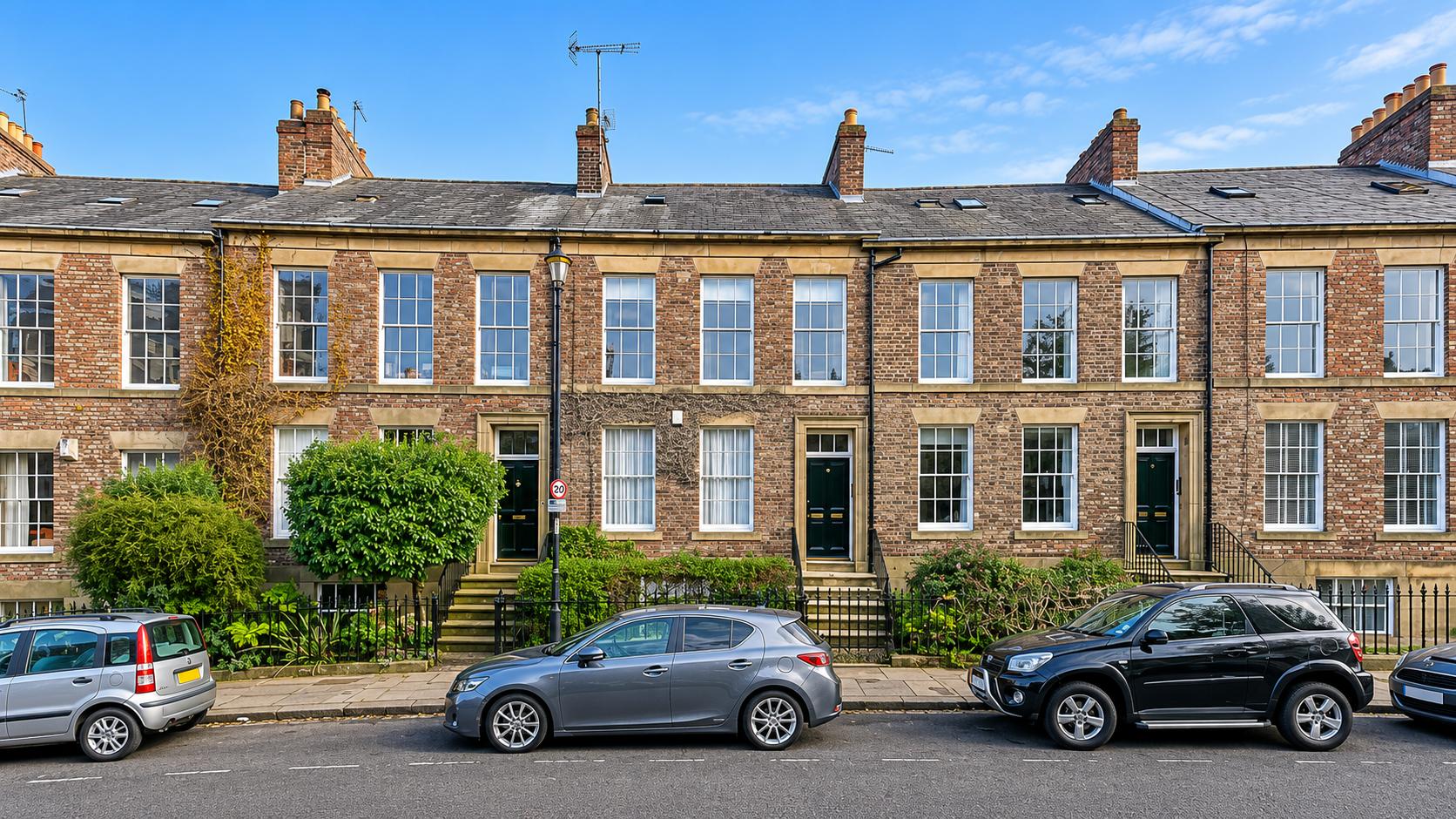
Newcastle has an unusually rich stock of historic buildings for a city of its size, from the Georgian sweep of Grainger Town to Victorian terraces, chapels and industrial structures repurposed as homes. A significant number carry statutory protection.
For owners, listing is a mixed blessing that is widely misunderstood. It is not a ban on change, nor is it a licence to do as you please provided the front looks right.
Here is what listing actually means in practice, and how it differs from the other designations frequently confused with it.
Listing protects the whole building.
A building is added to the National Heritage List for England because of its special architectural or historic interest. Once listed, protection applies to the entire structure, inside and out.
This is the single most common misunderstanding. Interior features are covered as fully as the facade, including staircases, panelling, fireplaces, plasterwork, original doors and historic joinery.
Protection also extends to objects and structures fixed to the building, and often to items within its curtilage that predate a defined date, such as boundary walls, outbuildings and railings.
The grades indicate significance, not restriction.
Listed buildings in England fall into three grades. Grade I covers buildings of exceptional interest, Grade II star covers particularly important buildings of more than special interest, and Grade II covers buildings of special interest.
The overwhelming majority of listed buildings nationally are Grade II, and that includes most listed homes. The grade signals relative significance rather than a different legal test for consent.
In practice, a higher grade tends to mean greater scrutiny and a stronger presumption against harmful change. The basic requirement to obtain consent is the same across all grades.
Consent is separate from planning permission.
Listed building consent is a distinct approval from planning permission, and either, both or neither may be required depending on the work.
It is needed for any works that would affect the building's special interest, whether or not planning permission is also required. That includes many internal alterations which would be entirely permitted development in an unlisted house.
Carrying out such works without consent is a criminal offence rather than a civil planning breach. This is a genuinely serious distinction and one that catches out owners who assume the worst outcome is being asked to reverse the work.
Everyday jobs can need approval.
The threshold sits lower than most people expect. Replacing original single-glazed timber sash windows with modern units, removing an internal wall, installing a new bathroom that alters historic fabric, or fitting a woodburner with a new flue can all require consent.
Even apparently minor decisions can matter. Repointing with hard cement mortar rather than lime can trap moisture and damage soft historic brickwork, and is frequently resisted for that reason.
Like-for-like repair using matching materials and methods is generally the least problematic route. The further a proposal moves from that, the more justification it needs.
Conservation areas are a different thing entirely.
Newcastle contains numerous conservation areas, and many residents assume this means their house is listed. It does not.
A conservation area designation protects the character and appearance of an area as a whole. It brings additional controls, particularly over demolition, works to trees and some external alterations, and it can be reinforced by an article 4 direction removing specific permitted development rights.
A house can be listed, in a conservation area, both, or neither. Checking which applies to a specific address is the sensible first step before planning any work.
Talk to the conservation officer early.
Every local planning authority has access to conservation expertise, and Newcastle City Council is no exception. Pre-application discussion is almost always time well spent.
Officers can indicate what is likely to be acceptable before drawings are commissioned, which frequently saves both money and disappointment. They can also point towards approaches that achieve the owner's practical aim through less damaging means.
Applications for consent generally need to be supported by a heritage statement explaining the significance of the building and how the proposal would affect it. Vague applications are refused far more often than well-evidenced ones.
Practical realities are worth planning for.
Insurance for listed property often requires specialist cover, since reinstatement must use appropriate materials and techniques. Standard rebuild-cost assumptions rarely apply.
Finding contractors experienced with lime plaster, traditional joinery or historic roofing takes longer than booking a general builder, and rates reflect that specialism. Building in extra time at the planning stage is realistic rather than pessimistic.
Energy efficiency is a genuine tension. Secondary glazing, careful draught-proofing, insulation at roof level and heavy curtains often achieve much of the benefit of replacement windows while remaining acceptable in heritage terms.
The trade-off is real, and so is the reward.
Listing does constrain what an owner can do, and it adds cost and time to work that would be straightforward elsewhere. There is no sense pretending otherwise.
In return, it protects the character that made the building appealing in the first place, and it protects neighbours from unsympathetic change next door.
For anyone considering buying a listed property in Newcastle, the practical advice is simple. Read the list entry, ask what previous alterations were consented, and speak to the council before assuming any plan is straightforward.
Share your thoughts.
Do you live in a listed building or conservation area in Newcastle?
Local News
What Listed Status Means If You Own a Newcastle Home
Owning a listed home in Newcastle brings genuine prestige and equally genuine obligations, and the two are easy to confuse until work is planned.
Advertisement





Comments (0)
You must be logged in to post comments.
Don't have an account? Register here
No comments yet. Be the first to share your thoughts!