
Few things unite drivers, cyclists and bus passengers quite like a bad stretch of road. Potholes are among the most reported issues to any local authority, and among the most consistently frustrating for the people reporting them.
What is less widely understood is that behind every report sits a defined process, shaped by legislation, inspection regimes and finite budgets. Knowing how it works makes the outcome considerably less mysterious.
Here is what actually happens after a pothole report is submitted, and why the answer is rarely as simple as sending someone out with a shovel.
The legal duty is narrower than people assume.
Highway authorities in England have a duty under the Highways Act 1980 to maintain roads that are maintainable at public expense. That duty is real, but it is not a guarantee that every defect will be fixed immediately.
Crucially, the same legislation provides a defence. If an authority can show it took reasonable care to secure that the road was not dangerous to traffic, it may not be liable for damage arising from a defect.
In practice, this means the strength of an authority's position rests heavily on its inspection and repair records. A documented, consistently followed regime is what separates a defensible position from an indefensible one.
Not every hole meets the intervention threshold.
Councils set out intervention criteria in a published highway maintenance policy. These specify the depth, width and location at which a defect becomes actionable.
A pothole on a busy carriageway may meet the threshold at a shallower depth than the same hole on a quiet footway, because risk depends on how the surface is used and at what speed. A defect near a bus stop or a school crossing may be prioritised more highly again.
This is why two potholes that look similar to a resident can receive very different responses. One may sit just above the threshold and be scheduled for repair, while the other is logged and monitored.
Roads are inspected on a rota, not only on request.
Reports from the public are only one input. Authorities run scheduled safety inspections across the network, with frequency determined by how important and heavily used each road is.
Strategic routes are inspected far more often than residential cul-de-sacs, sometimes monthly rather than annually. Inspectors drive or walk defined routes recording defects against the intervention criteria.
Your report is added to this system rather than replacing it. It can bring a defect to attention between scheduled inspections, which is genuinely valuable, particularly after a hard winter when new defects appear rapidly.
Repairs are categorised by urgency.
Once a defect is confirmed as actionable, it is given a priority category with an associated response time. The most severe, judged to present immediate danger, are made safe quickly, sometimes within hours.
Making safe is not always the same as a permanent repair. A temporary fill or coning off may be the first response, with a durable repair scheduled later as part of planned works.
Lower category defects are batched. Sending a crew to one hole is inefficient when several sit within a few streets, so work is often grouped, which explains delays that can seem inexplicable from the roadside.
Weather genuinely affects what is possible.
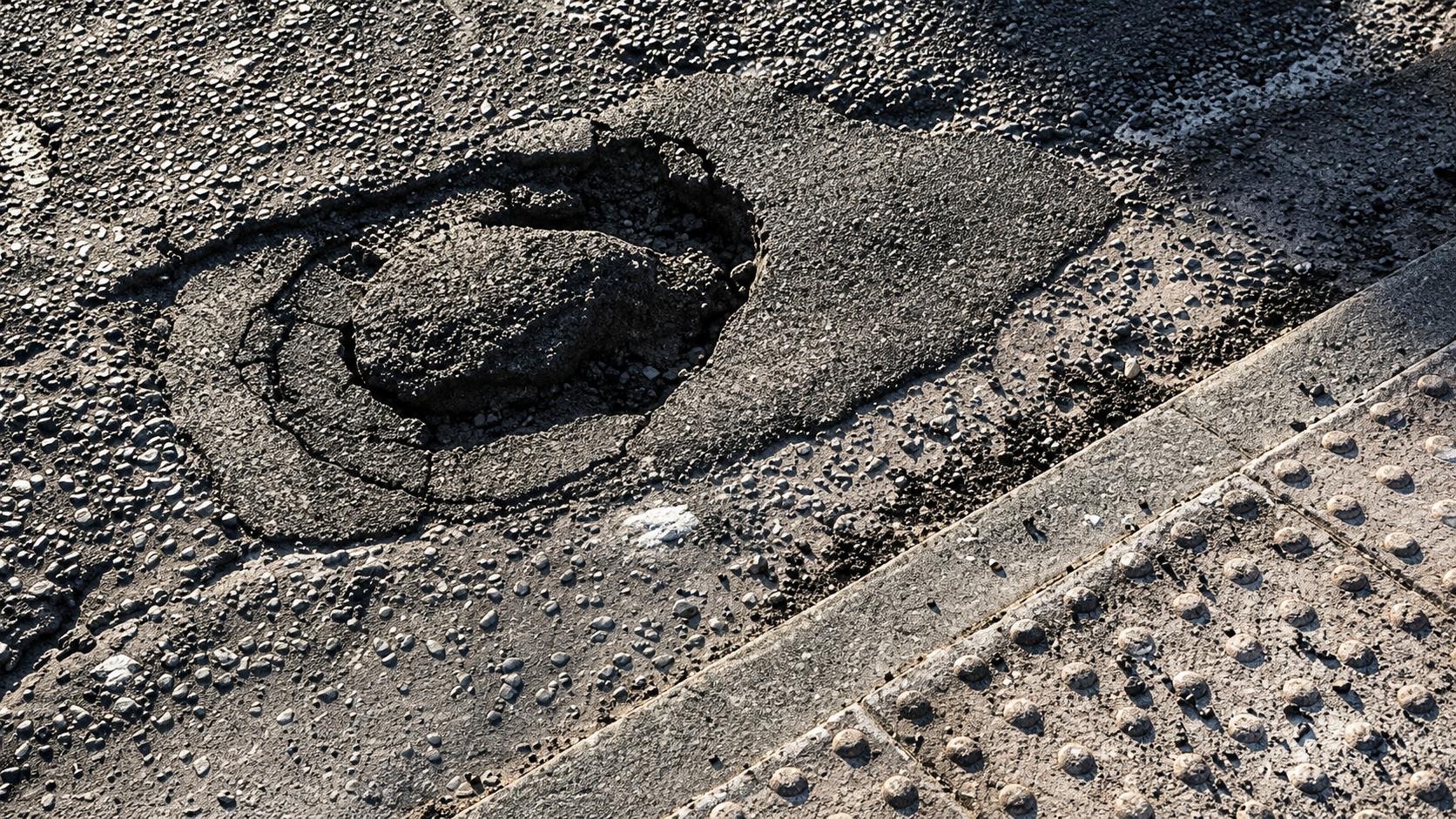
Potholes form when water penetrates the road surface, freezes, expands and breaks the material apart, with passing traffic then pulling the loosened surface away. This is why they multiply after cold, wet winters.
The same weather limits repair quality. Permanent hot-laid repairs need reasonably dry conditions to bond properly, so wet spells can push work back or force temporary solutions.
This creates an obvious tension. The period when potholes appear fastest is often the period when durable repairs are hardest to carry out.
Claims are possible but not automatic.
If a vehicle is damaged, a claim can be made to the highway authority. Evidence matters enormously: photographs of the defect with something for scale, the exact location, the date and time, and repair invoices or estimates.
The authority will check its inspection and repair records. If those show the road was inspected in line with policy and the defect was not present or not actionable at the last inspection, the statutory defence may apply and the claim may be declined.
That outcome frequently feels unjust to drivers facing a bill for a wheel or tyre. It is worth understanding it reflects the legal test rather than an assessment of whether the pothole was genuinely bad.
Good reporting improves the odds.
The most useful reports are specific. A precise location, ideally with a nearby house number, junction or landmark, is far more actionable than a street name alone.
A photograph showing depth, and a note of whether the defect affects the carriageway, cycle lane or footway, all help the inspector prioritise correctly. Most authorities, Newcastle included, provide an online reporting tool that captures this information directly.
Reporting also creates a record. Even where a defect is initially below threshold, a logged history contributes to the case for resurfacing a deteriorating road rather than patching it repeatedly.
Share your thoughts.
Which Newcastle street do you think is most overdue for resurfacing?
Local News
What Really Happens When You Report a Pothole
Reporting a pothole feels like shouting into the void, but there is a defined legal and inspection process behind what happens next.
Advertisement




Comments (0)
You must be logged in to post comments.
Don't have an account? Register here
No comments yet. Be the first to share your thoughts!