
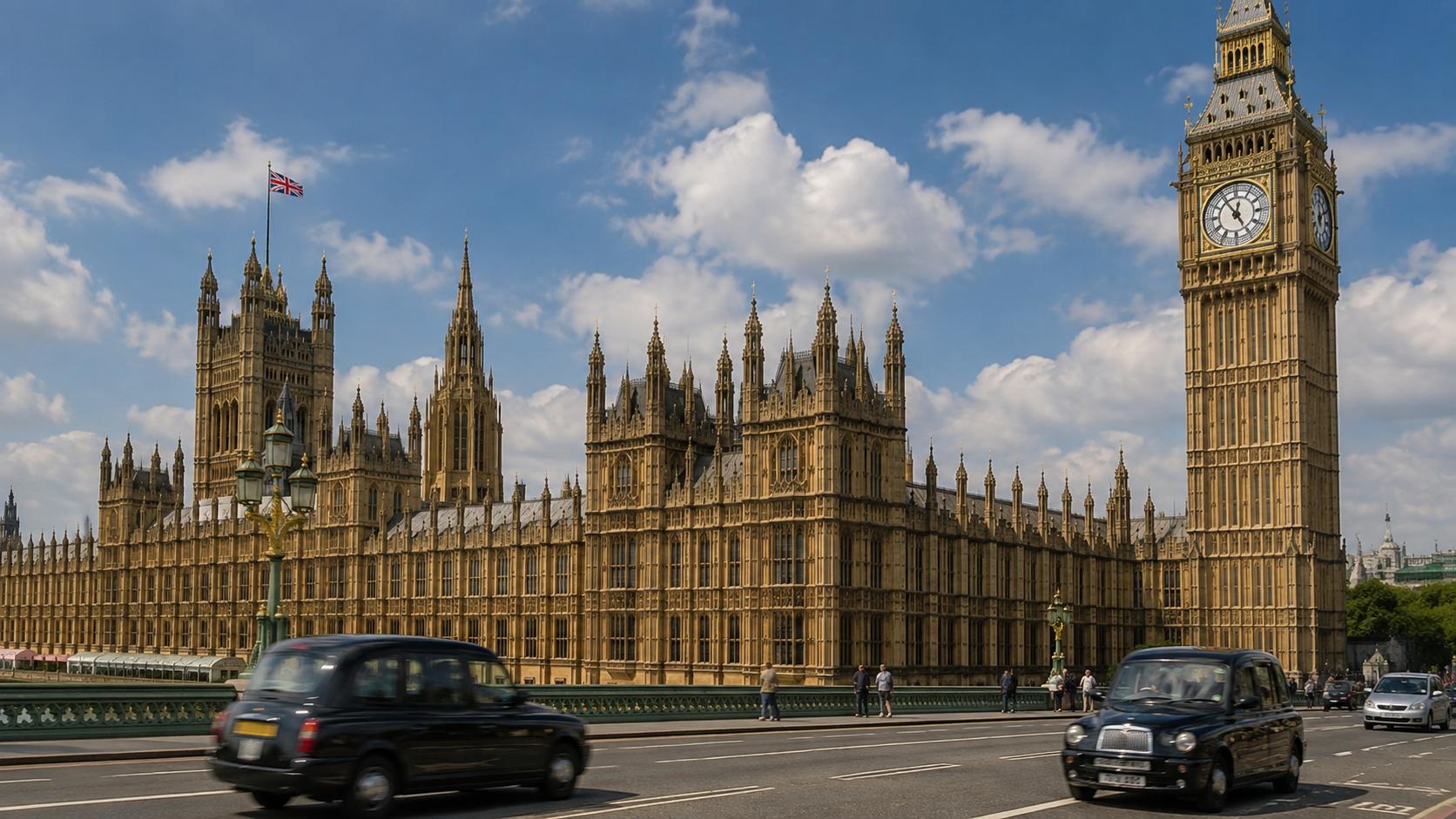
A change of Prime Minister between general elections invariably prompts the question of whether an election must follow.
Under the UK's constitutional arrangements, it does not. This article sets out the rules that determine when the next general election must be held and how the process works.
The Prime Minister is not directly elected.
Voters at a general election elect members of Parliament for their constituency. They do not vote directly for a Prime Minister.
The Prime Minister is the person able to command the confidence of the House of Commons, which in practice means the leader of the party or coalition holding a majority of seats.
When a governing party changes its leader, the parliamentary arithmetic is unchanged. The new leader takes office without a general election, and the government continues with the majority secured at the previous election.
This has happened repeatedly in modern British politics, under governments of both major parties.
The five-year limit applies.
The Dissolution and Calling of Parliament Act 2022 restored the previous arrangements under which the Prime Minister may request a dissolution of Parliament from the monarch.
That Act repealed the Fixed-term Parliaments Act 2011, which had set fixed five-year intervals and specified limited circumstances in which an early election could occur.
Under the current arrangements, a Parliament automatically dissolves five years after the day on which it first met, unless dissolved earlier. A general election follows.
The current Parliament first met in July 2024, following the general election of 4 July that year. That sets the latest point at which the next general election must take place in 2029.
An earlier election can be called.
The Prime Minister may request a dissolution at any point before the five-year limit, and elections have frequently been held earlier than the maximum term.
A government can also be brought down by a vote of no confidence in the House of Commons, which may lead to an election if no alternative government can be formed.
Neither route is automatic, and both depend on political circumstances rather than a fixed rule.
The campaign period is defined.
Once Parliament is dissolved, a general election must be held after a defined statutory period, currently 25 working days.
Dissolution means every seat becomes vacant. There are no MPs during a campaign, only candidates, including those seeking re-election.
Government ministers remain in office throughout, as the government continues to function, but a period of restraint applies to official announcements and government communications. This is commonly referred to as purdah or the pre-election period, and it limits activity that might influence the outcome.
Candidates and nominations.
Candidates must be nominated within the statutory timetable and pay a deposit, currently £500, which is returned if the candidate receives at least 5 per cent of the votes cast in the constituency.
Candidates must be aged 18 or over and meet eligibility requirements. Certain roles disqualify a person from standing, including holding certain public offices, judges, members of the armed forces and police officers.
Voting and identification.
Polls are open from 7am to 10pm on polling day.
Voters in Great Britain are required to show accepted photographic identification at polling stations, a requirement introduced by the Elections Act 2022 and first applied at local elections in 2023. A free Voter Authority Certificate is available for those without accepted ID.
Postal and proxy voting remain available, subject to application deadlines that fall well before polling day.
Registration deadlines are separate and typically close around twelve working days before the poll.
Counting and forming a government.
Counting begins after polls close, conducted by returning officers in each constituency. Individual results are declared through the night and into the following day.
If one party holds a majority of seats, its leader is invited by the monarch to form a government. If no party holds a majority, the incumbent Prime Minister remains in office while arrangements are explored, which may result in a coalition, a confidence and supply agreement or a minority government.
There is no fixed period for that process, and it is governed by convention rather than statute.
By-elections work differently.
A by-election is held when a single parliamentary seat becomes vacant, following a resignation, death or disqualification.
MPs cannot technically resign, and instead apply for an office of profit under the Crown, a procedural device that disqualifies them from membership.
The timing of a by-election is determined by the moving of a writ in the House of Commons, usually by the party that previously held the seat, and there is no fixed deadline by which this must happen.
What the current position means.
With a Parliament elected in July 2024 and a majority unchanged by the recent change of party leader, no general election is required before 2029.
Local elections, mayoral elections and any parliamentary by-elections continue to take place according to their own cycles in the meantime.
The Electoral Commission publishes guidance on registration, identification requirements and voting arrangements, and local authorities administer registration for their area.
Share your thoughts.
Should a change of Prime Minister trigger a general election?
Political News
When the Next General Election Has to Be Held
A change of Prime Minister does not trigger a general election. Here are the rules that determine when the next one must happen.
Advertisement


Comments (0)
You must be logged in to post comments.
Don't have an account? Register here
No comments yet. Be the first to share your thoughts!