
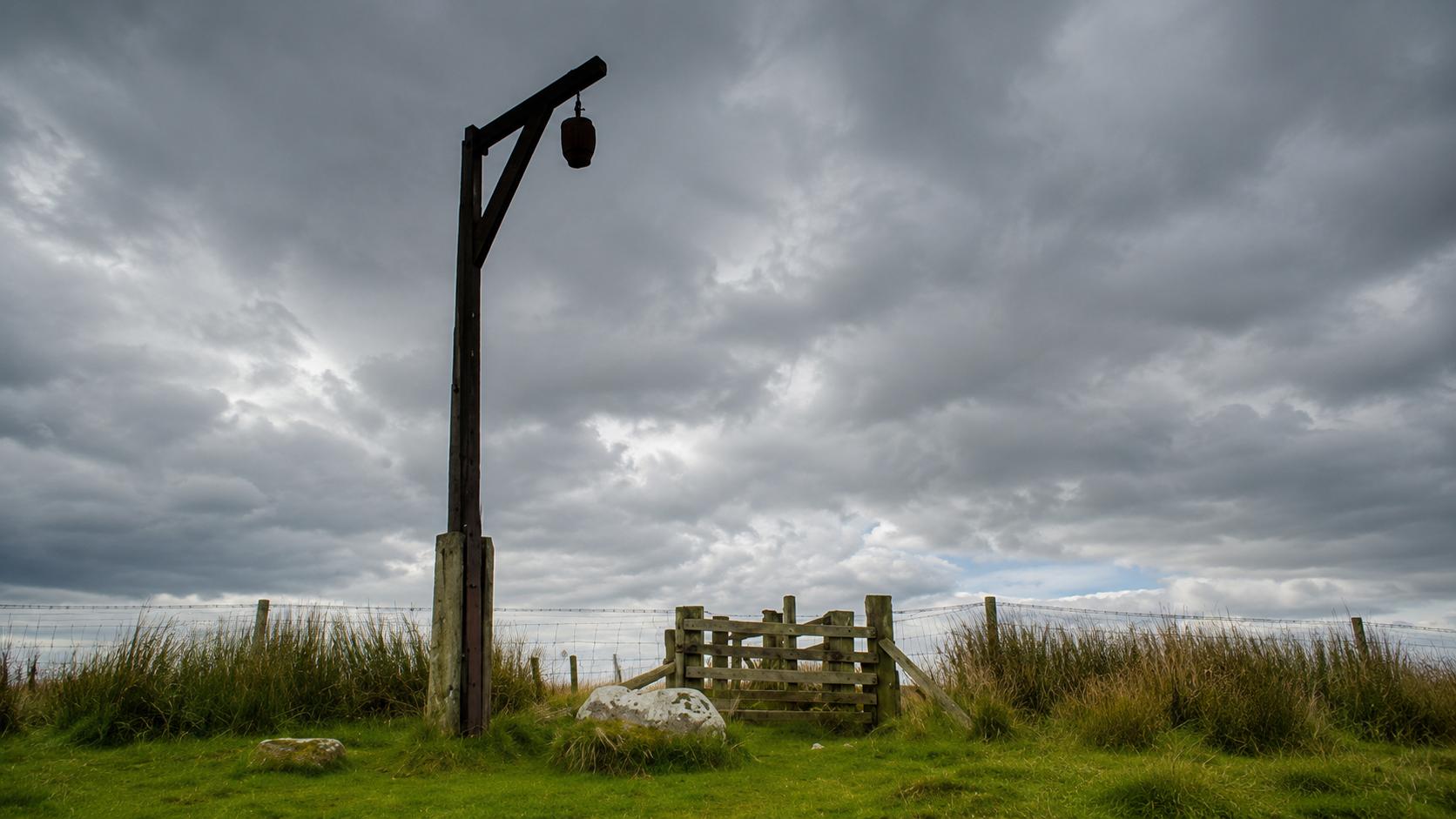
On a lonely stretch of moorland in Northumberland, far from any town, there stands a strange and eerie landmark: a tall wooden post, a gibbet, that recalls one of the most notorious crimes in the region's history. Winter's Gibbet, as it is known, marks the grim aftermath of a murder committed more than two centuries ago, and the once-common but now almost forgotten punishment of gibbeting. It is one of the most atmospheric and sobering historic sites in the North East.
A Crime on the Moor.
The story behind Winter's Gibbet begins in the late eighteenth century, with the murder of an elderly woman named Margaret Crozier, who lived at a remote spot near the village of Elsdon and kept a small shop. In 1791, she was robbed and murdered by a man named William Winter, who was assisted by two female accomplices. The crime, committed against a vulnerable old woman in her own home, was a brutal one, and it shocked the local community. The remoteness of the spot and the helplessness of the victim made the murder all the more terrible, and it became one of the most notorious crimes in the history of the region.
Brought to Justice.
The perpetrators of the crime did not escape justice, and their capture owed much to the sharp eyes of a young shepherd. According to the well-known account, a shepherd boy had noticed the suspicious characters in the area and was able to provide evidence that helped to identify them, including details of their distinctive footprints. This evidence proved crucial in bringing the culprits to justice. William Winter and his two accomplices were apprehended, tried for the murder at Newcastle, and found guilty. The role of the observant shepherd boy in securing their conviction became a celebrated part of the story, an example of watchfulness that was long remembered.
The Sentence.
Having been found guilty of the murder, William Winter and his accomplices were sentenced to death and executed at Newcastle in 1792. But for William Winter, the sentence did not end with his execution. In accordance with the grim custom of the time, it was ordered that his body should afterwards be hung in chains on a gibbet, within sight of the scene of his crime. This additional punishment, the gibbeting of the body after execution, was intended as a stark warning to others, and it consigned Winter's remains to a grim and very public fate on the lonely moor where his victim had lived and died.
The Custom of Gibbeting.
The practice of gibbeting, by which the body of an executed criminal was hung in chains in a public place, was a grim feature of the criminal justice of earlier times. The gibbeted body, left to hang and decay as a spectacle, was intended to serve as a terrible warning to others, a vivid demonstration of the consequences of serious crime. The custom, which had also been used in earlier centuries, was deliberately gruesome, designed to instil fear and to deter wrongdoing through the public display of the criminal's fate. Gibbeting was among the harshest and most macabre of punishments, and its use reflected the severity of the justice of the age.
The Lonely Gibbet.
Following his execution, William Winter's body was hung in chains on a gibbet erected on the moor near Elsdon, within sight of the scene of his crime. There it remained, a grim spectacle on the lonely moorland, until it eventually decayed. In time, the original gibbet itself fell into ruin, but the memory of the grisly event endured, and a replacement gibbet post was later erected on the spot to mark the site. This lone post, standing in the bleak and remote moorland, became a famous and eerie landmark, a reminder of the terrible crime and its grim aftermath. It has long attracted the curious and the intrigued.
An Eerie Landmark.
Winter's Gibbet has become one of the most atmospheric and unsettling historic sites in the North East. The lone post, standing in the midst of wild and lonely moorland, possesses a genuinely eerie quality, especially in the gathering dusk or under a brooding sky. The site has become entwined with local lore and ghostly legend, adding to its unsettling reputation, and it draws visitors who come to experience its strange atmosphere and to learn of the grim history behind it. Set amid spectacular and bleak scenery, the gibbet is a place of both beauty and dread, a reminder of a dark chapter in the region's past.
A Reminder of the Past.
Winter's Gibbet stands as a sobering reminder of the harsh justice of earlier times and of a notorious crime that shocked the region more than two centuries ago. The grim custom of gibbeting, the brutal murder that led to it and the lonely landmark that marks the spot all combine to make this one of the most memorable and atmospheric historic sites in the North East. To visit the gibbet is to be reminded of the severity of justice in the past and of the dark events that have left their mark on the landscape. It is a grim heritage, but a fascinating one, that continues to draw the curious to the lonely moor.
A Landmark and Its Lore.
Winter's Gibbet has become far more than a historical site; it has entered the folklore and the imagination of the region, acquiring a wealth of legend and association. The lone post on the bleak moor, with its grim history, possesses a powerful atmosphere that has made it a focus for ghostly tales and eerie associations, and it is widely regarded as one of the most haunting places in the region. The combination of the brutal crime that lies behind it, the grim custom of gibbeting that it recalls, and the wild and lonely setting in which it stands has given the gibbet a hold on the imagination that few historical sites can match. Visitors are drawn to the site by its atmosphere as much as by its history, coming to experience the strange and unsettling mood of the place and to learn of the dark events that it commemorates. The gibbet has become entwined with local legend, and stories and superstitions have gathered around it over the years, adding to its eerie reputation. This transformation of a historical site into a place of legend and atmosphere is a fascinating phenomenon, reflecting the way that places associated with dark events can acquire a powerful hold on the imagination. Winter's Gibbet stands as a striking example of this, a historical landmark that has become a place of folklore and fascination, drawing visitors to the lonely moor to experience its strange atmosphere and to reflect on the grim history that it recalls. It is a reminder of the power of place and story to preserve the memory of the past, and of the way that the dark events of history can live on in the landscape and the imagination of a region. The lonely gibbet endures as both a historical reminder and a place of legend.
Get involved.
Winter's Gibbet marks a notorious murder and the grim custom of gibbeting on the Northumberland moors.
Have you ever visited the lonely landmark of Winter's Gibbet on the moor?
Crime News
Winter's Gibbet: A Grim Landmark on Elsdon Moor
The story behind Winter's Gibbet near Elsdon, the lonely Northumberland landmark that recalls a notorious 1791 murder and the grim custom of gibbeting.
Advertisement





Comments (0)
You must be logged in to post comments.
Don't have an account? Register here
No comments yet. Be the first to share your thoughts!