
Newcastle is often celebrated for its industrial heritage, iconic bridges and vibrant nightlife, but another part of the city's history has quietly stood the test of time. Across Newcastle, historic places of worship continue to welcome visitors while preserving stories stretching back hundreds of years.
From medieval churches to grand Victorian cathedrals, these buildings have witnessed royal visits, civil wars, industrial expansion and the growth of one of England's most important northern cities.
According to Newcastle City Council, many of the city's medieval churches and religious houses helped define the layout of Newcastle that still exists today, making them an essential part of the city's heritage.
Here are five of Newcastle's most historic places of worship and why they remain important today.
1. Newcastle Cathedral.
Standing proudly in the heart of the city, Newcastle Cathedral remains one of the city's most recognisable landmarks.
Originally founded as the Parish Church of St Nicholas around the late 12th century, the site has been a place of Christian worship for more than 900 years. The present medieval building was largely constructed between 1275 and 1359 before gaining cathedral status in 1882 when the Diocese of Newcastle was created.
Its famous Lantern Tower, completed during the 15th century, became a beacon for sailors returning along the River Tyne and remains one of Britain's finest examples of medieval crown towers. The Grade I listed cathedral also contains one of northern England's largest collections of historic monuments and ledger stones.
Today, the cathedral continues to host daily worship, concerts, exhibitions and community events, welcoming thousands of visitors every year.
2. St Mary's Cathedral.
Just a short walk from Newcastle Central Station stands another architectural masterpiece.
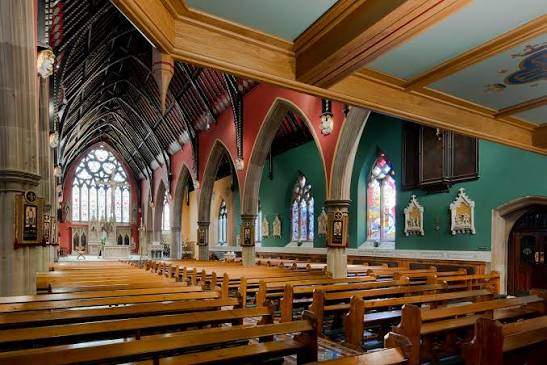
St Mary's Cathedral, designed by renowned architect Augustus Welby Pugin, opened in 1844 and became the Roman Catholic cathedral for the Diocese of Hexham and Newcastle in 1850. It remains one of the finest examples of Gothic Revival architecture in northern England.
The cathedral's soaring spire dominated Newcastle's skyline for many years and reflected the rapid growth of the Catholic community during the Victorian era.
Visitors continue to admire its stained-glass windows, intricate stonework and peaceful interior, making it one of Newcastle's most photographed religious buildings.
3. All Saints' Church.
Although often overlooked by visitors, All Saints' Church has played a remarkable role in Newcastle's history.
Built between 1786 and 1796 on the site of an earlier medieval church, the Grade I listed building is famous for its distinctive elliptical interior and elegant Georgian architecture.
The church also houses the impressive memorial brass of medieval merchant Roger Thornton, one of Newcastle's most influential historical figures, preserving an important link with the city's commercial past.
Today, All Saints' continues to serve both worshippers and visitors while remaining one of Newcastle's most architecturally distinctive churches.
4. St Andrew's Church.
Few buildings in Newcastle can claim to have served the city for as long as St Andrew's Church.
Believed to date back to the early 12th century, it is widely regarded as one of Newcastle's oldest parish churches. Over the centuries it survived border conflicts, political unrest and the rapid industrial expansion that transformed the city.
Its historic churchyard contains graves and memorials dating back hundreds of years, while the surrounding area offers a glimpse into medieval Newcastle.
Despite its age, St Andrew's continues to hold regular services and remains an important part of the city's spiritual life.
5. The Newcastle Friends Meeting House.
Not every historic place of worship is defined by towering spires.
The Quaker Meeting House in Gosforth represents centuries of Quaker tradition in the North East. While the current building is more modern than some of Newcastle's medieval churches, the Religious Society of Friends has deep historical roots across northern England dating back to the 1650s.
Today, Newcastle forms part of the Northumbria Area Quaker Meeting, continuing a tradition centred on silent worship, equality and community service that has influenced British society for more than 350 years.
The meeting house regularly welcomes visitors interested in learning more about Quaker beliefs and local history.
More than historic buildings.
These places of worship are far more than impressive architecture.
They have witnessed coronations, wars, industrial prosperity, economic hardship and generations of family celebrations including baptisms, weddings and funerals.
According to the 2021 Census, Christianity remains Newcastle's largest religion, with 41.3 percent of residents identifying as Christian, although the city is becoming increasingly diverse, with growing Muslim, Hindu, Sikh and other faith communities alongside 40.8 percent of residents who say they have no religion. This changing picture makes Newcastle's historic places of worship valuable reminders of the city's evolving cultural story.
Whether visitors come for faith, architecture or history, these remarkable buildings continue to connect modern Newcastle with nearly a thousand years of shared heritage.
Join the conversation.
Have you visited any of Newcastle's historic places of worship?
Community News
5 Of Newcastle's Oldest Places of Worship
Advertisement



Comments (0)
You must be logged in to post comments.
Don't have an account? Register here
No comments yet. Be the first to share your thoughts!